Department of Medical Biosciences, University of the Western Cape, Robert Sobukwe Road, Private Bag X17, Bellville 7535, South Africa.
Division of Molecular Biology and Human Genetics, Faculty of Medicine and Health Sciences, Stellenbosch University, Cape Town, South Africa.
Oxid Med Cell Longev. 2018 Jun 27;2018:6241017. doi: 10.1155/2018/6241017. eCollection 2018.
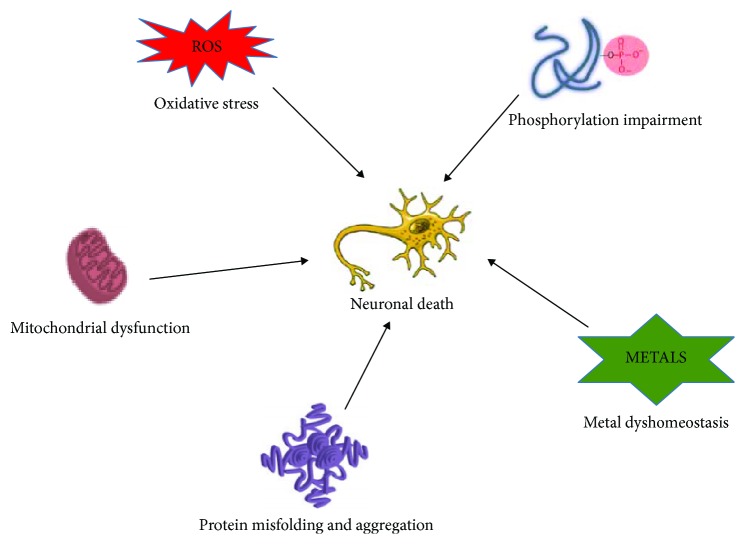
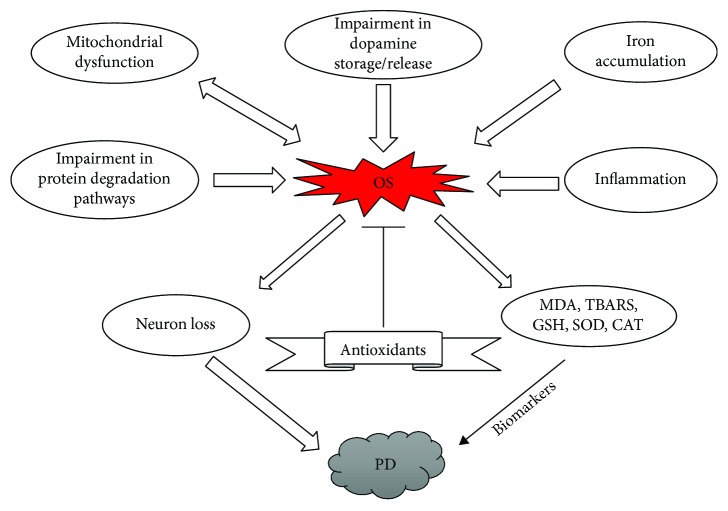
A wide range of neurodegenerative diseases (NDs), including Alzheimer's disease, Parkinson's disease, Huntington's disease, and prion diseases, share common mechanisms such as neuronal loss, apoptosis, mitochondrial dysfunction, oxidative stress, and inflammation. Intervention strategies using plant-derived bioactive compounds have been offered as a form of treatment for these debilitating conditions, as there are currently no remedies to prevent, reverse, or halt the progression of neuronal loss. Rutin, a glycoside of the flavonoid quercetin, is found in many plants and fruits, especially buckwheat, apricots, cherries, grapes, grapefruit, plums, and oranges. Pharmacological studies have reported the beneficial effects of rutin in many disease conditions, and its therapeutic potential in several models of NDs has created considerable excitement. Here, we have summarized the current knowledge on the neuroprotective mechanisms of rutin in various experimental models of NDs. The mechanisms of action reviewed in this article include reduction of proinflammatory cytokines, improved antioxidant enzyme activities, activation of the mitogen-activated protein kinase cascade, downregulation of mRNA expression of PD-linked and proapoptotic genes, upregulation of the ion transport and antiapoptotic genes, and restoration of the activities of mitochondrial complex enzymes. Taken together, these findings suggest that rutin may be a promising neuroprotective compound for the treatment of NDs.
一系列神经退行性疾病(NDs),包括阿尔茨海默病、帕金森病、亨廷顿病和朊病毒病,都具有共同的机制,如神经元丧失、细胞凋亡、线粒体功能障碍、氧化应激和炎症。使用植物源性生物活性化合物的干预策略已被提出来作为这些衰弱疾病的一种治疗方法,因为目前尚无预防、逆转或阻止神经元丧失进展的方法。芦丁是一种黄酮类槲皮素的糖苷,存在于许多植物和水果中,特别是荞麦、杏、樱桃、葡萄、葡萄柚、李子和橙子。药理学研究报告了芦丁在许多疾病中的有益作用,其在几种神经退行性疾病模型中的治疗潜力引起了相当大的关注。在这里,我们总结了芦丁在各种神经退行性疾病实验模型中神经保护机制的最新知识。本文综述的作用机制包括减少促炎细胞因子、提高抗氧化酶活性、激活丝裂原活化蛋白激酶级联反应、下调与 PD 相关和促凋亡基因的 mRNA 表达、上调离子转运和抗凋亡基因的表达,以及恢复线粒体复合酶的活性。总之,这些发现表明芦丁可能是治疗 NDs 的一种有前途的神经保护化合物。