Institute of Tropical Crop Genetic Resources, Chinese Academy of Tropical Agricultural Sciences, Haikou, 571101, P.R. China.
Hainan Key Laboratory for Sustainable Utilization of Tropical Bioresources, College of Tropical Crops, Hainan University, Haikou, 570110, P.R. China.
BMC Plant Biol. 2021 Oct 13;21(1):466. doi: 10.1186/s12870-021-03249-2.
Phosphorus (P) is an essential macronutrient for plant growth that participates in a series of biological processes. Thus, P deficiency limits crop growth and yield. Although Stylosanthes guianensis (stylo) is an important tropical legume that displays adaptation to low phosphate (Pi) availability, its adaptive mechanisms remain largely unknown.
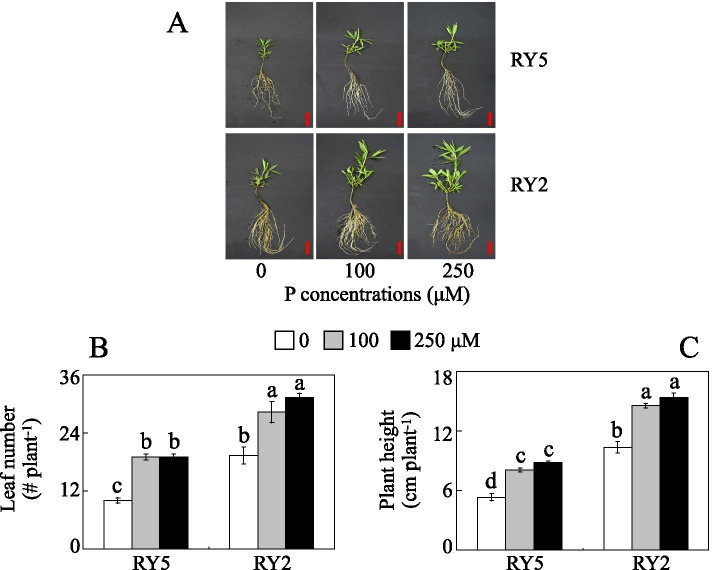
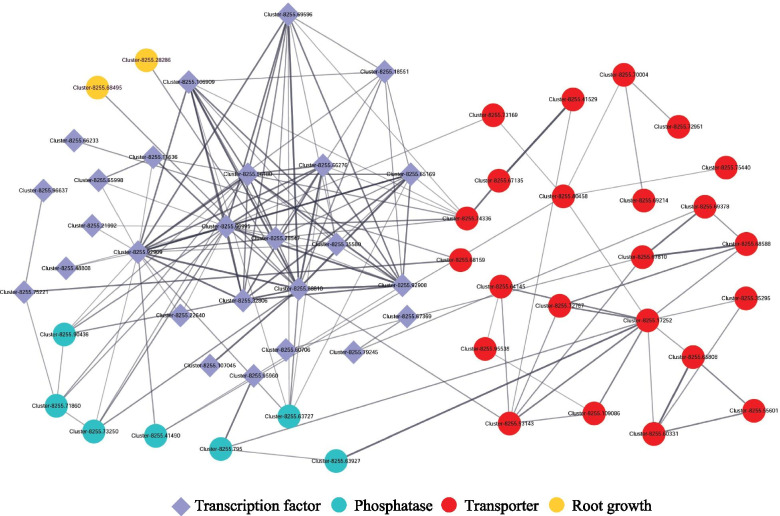
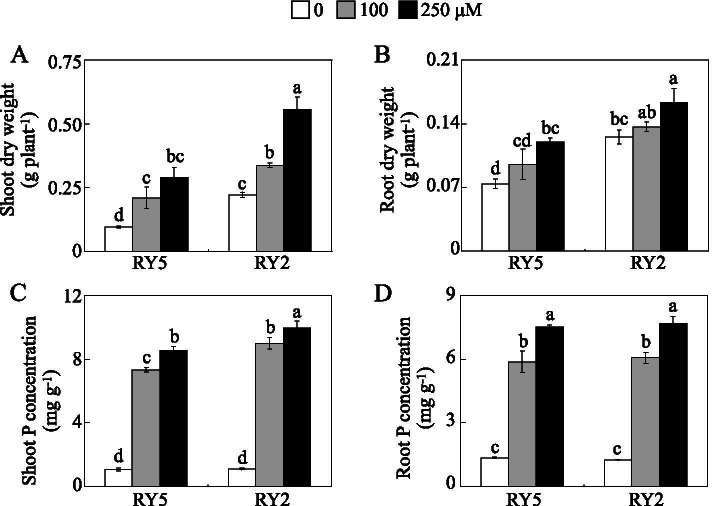
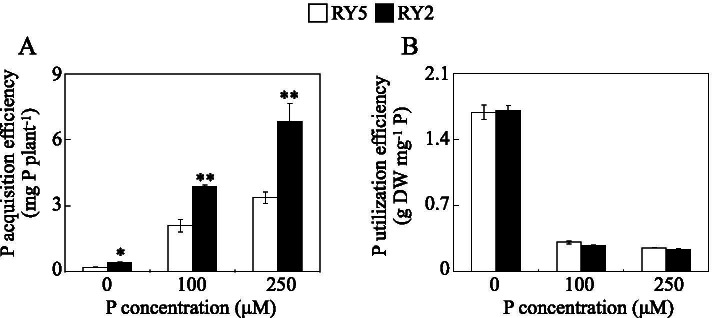
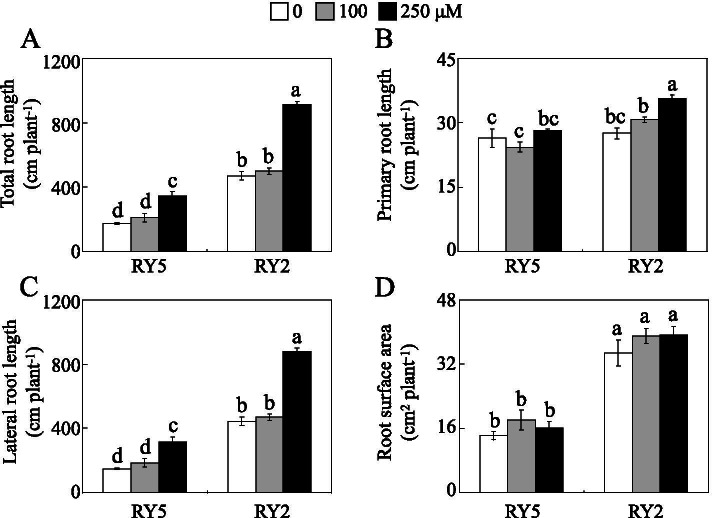
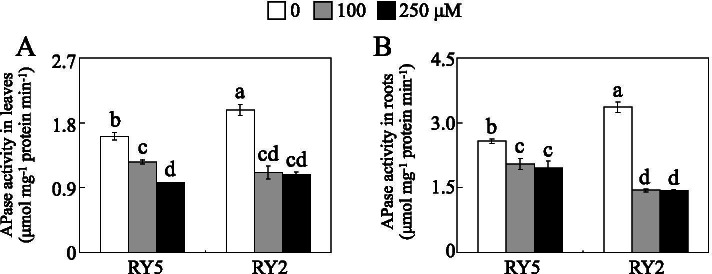
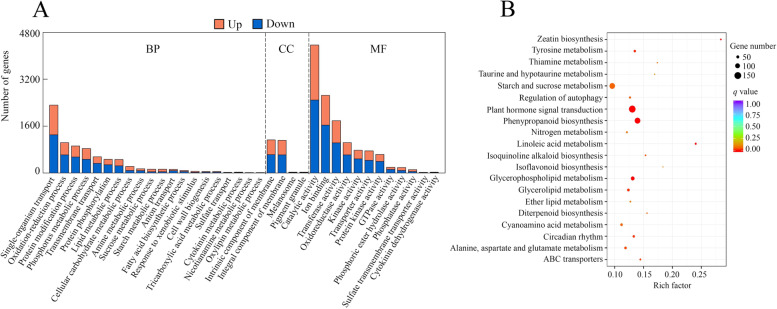
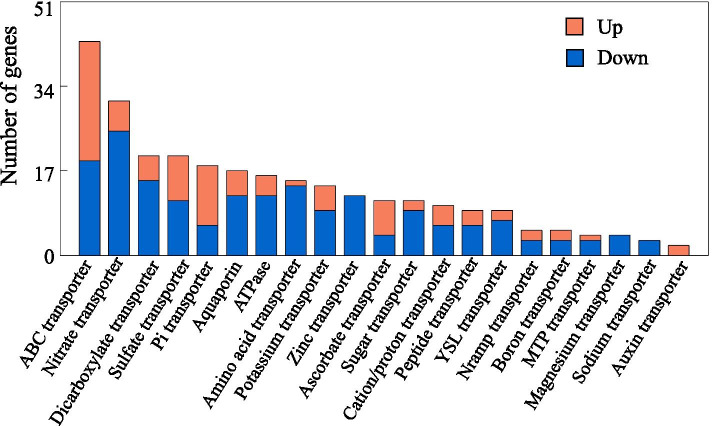
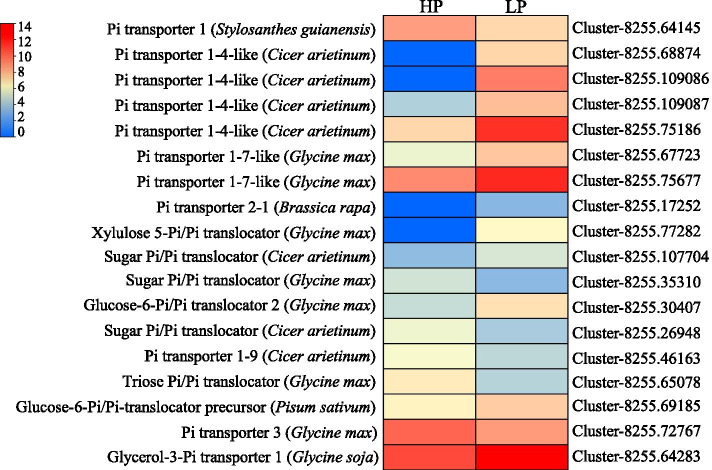
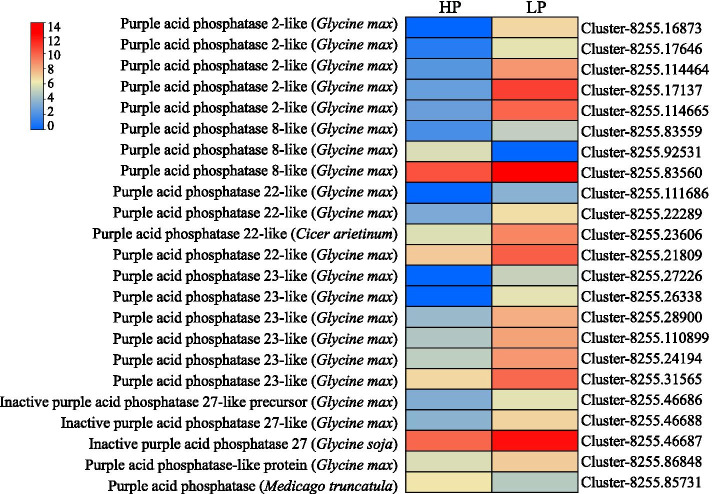
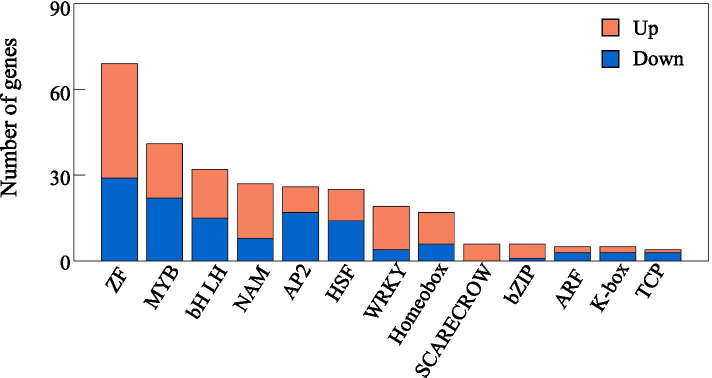
In this study, differences in low-P stress tolerance were investigated using two stylo cultivars ('RY2' and 'RY5') that were grown in hydroponics. Results showed that cultivar RY2 was better adapted to Pi starvation than RY5, as reflected by lower values of relative decrease rates of growth parameters than RY5 at low-P stress, especially for the reduction of shoot and root dry weight. Furthermore, RY2 exhibited higher P acquisition efficiency than RY5 under the same P treatment, although P utilization efficiency was similar between the two cultivars. In addition, better root growth performance and higher leaf and root APase activities were observed with RY2 compared to RY5. Subsequent RNA-seq analysis revealed 8,348 genes that were differentially expressed under P deficient and sufficient conditions in RY2 roots, with many Pi starvation regulated genes associated with P metabolic process, protein modification process, transport and other metabolic processes. A group of differentially expressed genes (DEGs) involved in Pi uptake and Pi homeostasis were identified, such as genes encoding Pi transporter (PT), purple acid phosphatase (PAP), and multidrug and toxin extrusion (MATE). Furthermore, a variety of genes related to transcription factors and regulators involved in Pi signaling, including genes belonging to the PHOSPHATE STARVATION RESPONSE 1-like (PHR1), WRKY and the SYG1/PHO81/XPR1 (SPX) domain, were also regulated by P deficiency in stylo roots.
This study reveals the possible mechanisms underlying the adaptation of stylo to P deficiency. The low-P tolerance in stylo is probably manifested through regulation of root growth, Pi acquisition and cellular Pi homeostasis as well as Pi signaling pathway. The identified genes involved in low-P tolerance can be potentially used to design the breeding strategy for developing P-efficient stylo cultivars to grow on acid soils in the tropics.
磷(P)是植物生长所必需的大量营养素,参与一系列生物过程。因此,P 缺乏会限制作物生长和产量。尽管银合欢(stylo)是一种重要的热带豆科植物,对低磷(Pi)供应具有适应性,但它的适应机制在很大程度上仍不清楚。
本研究使用在水培中生长的两个银合欢品种(“RY2”和“RY5”)来研究低磷胁迫耐受性的差异。结果表明,与 RY5 相比,品种 RY2 更能适应 Pi 饥饿,因为在低磷胁迫下,生长参数的相对减少率比 RY5 低,特别是地上部和根干重的减少。此外,在相同的 P 处理下,RY2 表现出比 RY5 更高的 P 摄取效率,尽管两个品种的 P 利用效率相似。此外,与 RY5 相比,RY2 具有更好的根生长性能和更高的叶片和根 APase 活性。随后的 RNA-seq 分析显示,在 RY2 根中,在 P 缺乏和充足条件下有 8348 个基因差异表达,许多与 Pi 饥饿相关的基因与 P 代谢过程、蛋白质修饰过程、运输和其他代谢过程有关。鉴定出一组参与 Pi 摄取和 Pi 稳态的差异表达基因(DEGs),如 Pi 转运体(PT)、紫色酸性磷酸酶(PAP)和多药和毒素外排(MATE)的编码基因。此外,还调节了与 Pi 信号转导有关的转录因子和调节因子的各种基因,包括属于 PHOSPHATE STARVATION RESPONSE 1-like (PHR1)、WRKY 和 SYG1/PHO81/XPR1 (SPX) 结构域的基因。
本研究揭示了银合欢适应 P 缺乏的可能机制。银合欢对低 P 的耐受性可能通过调节根生长、Pi 摄取和细胞 Pi 稳态以及 Pi 信号通路来体现。鉴定出的参与低 P 耐受性的基因可用于设计培育高效 P 银合欢品种的策略,以在热带酸性土壤上生长。