Department of Radiation Oncology, Rutgers Cancer Institute of New Jersey, New Brunswick, NJ, USA.
Department of Clinical Microbiology Laboratory, Children's Hospital of Fudan University, Shanghai, China.
Nat Commun. 2021 Oct 13;12(1):5966. doi: 10.1038/s41467-021-26227-6.
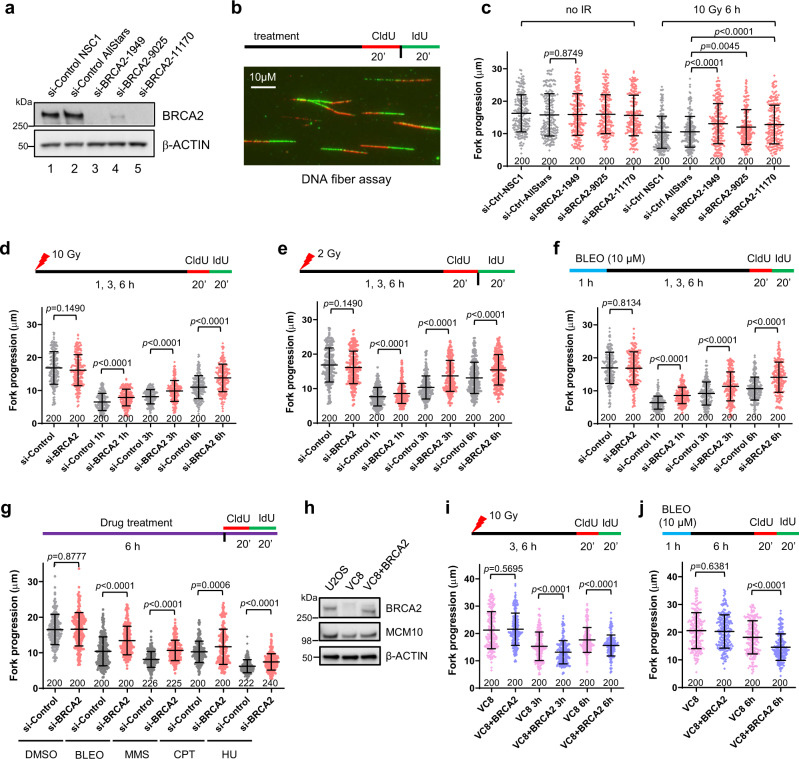
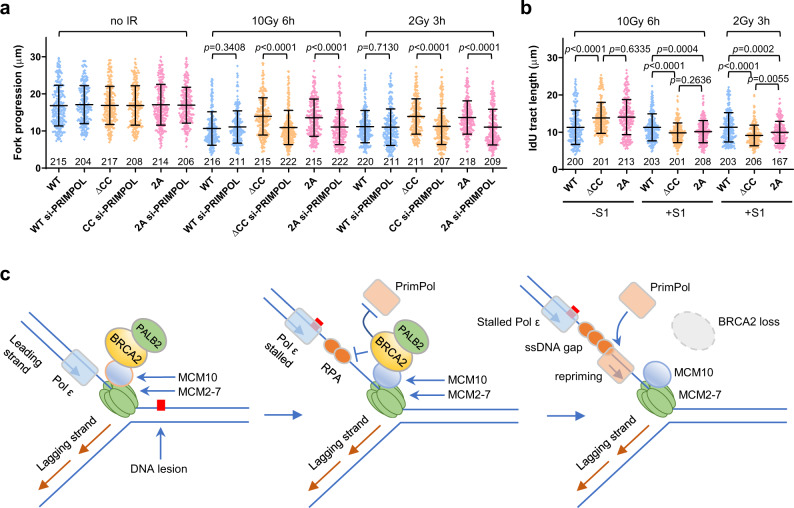
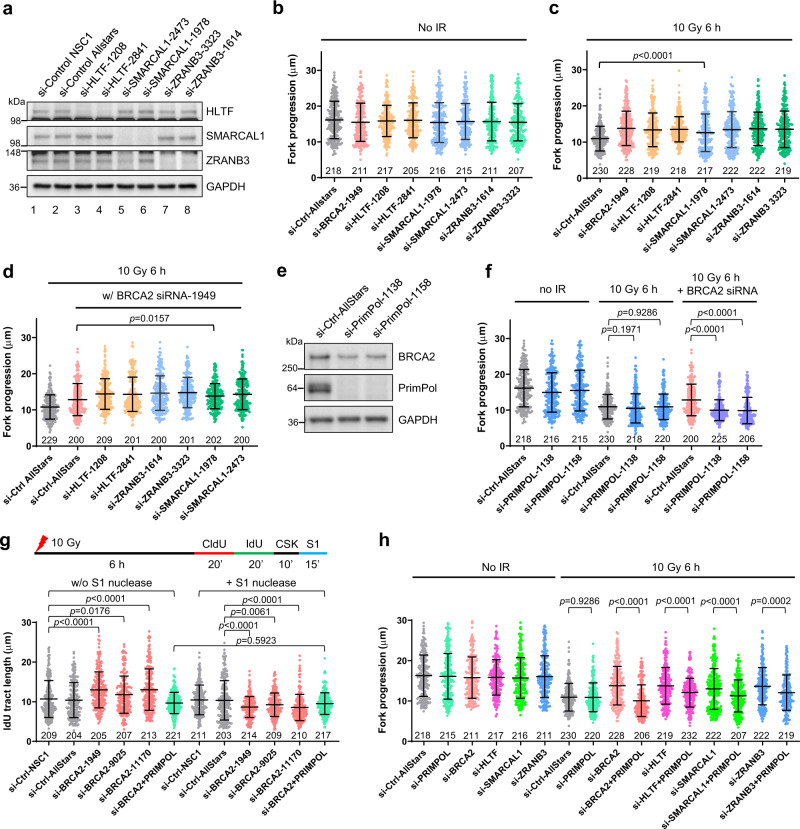
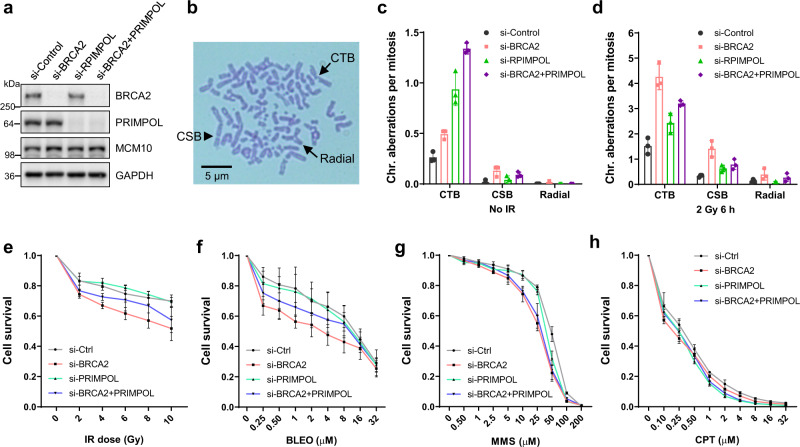
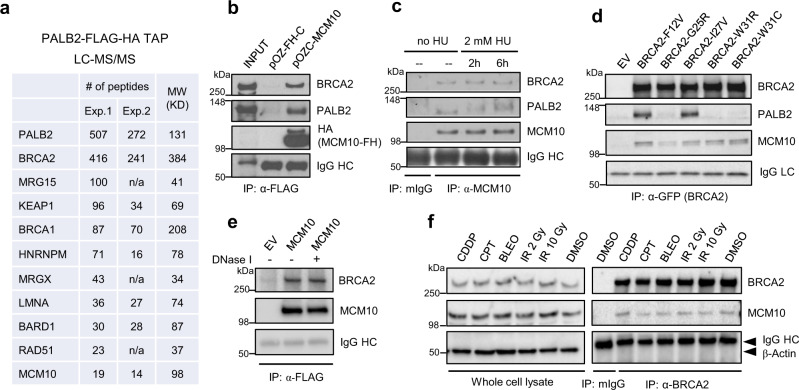
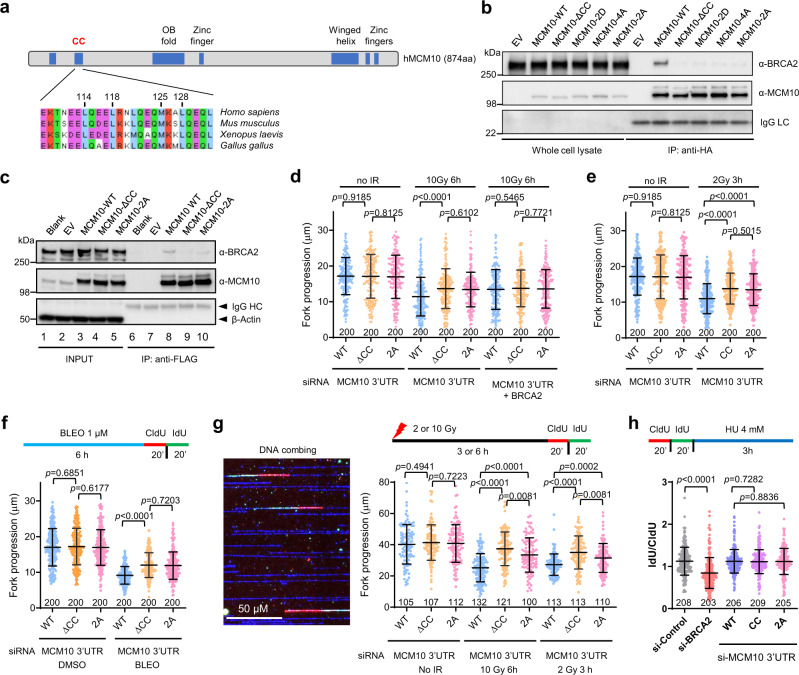
The BRCA2 tumor suppressor protects genome integrity by promoting homologous recombination-based repair of DNA breaks, stability of stalled DNA replication forks and DNA damage-induced cell cycle checkpoints. BRCA2 deficient cells display the radio-resistant DNA synthesis (RDS) phenotype, however the mechanism has remained elusive. Here we show that cells without BRCA2 are unable to sufficiently restrain DNA replication fork progression after DNA damage, and the underrestrained fork progression is due primarily to Primase-Polymerase (PRIMPOL)-mediated repriming of DNA synthesis downstream of lesions, leaving behind single-stranded DNA gaps. Moreover, we find that BRCA2 associates with the essential DNA replication factor MCM10 and this association suppresses PRIMPOL-mediated repriming and ssDNA gap formation, while having no impact on the stability of stalled replication forks. Our findings establish an important function for BRCA2, provide insights into replication fork control during the DNA damage response, and may have implications in tumor suppression and therapy response.
BRCA2 肿瘤抑制因子通过促进 DNA 断裂的同源重组修复、稳定停滞的 DNA 复制叉和 DNA 损伤诱导的细胞周期检查点来保护基因组完整性。BRCA2 缺陷细胞表现出放射抗性 DNA 合成(RDS)表型,但机制仍不清楚。在这里,我们表明,缺乏 BRCA2 的细胞在 DNA 损伤后无法充分抑制 DNA 复制叉的推进,而未被抑制的叉推进主要是由于 Primase-Polymerase(PRIMPOL)介导的在损伤下游重新启动 DNA 合成,从而留下单链 DNA 缺口。此外,我们发现 BRCA2 与必需的 DNA 复制因子 MCM10 相关联,这种关联抑制了 PRIMPOL 介导的重新启动和 ssDNA 缺口形成,而对停滞复制叉的稳定性没有影响。我们的发现确立了 BRCA2 的重要功能,为 DNA 损伤反应期间的复制叉控制提供了新的见解,并可能对肿瘤抑制和治疗反应具有重要意义。