Allergy Unit, Department of Pediatrics, Meyer Children's University Hospital, Florence, Italy.
Department of Immunology, Instituto de Investigación Sanitaria Hospital Universitario de La Princesa (IIS-IP), Madrid, Spain.
Front Immunol. 2021 Sep 28;12:636612. doi: 10.3389/fimmu.2021.636612. eCollection 2021.
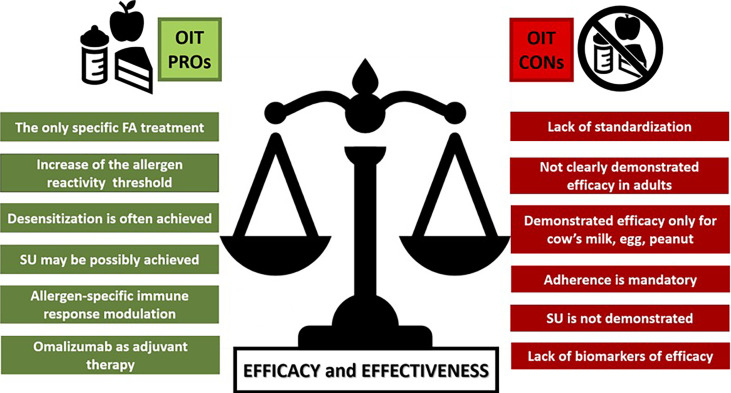
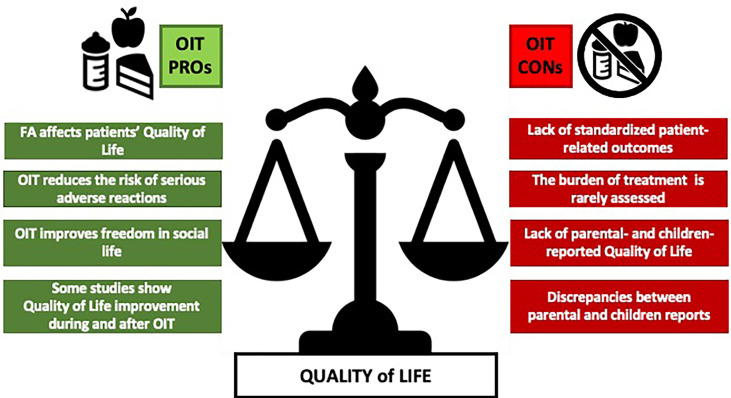
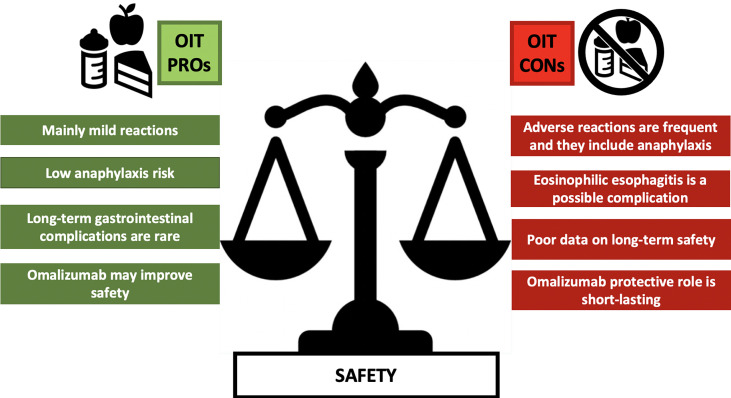
The prevalence of food allergy has increased in recent years, especially in children. Allergen avoidance, and drugs in case of an allergic reaction, remains the standard of care in food allergy. Nevertheless, increasing attention has been given to the possibility to treat food allergy, through immunotherapy, particularly oral immunotherapy (OIT). Several OIT protocols and clinical trials have been published. Most of them focus on children allergic to milk, egg, or peanut, although recent studies developed protocols for other foods, such as wheat and different nuts. OIT efficacy in randomized controlled trials is usually evaluated as the possibility for patients to achieve desensitization through the consumption of an increasing amount of a food allergen, while the issue of a possible long-term sustained unresponsiveness has not been completely addressed. Here, we evaluated current pediatric OIT knowledge, focusing on the results of clinical trials and current guidelines. Specifically, we wanted to highlight what is known in terms of OIT efficacy and effectiveness, safety, and impact on quality of life. For each aspect, we reported the pros and the cons, inferable from published literature. In conclusion, even though many protocols, reviews and meta-analysis have been published on this topic, pediatric OIT remains a controversial therapy and no definitive generalized conclusion may be drawn so far. It should be an option provided by specialized teams, when both patients and their families are prone to adhere to the proposed protocol. Efficacy, long-term effectiveness, possible role of adjuvant therapies, risk of severe reactions including anaphylaxis or eosinophilic esophagitis, and impact on the quality of life of both children and caregivers are all aspects that should be discussed before starting OIT. Future studies are needed to provide firm clinical and scientific evidence, which should also consider patient reported outcomes.
近年来,食物过敏的患病率有所增加,尤其是在儿童中。过敏原回避和过敏反应时的药物治疗仍然是食物过敏的标准治疗方法。然而,人们越来越关注通过免疫疗法,特别是口服免疫疗法(OIT)来治疗食物过敏的可能性。已经发表了几种 OIT 方案和临床试验。它们大多数都集中在对牛奶、鸡蛋或花生过敏的儿童上,尽管最近的研究已经制定了针对其他食物(如小麦和不同坚果)的方案。随机对照试验中 OIT 的疗效通常评估为患者通过食用越来越多的食物过敏原来实现脱敏的可能性,而长期持续无反应的问题尚未得到完全解决。在这里,我们评估了当前儿科 OIT 的知识,重点关注临床试验和当前指南的结果。具体来说,我们希望强调在 OIT 的疗效和有效性、安全性以及对生活质量的影响方面的已知内容。对于每个方面,我们从已发表的文献中报告了正反两方面的观点。总之,尽管已经发表了许多关于这个主题的方案、综述和荟萃分析,但儿科 OIT 仍然是一种有争议的治疗方法,到目前为止还没有得出明确的普遍结论。它应该是由专业团队提供的一种选择,前提是患者及其家属愿意遵守所提出的方案。疗效、长期有效性、辅助治疗的可能作用、包括过敏反应或嗜酸性食管炎在内的严重反应的风险,以及儿童和照顾者的生活质量的影响,都是在开始 OIT 之前应该讨论的方面。需要进一步的研究来提供确凿的临床和科学证据,这些证据还应考虑患者报告的结果。