Correia Wilson, Dorta-Guerra Roberto, Sanches Mitza, Almeida Semedo Carmen de Jesús Borges, Valladares Basilio, de Pina-Araújo Isabel Inês M, Carmelo Emma
Instituto Universitario de Enfermedades Tropicales y Salud Pública de Canarias, Universidad de La Laguna, La Laguna, Spain.
Departamento de Matemáticas, Estadística e Investigación Operativa, Facultad de Ciencias, Universidad de La Laguna, La Laguna, Spain.
Front Pediatr. 2021 Sep 28;9:716351. doi: 10.3389/fped.2021.716351. eCollection 2021.
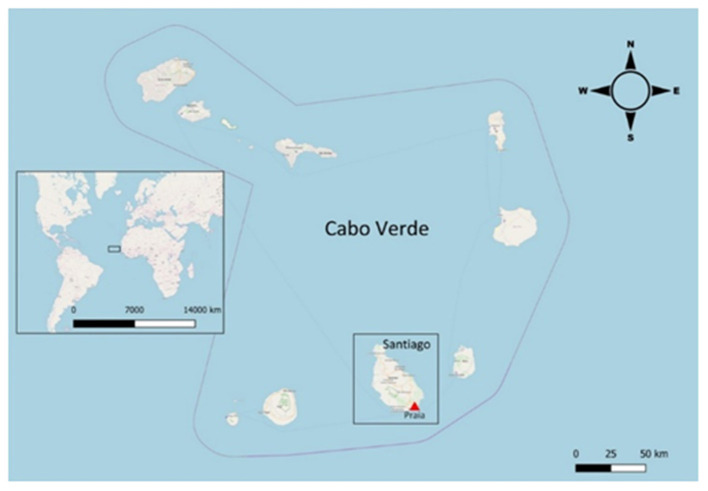
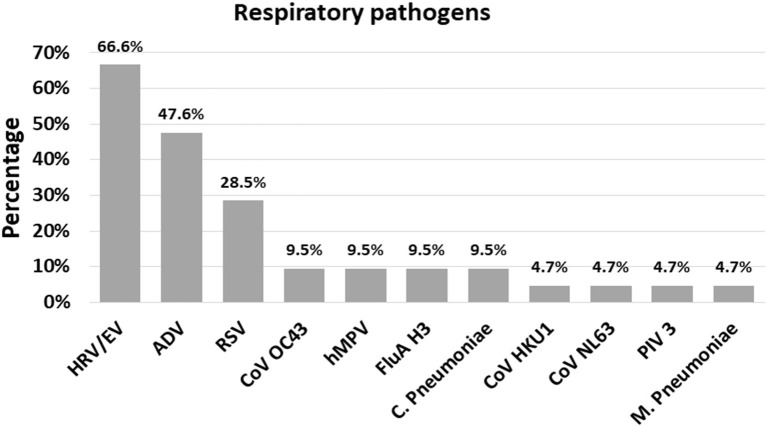
Acute respiratory infections are one of the major causes of morbidity and mortality in children under 5 years in developing countries and are a challenge for the health system of these countries. In Cabo Verde, despite the lack of recent studies, data indicate that it affects thousands of children, being the fourth leading cause of infant mortality in 2013. The aim of this study was to identify and describe the etiological agents associated with acute respiratory tract infections in children under 5 years old, and their associated risk factors, such as clinical symptoms or socio-demographic characteristics. Naso-pharyngeal samples were collected from children under 5 years attending at Dr. Agostinho Neto Hospital (Praia, Santiago Island, Cabo Verde) with suspected ARI at different time-points during 2019. Samples were analyzed using ® to identify etiological agents of ARI. A questionnaire with socio-demographic information was also collected for each participant. Data analyses were carried out using the IBM SPSS version 25 (IBM Corporation, Armonk, NY) and R 3.5.1 statistical software. A total of 129 naso-pharyngeal samples were included in the study. Seventeen different etiologic agents of respiratory infections were identified. HRV/EV was the most frequent agent detected, followed by FluA H3 and RSV. Coinfection with two or more pathogens was detected in up to 20% of positive samples. The results were analyzed in terms of age-group, sex, period of the year and other social and demographic factors. Viruses are the main causative agents of ARI in children <5 years attending at the pediatrics service at the Dr. Agostinho Neto Hospital in Praia city, Santiago Island, Cabo Verde. Some factors are described in this study as statistically associated with the presence of an infectious agent, such as having one or more children sharing the bedroom with an adult and the presence of some clinical symptoms. The data addresses the need for studies on respiratory tract infections in Cabo Verde.
急性呼吸道感染是发展中国家5岁以下儿童发病和死亡的主要原因之一,也是这些国家卫生系统面临的一项挑战。在佛得角,尽管缺乏近期研究,但数据表明,它影响着数千名儿童,是2013年婴儿死亡的第四大主要原因。本研究的目的是识别和描述5岁以下儿童急性呼吸道感染的病原体及其相关危险因素,如临床症状或社会人口学特征。2019年期间,在不同时间点从普拉亚市(圣地亚哥岛,佛得角)阿戈斯蒂纽·内托博士医院就诊的疑似急性呼吸道感染的5岁以下儿童中采集鼻咽样本。使用®对样本进行分析,以识别急性呼吸道感染的病原体。还为每位参与者收集了一份包含社会人口学信息的问卷。使用IBM SPSS 25版(IBM公司,纽约州阿蒙克)和R 3.5.1统计软件进行数据分析。该研究共纳入129份鼻咽样本。识别出17种不同的呼吸道感染病原体。人鼻病毒/肠道病毒是检测到的最常见病原体,其次是甲型H3流感病毒和呼吸道合胞病毒。在高达20%的阳性样本中检测到两种或更多病原体的合并感染。根据年龄组、性别、年份以及其他社会和人口因素对结果进行了分析。病毒是佛得角普拉亚市圣地亚哥岛阿戈斯蒂纽·内托博士医院儿科就诊的5岁以下儿童急性呼吸道感染的主要病原体。本研究描述了一些在统计学上与感染病原体存在相关的因素,如一个或多个孩子与成人共用卧室以及某些临床症状的出现。这些数据满足了佛得角呼吸道感染研究的需求。