Applied Tumor Genomics Research Program and Department of Oncology, Faculty of Medicine, University of Helsinki, Helsinki, Finland.
Cell Adhesion Unit, Division of Neuroscience, IRCSS San Raffaele Scientific Institute, San Raffaele Vita-Salute University, Milan, Italy.
Oncogene. 2021 Nov;40(46):6406-6416. doi: 10.1038/s41388-021-02048-1. Epub 2021 Oct 15.
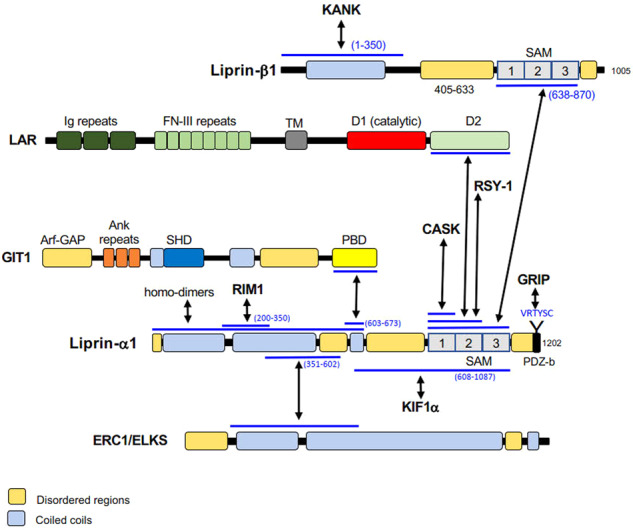
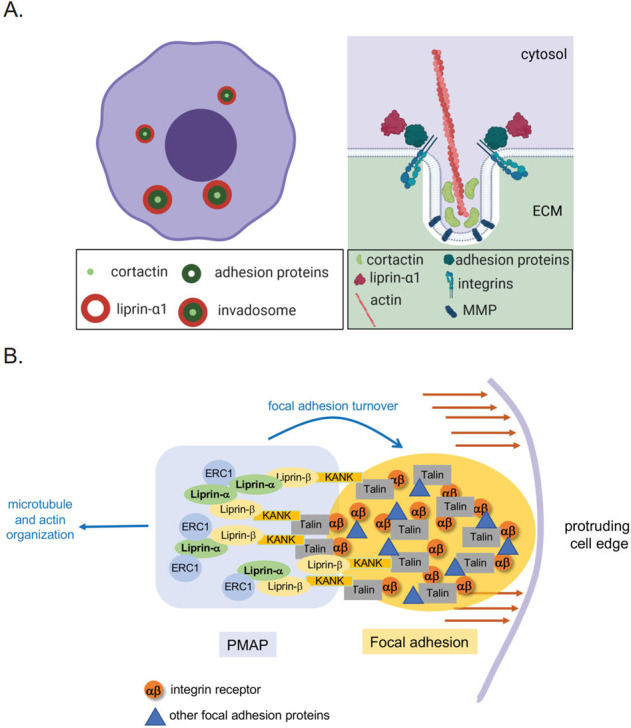
Liprins are a multifunctional family of scaffold proteins, identified by their involvement in several important neuronal functions related to signaling and organization of synaptic structures. More recently, the knowledge on the liprin family has expanded from neuronal functions to processes relevant to cancer progression, including cell adhesion, cell motility, cancer cell invasion, and signaling. These proteins consist of regions, which by prediction are intrinsically disordered, and may be involved in the assembly of supramolecular structures relevant for their functions. This review summarizes the current understanding of the functions of liprins in different cellular processes, with special emphasis on liprins in tumor progression. The available data indicate that liprins may be potential biomarkers for cancer progression and may have therapeutic importance.
脂联素是一类多功能支架蛋白家族,其参与多种与信号转导和突触结构组织相关的重要神经元功能而被鉴定。最近,脂联素家族的知识已经从神经元功能扩展到与癌症进展相关的过程,包括细胞黏附、细胞迁移、癌细胞侵袭和信号转导。这些蛋白质包含预测为固有无序的区域,可能参与组装与其功能相关的超分子结构。这篇综述总结了目前对脂联素在不同细胞过程中的功能的理解,特别强调了脂联素在肿瘤进展中的作用。现有数据表明,脂联素可能是癌症进展的潜在生物标志物,并具有治疗意义。