Reference Center for Neuromuscular Disorders and ALS, CHU La Timone, Marseille, France.
Department of Neurology, Medical Park Bad Feilnbach, Bad Feilnbach, Germany.
Orphanet J Rare Dis. 2021 Oct 16;16(1):433. doi: 10.1186/s13023-021-02040-8.
Charcot-Marie-Tooth disease type 1A (CMT1A) is a rare, orphan, hereditary neuromuscular disorder with no cure and for which only symptomatic treatment is currently available. A previous phase 2 trial has shown preliminary evidence of efficacy for PXT3003 in treating CMT1A. This phase 3, international, randomized, double-blind, placebo-controlled study further investigated the efficacy and safety of high- or low-dose PXT3003 (baclofen/naltrexone/D-sorbitol [mg]: 6/0.70/210 or 3/0.35/105) in treating subjects with mild to moderate CMT1A.
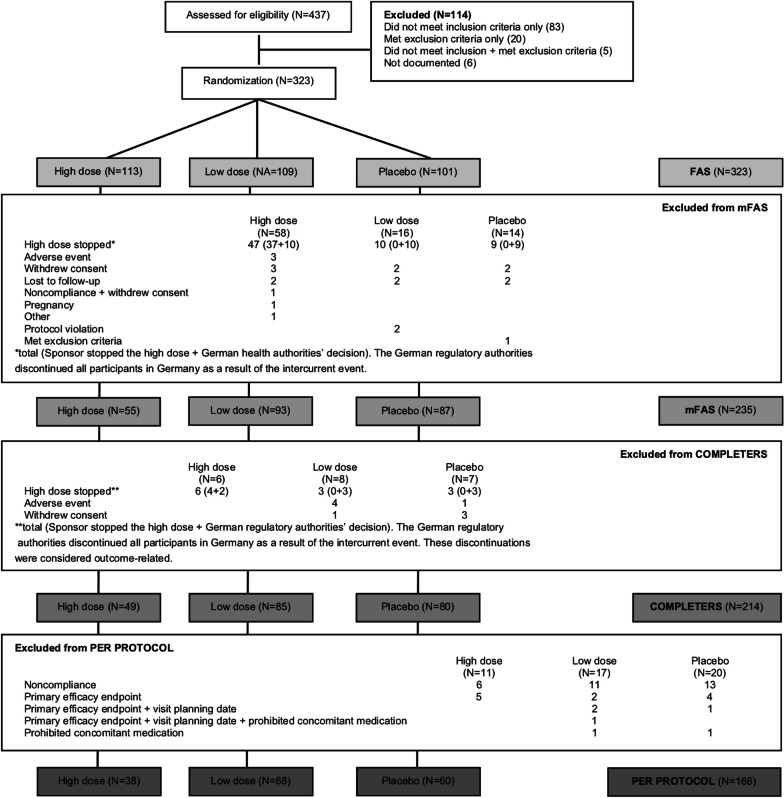
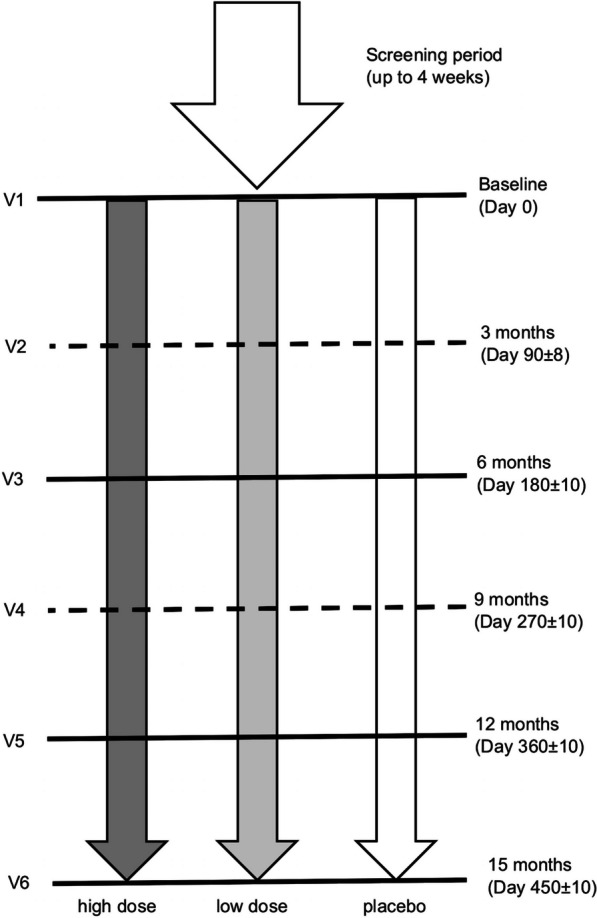
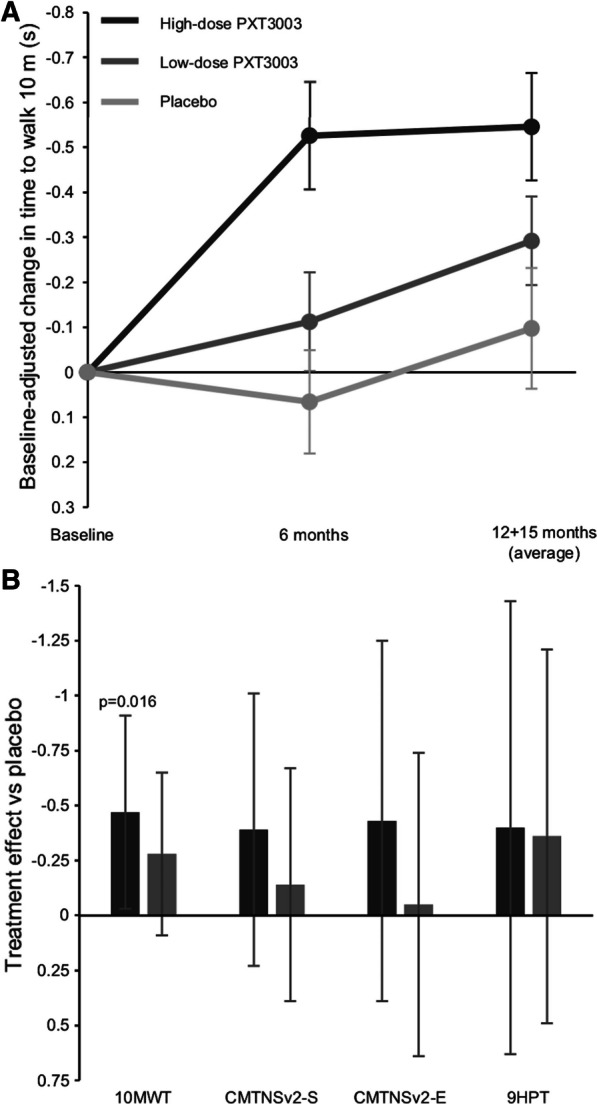
In this study, 323 subjects with mild-to-moderate CMT1A were randomly assigned in a 1:1:1 ratio to receive 5 mL of high- or low-dose PXT3003, or placebo, orally twice daily for up to 15 months. Efficacy was assessed using the change in Overall Neuropathy Limitations Scale total score from baseline to months 12 and 15 (primary endpoint). Secondary endpoints included the 10-m walk test and other assessments. The high-dose group was discontinued early due to unexpected crystal formation in the high-dose formulation, which resulted in an unanticipated high discontinuation rate, overall and especially in the high-dose group. The statistical analysis plan was adapted to account for the large amount of missing data before database lock, and a modified full analysis set was used in the main analyses. Two sensitivity analyses were performed to check the interpretation based on the use of the modified full analysis set.
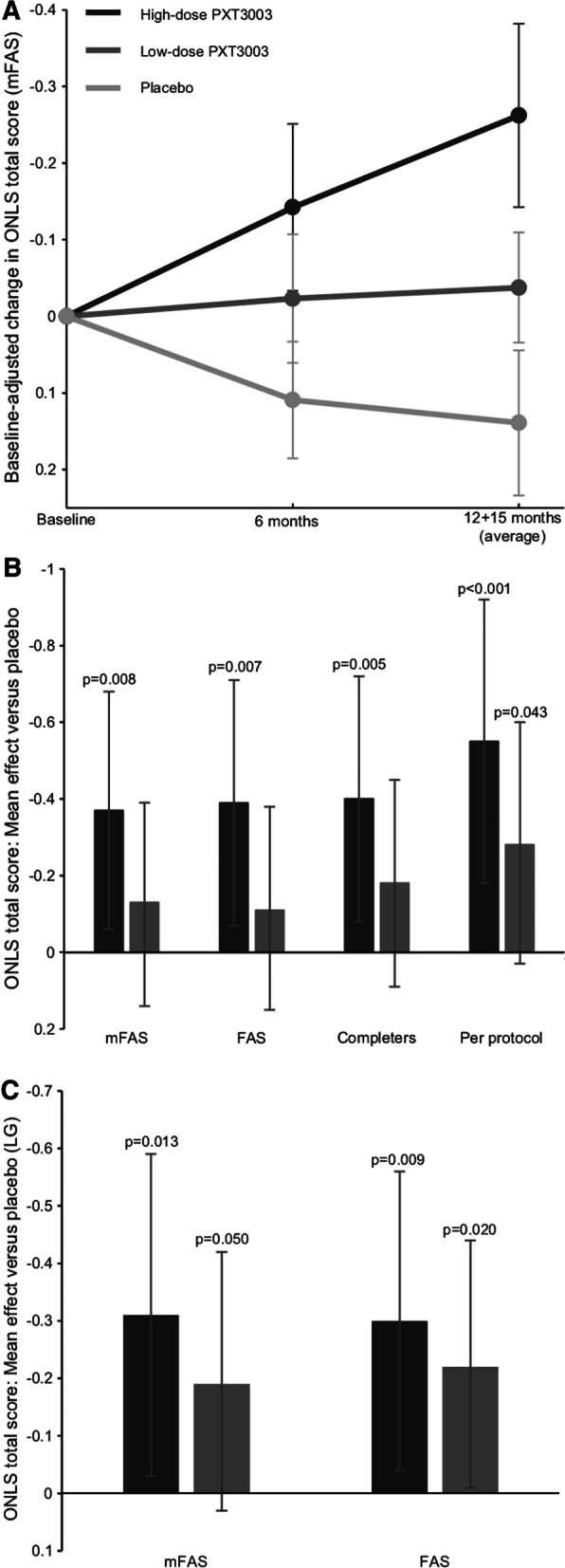
High-dose PXT3003 demonstrated significant improvement in the Overall Neuropathy Limitations Scale total score vs placebo (mean difference: - 0.37 points; 97.5% CI [- 0.68 to - 0.06]; p = 0.008), and consistent treatment effects were shown in the sensitivity analyses. Both PXT3003 doses were safe and well-tolerated.
The high-dose group demonstrated a statistically significant improvement in the primary endpoint and a good safety profile. Overall, high-dose PXT3003 is a promising treatment option for patients with Charcot-Marie-Tooth disease type 1A.
Charcot-Marie-Tooth 病 1A 型(CMT1A)是一种罕见的、孤儿的遗传性神经肌肉疾病,目前尚无治愈方法,仅可对症治疗。一项先前的 2 期试验已经证明 PXT3003 治疗 CMT1A 的初步疗效。这项 3 期、国际性、随机、双盲、安慰剂对照研究进一步调查了高剂量或低剂量 PXT3003(巴氯芬/纳曲酮/D-山梨醇[mg]:6/0.70/210 或 3/0.35/105)治疗轻度至中度 CMT1A 患者的疗效和安全性。
在这项研究中,323 名轻度至中度 CMT1A 患者以 1:1:1 的比例随机分配,每天口服两次接受高剂量或低剂量 PXT3003 或安慰剂治疗,为期长达 15 个月。主要终点是从基线到 12 个月和 15 个月时总神经病变限制量表(Overall Neuropathy Limitations Scale)总分的变化。次要终点包括 10 米步行测试和其他评估。由于高剂量制剂中出现意外结晶,高剂量组提前停药,导致停药率异常高,尤其是在高剂量组。在数据库锁定之前,根据大量缺失数据调整了统计分析计划,并在主要分析中使用了修改后的全分析集。进行了两次敏感性分析,以检查基于使用修改后的全分析集的解释。
高剂量 PXT3003 与安慰剂相比,总神经病变限制量表总分显著改善(平均差异:-0.37 分;97.5%置信区间[-0.68 至-0.06];p=0.008),且在敏感性分析中显示出一致的治疗效果。两种 PXT3003 剂量均安全且耐受良好。
高剂量组在主要终点显示出统计学上的显著改善,且安全性良好。总体而言,高剂量 PXT3003 是治疗 CMT1A 患者的一种有前途的治疗选择。