Department of Medical Laboratory Science, Faculty of Health Sciences & Technology, Nnamdi Azikiwe University, Nnewi, Nigeria.
Department of Obstetrics and Gynaecology, Nnamdi Azikiwe University Teaching Hospital, Nnewi, Nigeria.
Front Cell Infect Microbiol. 2021 Oct 1;11:709372. doi: 10.3389/fcimb.2021.709372. eCollection 2021.
Bacterial infections are usually suspected in infertile couples seeking IVF with no clear understanding of the microbial compositions present in the seminal fluids and vaginal niche of the patients. We used next-generation sequencing technology to correlate microbiota compositions with IVF clinical outcomes.
Thirty-six couples were recruited to provide seminal fluids and vaginal swabs. Bacterial DNA was extracted, and V4 region of the 16S rRNA was amplified and sequenced in a pair-end configuration on the Illumina MiSeq platform rendering 2 × 150 bp sequences. Microbial taxonomy to species level was generated using the Greengenes database. Linear discriminant analysis (LDA) effect size (LEfSe) was used to identify biologically and statistically significant differences in relative abundance.
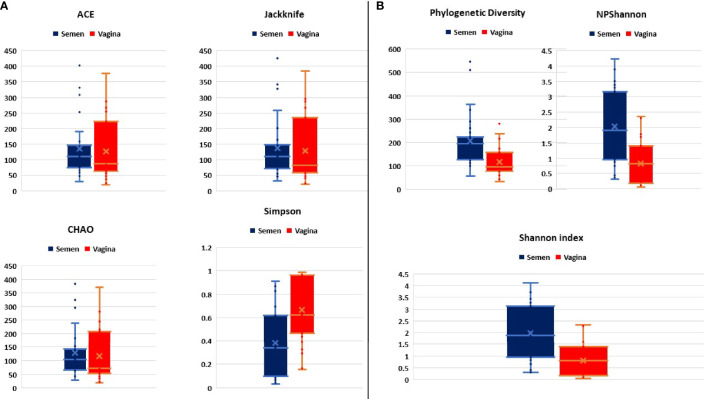
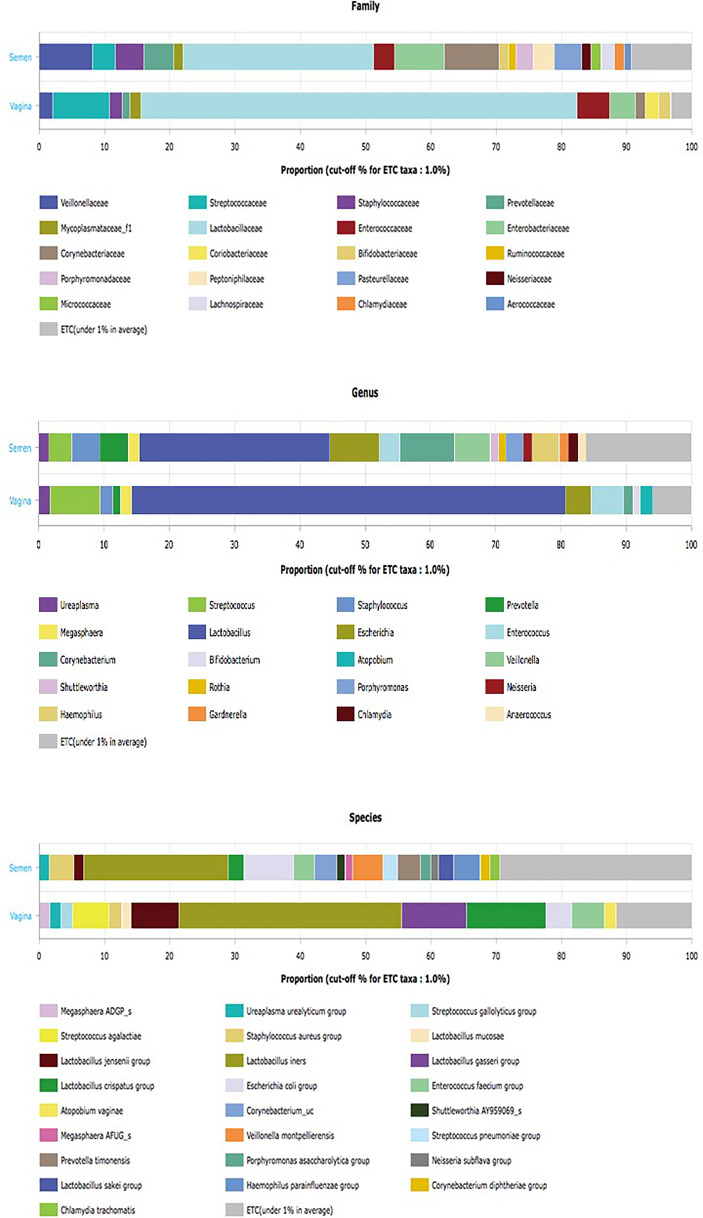
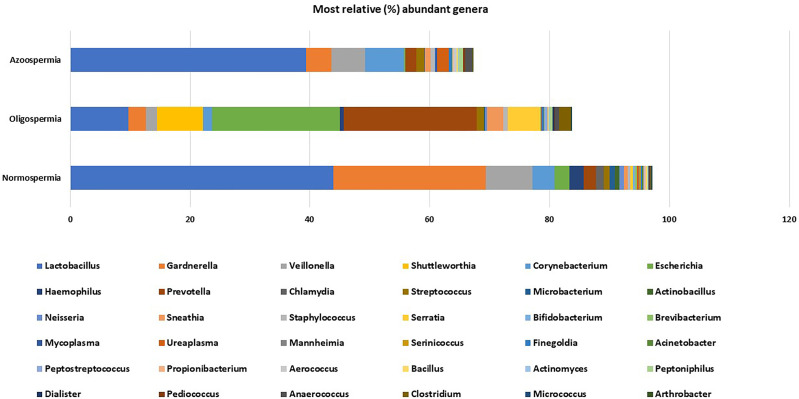
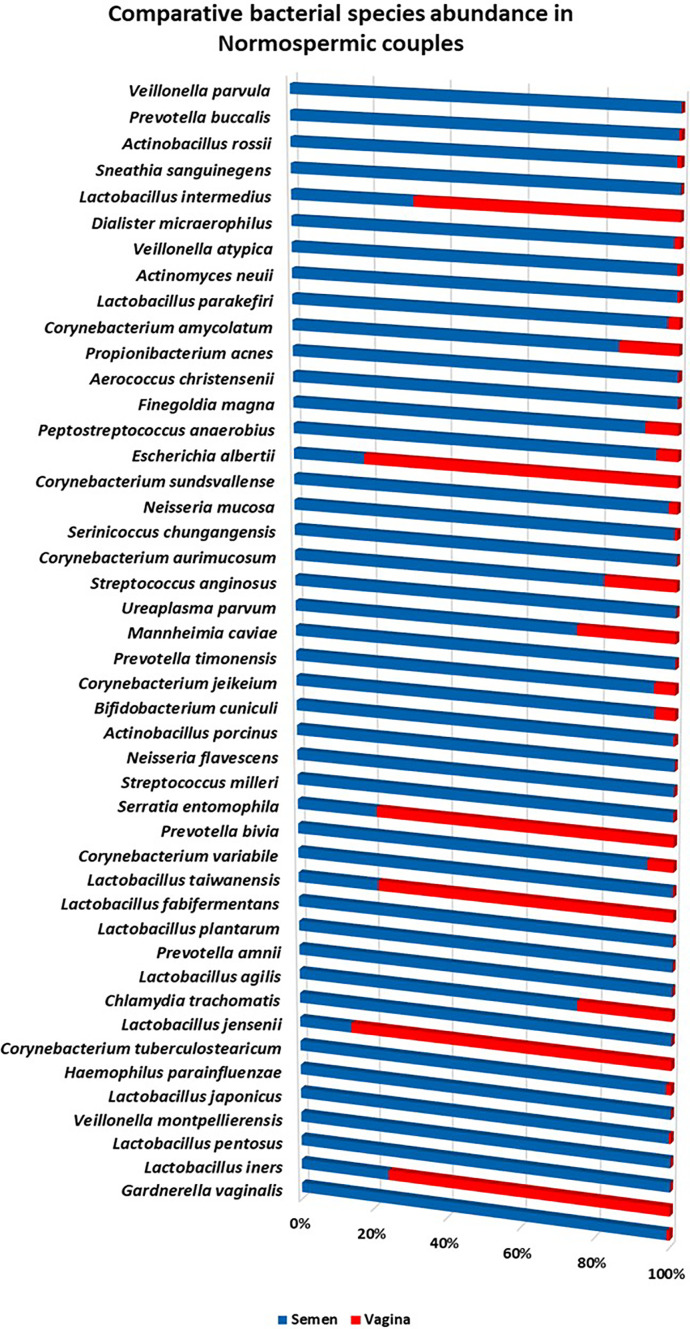
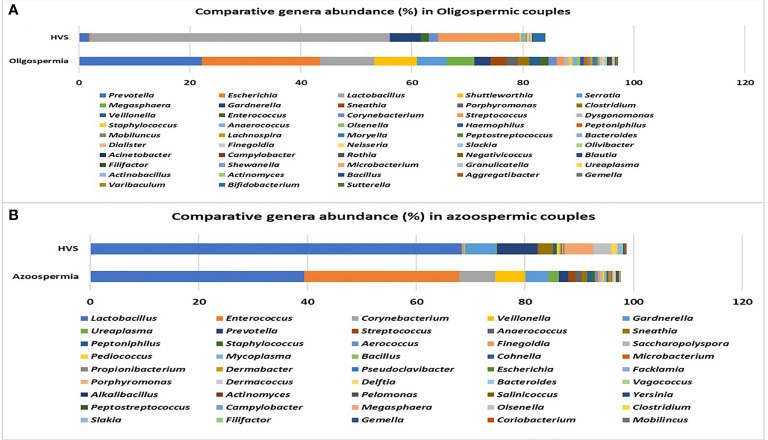
Seminal fluid microbiota compositions had lower bacterial concentrations compared with the vagina, but species diversity was significantly higher in seminal fluid samples. Azoospermic subjects had more relative abundance of and In Normospermic semen, (43.86%) was the most abundant, followed by (25.45%), while the corresponding vaginal samples, (61.74%) was the most abundant, followed by (6.07%) and (5.86%).
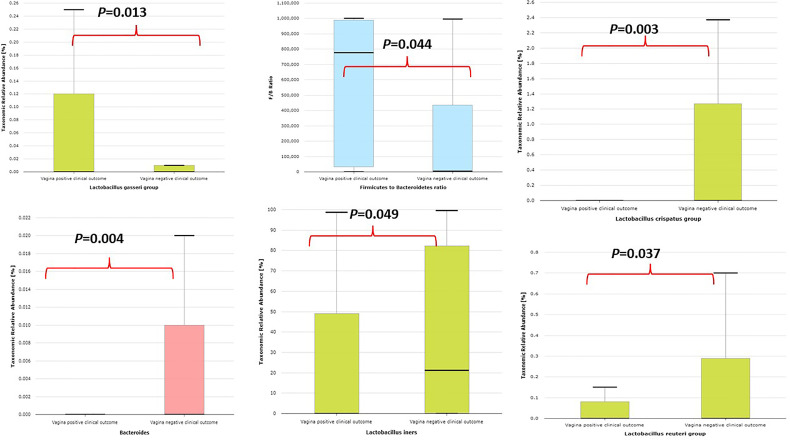
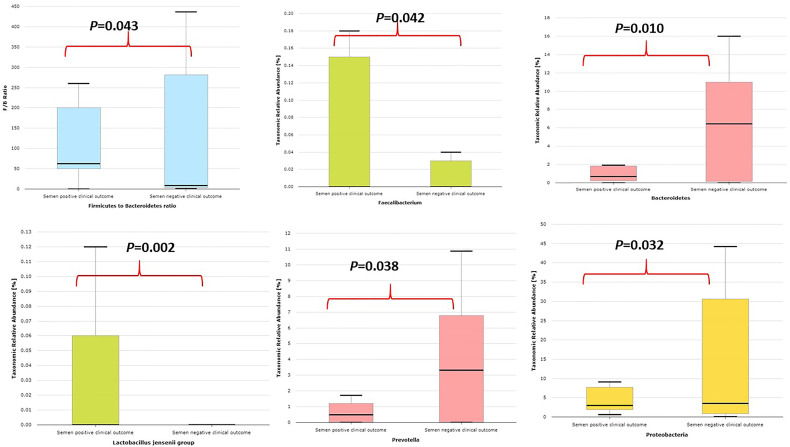
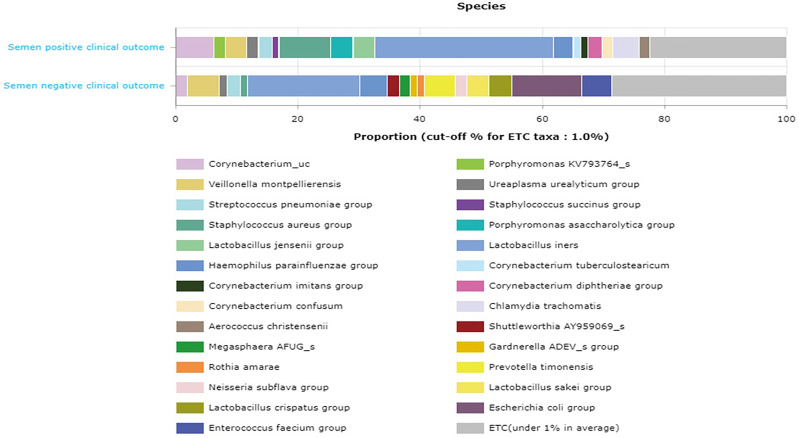
Semen samples with positive IVF were significantly colonized by (=0.002), (=0.042) and significantly less colonized by , , , and lower / ratio compared with semen samples with negative IVF. Vaginal samples with positive IVF clinical outcome were significantly colonized by , less colonized by and This study has opened a window of possibility for replenishments in men and women before IVF treatment.
对于不明原因不孕的夫妇,在进行 IVF 治疗前,通常怀疑有细菌感染,但对于患者精液和阴道微生态中的微生物组成了解甚少。本研究采用下一代测序技术,分析微生物组与 IVF 临床结局的相关性。
招募 36 对夫妇提供精液和阴道拭子标本。提取细菌 DNA,采用 Illumina MiSeq 平台进行 16S rRNA V4 区扩增和双端测序,获得 2×150bp 序列。基于 Greengenes 数据库进行微生物分类学分析,以物种水平鉴定。采用线性判别分析(LDA)效应量(LEfSe)分析相对丰度的生物学和统计学差异。
与阴道相比,精液中的细菌浓度较低,但物种多样性显著较高。非梗阻性无精子症患者的 和 相对丰度较高。在正常精子中, (43.86%)丰度最高,其次是 (25.45%),而相应的阴道样本中, (61.74%)丰度最高,其次是 (6.07%)和 (5.86%)。
与 IVF 阴性的精液相比,IVF 阳性的精液样本中 (=0.002)、 (=0.042)的相对丰度显著较高, (=0.000)、 (=0.000)、 (=0.001)和 (=0.001)的相对丰度显著较低, / 比值也显著较低。IVF 阳性的阴道样本中 (=0.000)的相对丰度显著较高, (=0.000)和 (=0.001)的相对丰度显著较低。本研究为 IVF 治疗前男性和女性的 补充提供了新的思路。