Department of Disease Control, Faculty of Infectious and Tropical Diseases, London School of Hygiene and Tropical Medicine, London, United Kingdom.
School of Tropical Medicine and Global Health, University of Nagasaki, Nagasaki, Japan.
Microbiol Spectr. 2021 Oct 31;9(2):e0015721. doi: 10.1128/Spectrum.00157-21. Epub 2021 Oct 20.
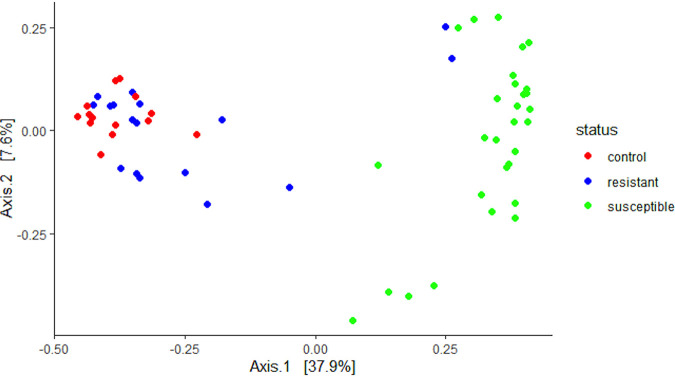
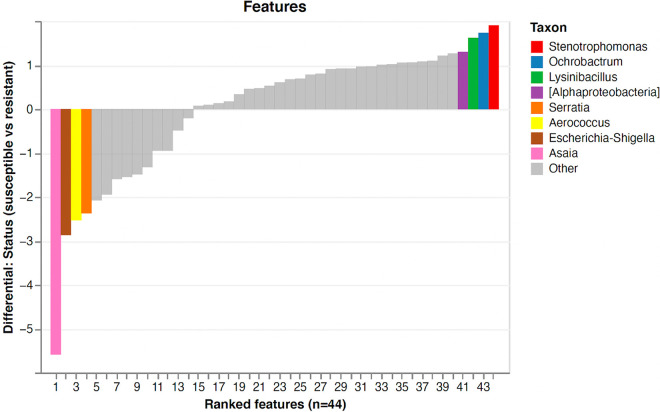
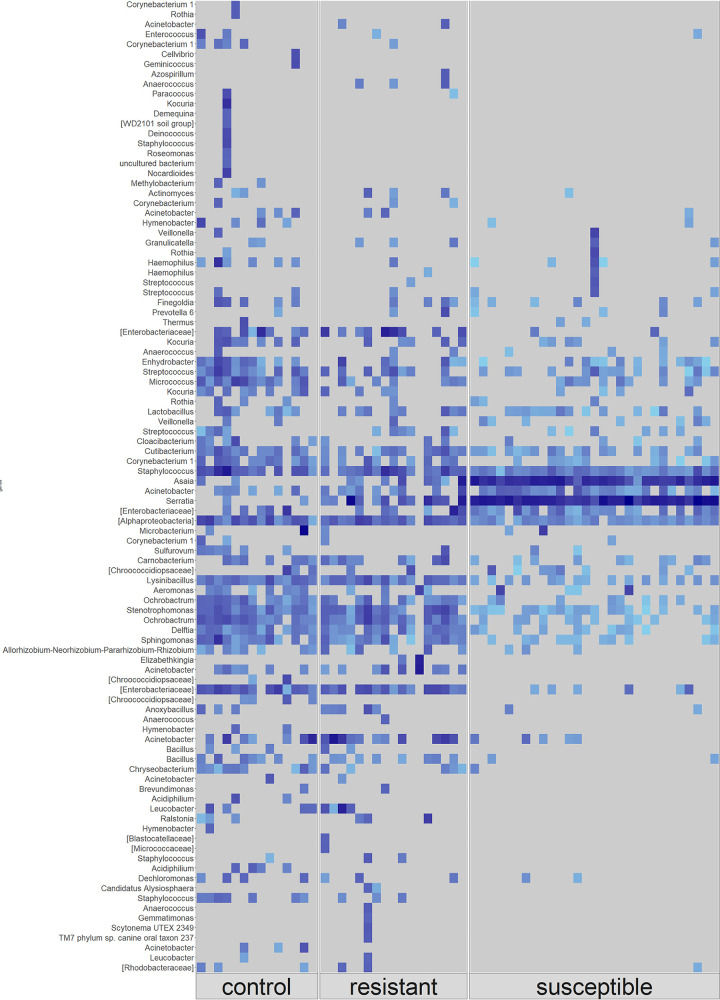
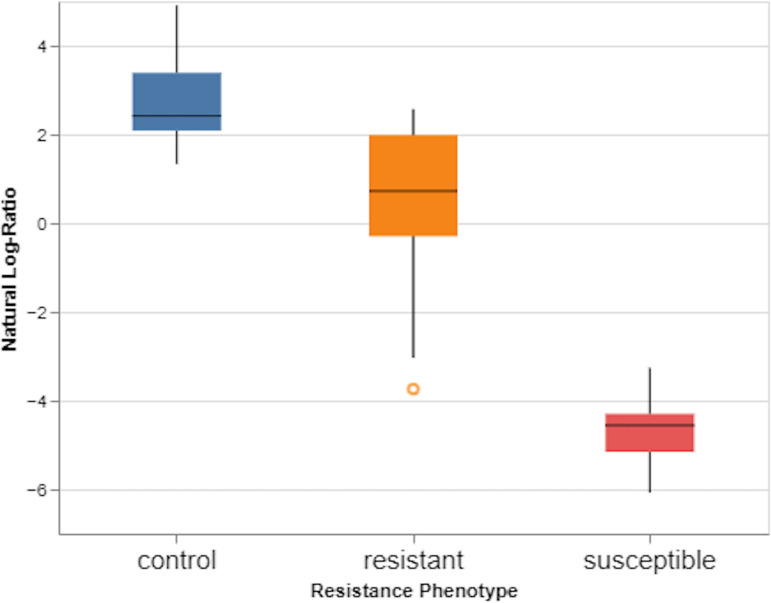
Insecticide resistance among mosquito species is now a pervasive phenomenon that threatens to jeopardize global malaria vector control efforts. Evidence of links between the mosquito microbiota and insecticide resistance is emerging, with significant enrichment of insecticide degrading bacteria and enzymes in resistant populations. Using 16S rRNA amplicon sequencing, we characterized and compared the microbiota of Anopheles coluzzii in relation to their deltamethrin resistance and exposure profiles. Comparisons between 2- and 3-day-old deltamethrin-resistant and -susceptible mosquitoes demonstrated significant differences in microbiota diversity. , , and genera, each of which comprised insecticide-degrading species, were significantly enriched in resistant mosquitoes. Susceptible mosquitoes had a significant reduction in alpha diversity compared to resistant individuals, with and dominating microbial profiles. There was no significant difference in deltamethrin-exposed and -unexposed 5- to 6-day-old individuals, suggesting that insecticide exposure had minimal impact on microbial composition. and were also dominant in 5- to 6-day-old mosquitoes, which had reduced microbial diversity compared to 2- to 3-day-old mosquitoes. Our findings revealed significant alterations of Anopheles coluzzii microbiota associated with deltamethrin resistance, highlighting the potential for identification of novel microbial markers for insecticide resistance surveillance. qPCR detection of and was consistent with 16S rRNA sequencing, suggesting that population-level field screening of bacterial microbiota may be feasibly integrated into wider resistance monitoring, if reliable and reproducible markers associated with phenotype can be identified. Control of insecticide-resistant vector populations remains a significant challenge to global malaria control and while substantial progress has been made elucidating key target site mutations, overexpressed detoxification enzymes and alternate gene families, the contribution of the mosquito microbiota to phenotypic insecticide resistance has been largely overlooked. We focused on determining the effects of deltamethrin resistance intensity on Anopheles coluzzii microbiota and identifying any microbial taxa associated with phenotype. We demonstrated a significant reduction in microbial diversity between deltamethrin-resistant and -susceptible mosquitoes. Insecticide degrading bacterial species belonging to , , and genera were significantly enriched in resistant mosquitoes, while and dominated microbial profiles of susceptible individuals. Our results revealed significant alterations of Anopheles coluzzii microbiota associated with deltamethrin resistance, highlighting the potential for identification of novel microbial markers for surveillance and opportunities for designing innovative control techniques to prevent the further evolution and spread of insecticide resistance.
目前,蚊子对杀虫剂的抗药性是一种普遍存在的现象,这威胁到了全球疟疾媒介控制工作。越来越多的证据表明,蚊子的微生物组与杀虫剂抗药性之间存在联系,在具有抗药性的种群中,杀虫剂降解细菌和酶的丰度显著增加。本研究通过 16S rRNA 扩增子测序,对与拟除虫菊酯抗药性和暴露情况相关的库蚊属(Anopheles coluzzii)微生物组进行了特征描述和比较。对 2-3 龄拟除虫菊酯抗性和敏感蚊子的比较表明,微生物组多样性存在显著差异。 , , 和 属,其中每个属都包含有杀虫剂降解能力的物种,在抗性蚊子中显著富集。与抗性个体相比,敏感蚊子的α多样性显著降低, 和 主导着微生物组。5-6 龄未接触和接触拟除虫菊酯的个体之间没有显著差异,这表明杀虫剂暴露对微生物组成的影响很小。 和 也在 5-6 龄蚊子中占主导地位,与 2-3 龄蚊子相比,它们的微生物多样性降低。本研究结果揭示了与拟除虫菊酯抗药性相关的库蚊属微生物组的显著变化,强调了识别新型微生物标记物进行杀虫剂抗药性监测的潜力。qPCR 检测 和 与 16S rRNA 测序结果一致,这表明如果能够识别与表型相关的可靠且可重复的标记物,则可以将细菌微生物组的种群水平现场筛选切实纳入更广泛的抗药性监测中。控制具有抗药性的媒介种群仍然是全球疟疾控制的重大挑战,虽然在阐明关键靶标基因突变、过度表达的解毒酶和替代基因家族方面已经取得了相当大的进展,但蚊子微生物组对表型杀虫剂抗药性的贡献在很大程度上被忽视了。本研究重点确定了拟除虫菊酯抗性强度对库蚊属微生物组的影响,并确定了与表型相关的任何微生物分类群。本研究表明,拟除虫菊酯抗性和敏感蚊子之间的微生物多样性显著降低。属于 , , 和 属的杀虫剂降解细菌物种在抗性蚊子中显著富集,而 和 则主导着敏感个体的微生物组。本研究结果揭示了与拟除虫菊酯抗药性相关的库蚊属微生物组的显著变化,强调了识别新型微生物标记物进行监测的潜力,并为设计创新的控制技术以防止杀虫剂抗药性的进一步进化和传播提供了机会。