Département Génomes et Génétique, Institut Pasteur, UMR3525, CNRS, Unité Plasticité du Génome Bactérien, Paris, France.
Sorbonne Université, Collège doctoral, F-75005 Paris, France.
PLoS Genet. 2021 Oct 20;17(10):e1009748. doi: 10.1371/journal.pgen.1009748. eCollection 2021 Oct.
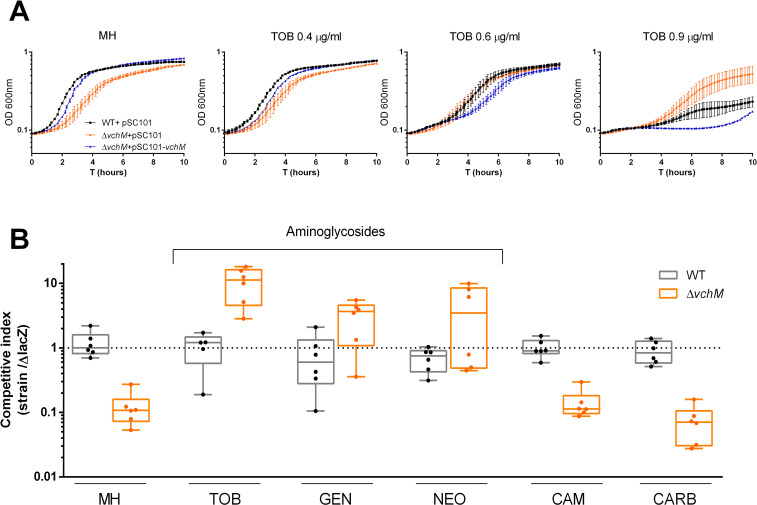
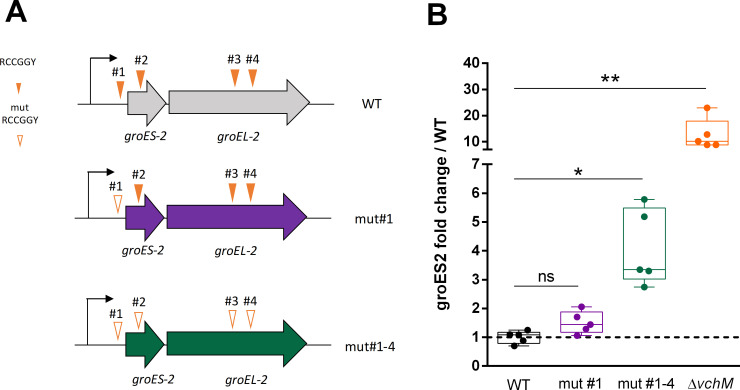
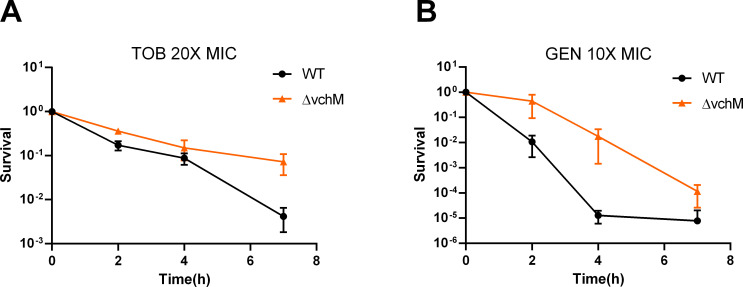
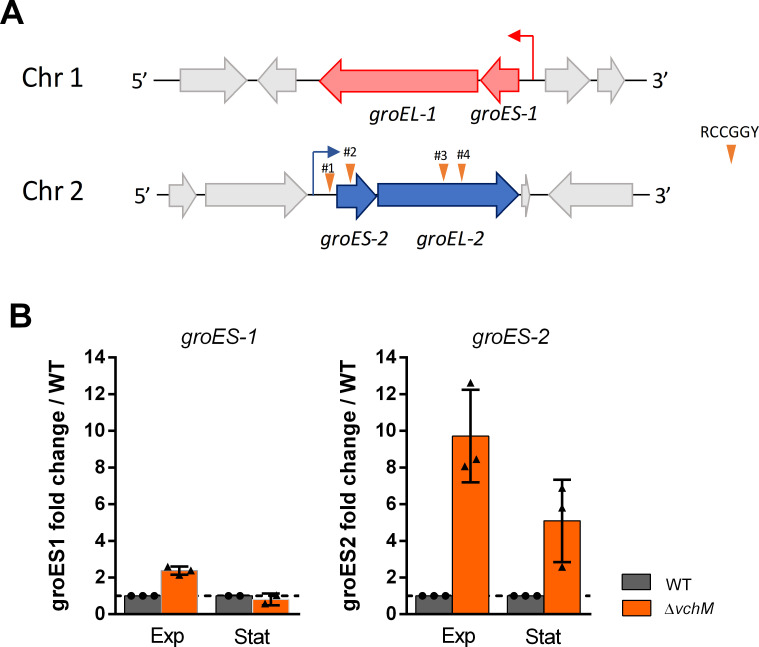
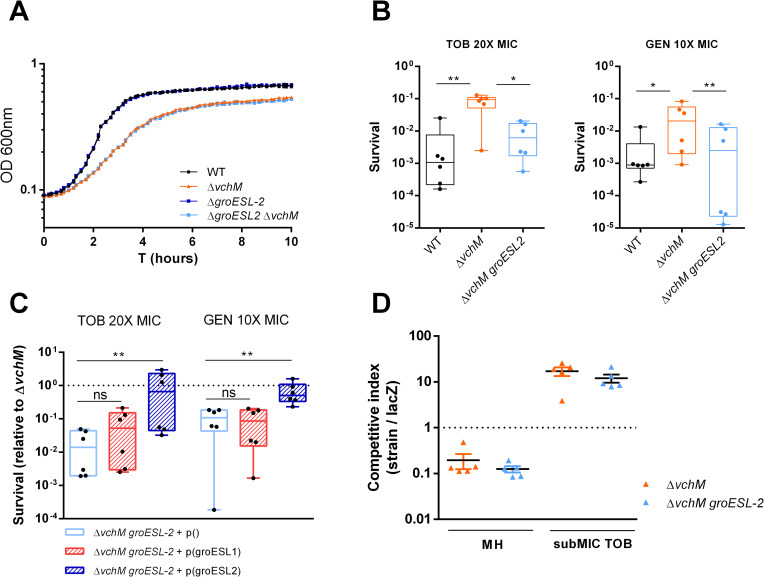
Antibiotic resistance has become a major global issue. Understanding the molecular mechanisms underlying microbial adaptation to antibiotics is of keen importance to fight Antimicrobial Resistance (AMR). Aminoglycosides are a class of antibiotics that target the small subunit of the bacterial ribosome, disrupting translational fidelity and increasing the levels of misfolded proteins in the cell. In this work, we investigated the role of VchM, a DNA methyltransferase, in the response of the human pathogen Vibrio cholerae to aminoglycosides. VchM is a V. cholerae specific orphan m5C DNA methyltransferase that generates cytosine methylation at 5'-RCCGGY-3' motifs. We show that deletion of vchM, although causing a growth defect in absence of stress, allows V. cholerae cells to cope with aminoglycoside stress at both sub-lethal and lethal concentrations of these antibiotics. Through transcriptomic and genetic approaches, we show that groESL-2 (a specific set of chaperonin-encoding genes located on the second chromosome of V. cholerae), are upregulated in cells lacking vchM and are needed for the tolerance of vchM mutant to lethal aminoglycoside treatment, likely by fighting aminoglycoside-induced misfolded proteins. Interestingly, preventing VchM methylation of the four RCCGGY sites located in groESL-2 region, leads to a higher expression of these genes in WT cells, showing that the expression of these chaperonins is modulated in V. cholerae by DNA methylation.
抗生素耐药性已成为一个全球性的重大问题。了解微生物对抗生素产生适应性的分子机制对于对抗抗生素耐药性(AMR)至关重要。氨基糖苷类是一类靶向细菌核糖体小亚基的抗生素,破坏翻译保真度并增加细胞内错误折叠蛋白的水平。在这项工作中,我们研究了 DNA 甲基转移酶 VchM 在人类病原体霍乱弧菌对氨基糖苷类药物的反应中的作用。VchM 是一种霍乱弧菌特异性孤儿 m5C DNA 甲基转移酶,可在 5'-RCCGGY-3' 基序处生成胞嘧啶甲基化。我们表明,尽管 vchM 的缺失在没有压力的情况下会导致生长缺陷,但它允许霍乱弧菌细胞在亚致死和致死浓度的这些抗生素下应对氨基糖苷类药物的压力。通过转录组学和遗传方法,我们表明 groESL-2(一组位于霍乱弧菌第二染色体上的特定伴侣素编码基因)在缺乏 vchM 的细胞中上调,并且需要 vchM 突变体对致死性氨基糖苷类药物治疗的耐受性,可能是通过对抗氨基糖苷类药物诱导的错误折叠蛋白。有趣的是,防止 VchM 对位于 groESL-2 区域的四个 RCCGGY 位点进行甲基化,会导致 WT 细胞中这些基因的表达更高,表明这些伴侣素在霍乱弧菌中的表达受 DNA 甲基化调节。