Parvu Valentin, Gary Devin S, Mann Joseph, Lin Yu-Chih, Mills Dorsey, Cooper Lauren, Andrews Jeffrey C, Manabe Yukari C, Pekosz Andrew, Cooper Charles K
Becton, Dickinson and Company, BD Life Sciences-Integrated Diagnostic Solutions, Sparks, MD, United States.
W. Harry Feinstone Department of Molecular Microbiology and Immunology, Johns Hopkins Bloomberg School of Public Health, Baltimore, MD, United States.
Front Microbiol. 2021 Oct 5;12:714242. doi: 10.3389/fmicb.2021.714242. eCollection 2021.
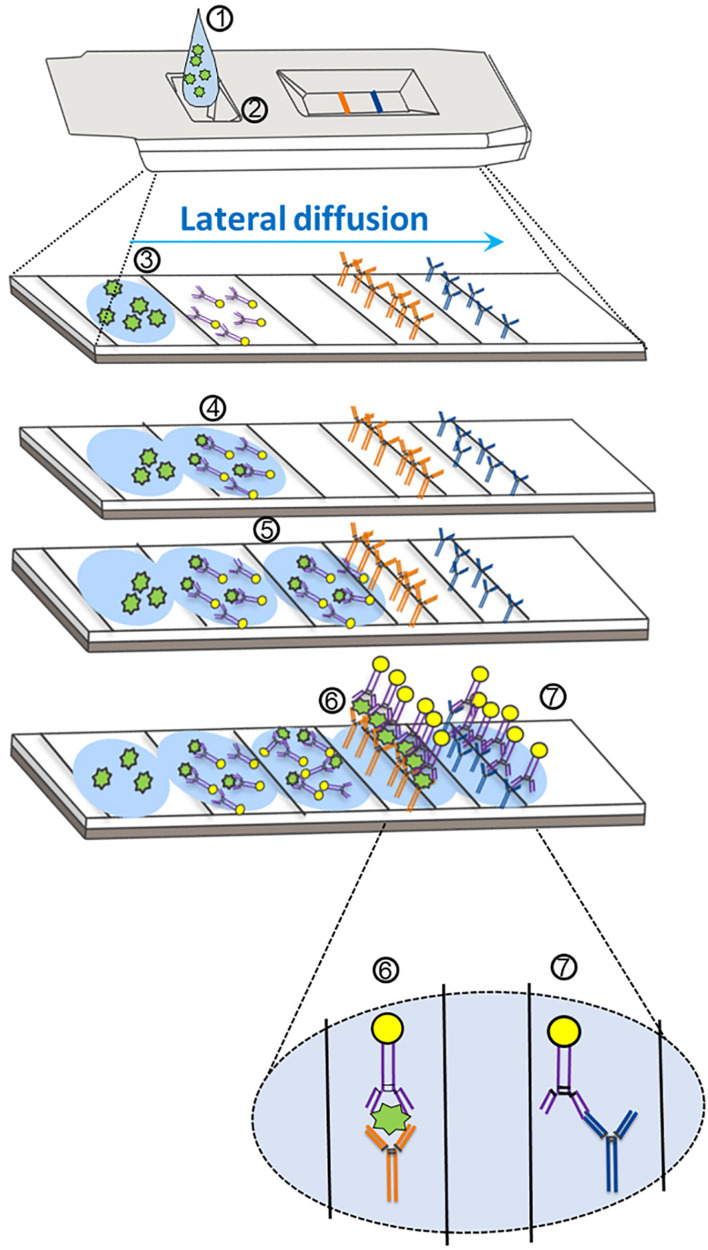
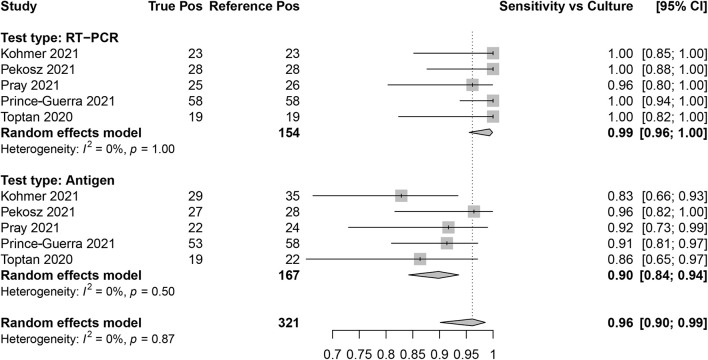
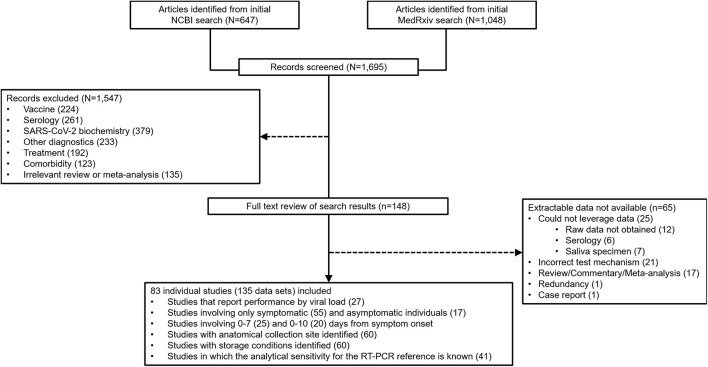
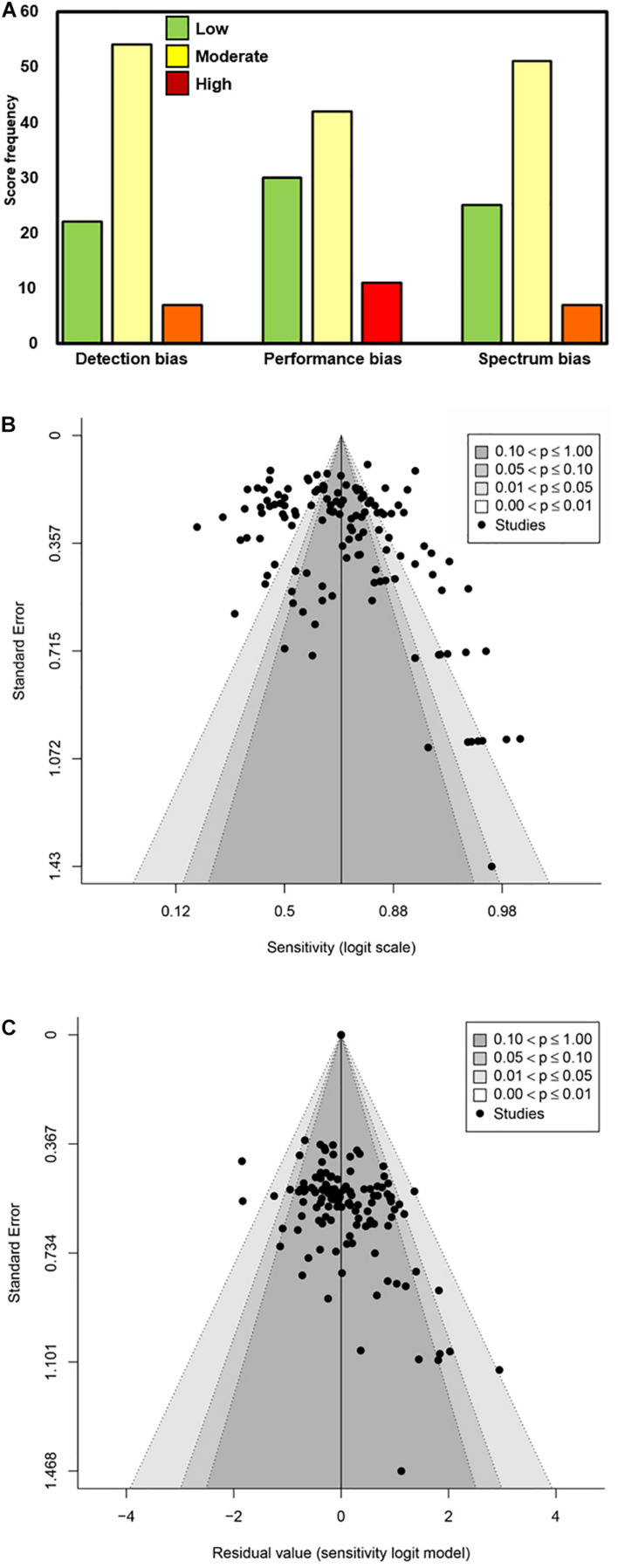
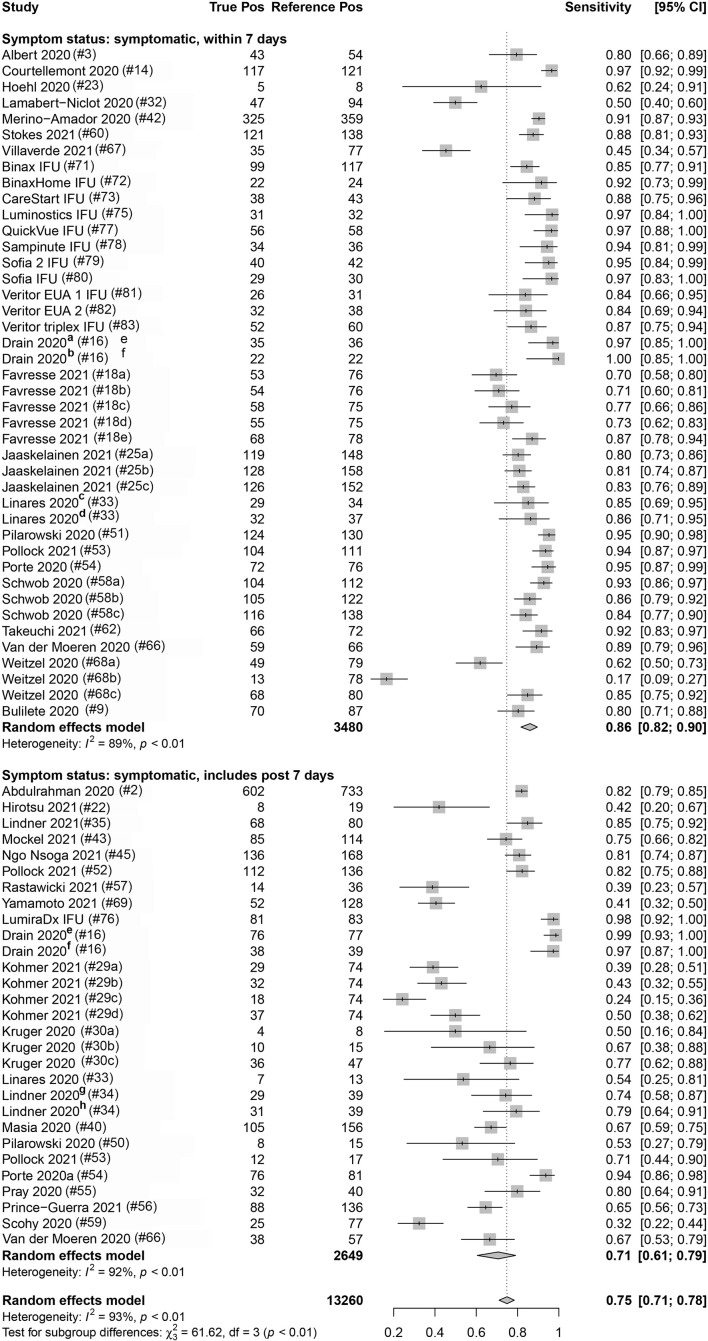
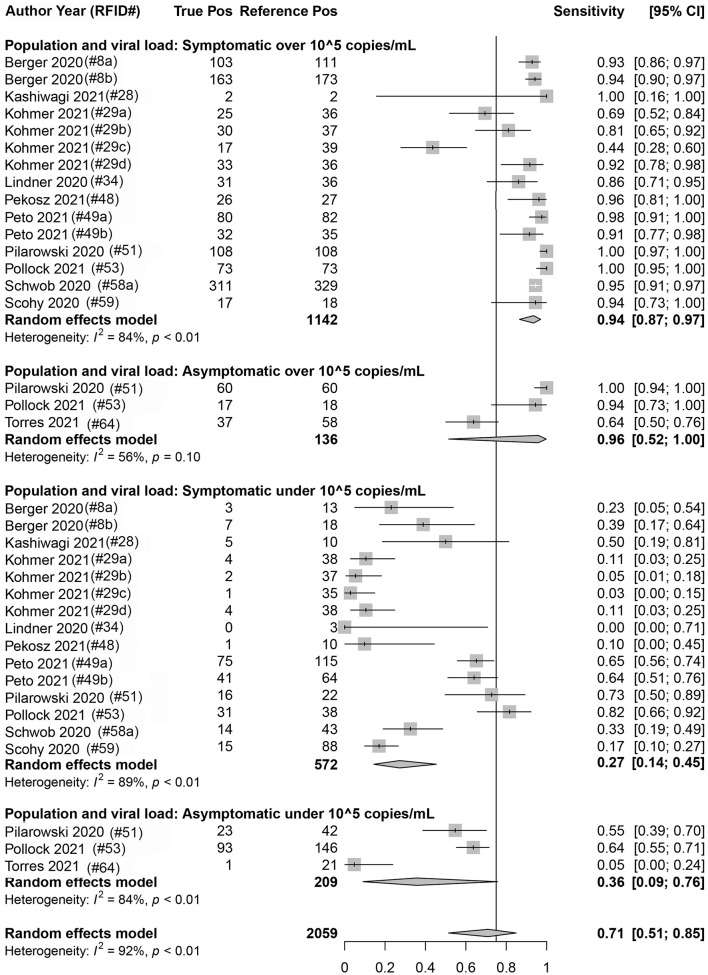
Tests that detect the presence of severe acute respiratory syndrome coronavirus-2 (SARS-CoV-2) antigen in clinical specimens from the upper respiratory tract can provide a rapid means of coronavirus disease 2019 (COVID-19) diagnosis and help identify individuals who may be infectious and should isolate to prevent SARS-CoV-2 transmission. This systematic review assesses the diagnostic accuracy of SARS-CoV-2 antigen detection in COVID-19 symptomatic and asymptomatic individuals compared to quantitative reverse transcription polymerase chain reaction (RT-qPCR) and summarizes antigen test sensitivity using meta-regression. In total, 83 studies were included that compared SARS-CoV-2 rapid antigen-based lateral flow testing (RALFT) to RT-qPCR for SARS-CoV-2. Generally, the quality of the evaluated studies was inconsistent; nevertheless, the overall sensitivity for RALFT was determined to be 75.0% (95% confidence interval: 71.0-78.0). Additionally, RALFT sensitivity was found to be higher for symptomatic vs. asymptomatic individuals and was higher for a symptomatic population within 7 days from symptom onset compared to a population with extended days of symptoms. Viral load was found to be the most important factor for determining SARS-CoV-2 antigen test sensitivity. Other design factors, such as specimen storage and anatomical collection type, also affect the performance of RALFT. RALFT and RT-qPCR testing both achieve high sensitivity when compared to SARS-CoV-2 viral culture.
检测上呼吸道临床标本中是否存在严重急性呼吸综合征冠状病毒2(SARS-CoV-2)抗原的检测方法,可为2019冠状病毒病(COVID-19)提供快速诊断手段,并有助于识别可能具有传染性、应进行隔离以防止SARS-CoV-2传播的个体。本系统评价评估了与定量逆转录聚合酶链反应(RT-qPCR)相比,SARS-CoV-2抗原检测在有症状和无症状COVID-19个体中的诊断准确性,并使用meta回归总结抗原检测的敏感性。总共纳入了83项将基于SARS-CoV-2快速抗原的侧向流动检测(RALFT)与SARS-CoV-2的RT-qPCR进行比较的研究。总体而言,所评估研究的质量参差不齐;尽管如此,RALFT的总体敏感性确定为75.0%(95%置信区间:71.0-78.0)。此外,发现有症状个体的RALFT敏感性高于无症状个体,且症状出现后7天内的有症状人群的RALFT敏感性高于症状持续时间较长的人群。病毒载量是决定SARS-CoV-2抗原检测敏感性的最重要因素。其他设计因素,如标本储存和解剖采集类型,也会影响RALFT的性能。与SARS-CoV-2病毒培养相比,RALFT和RT-qPCR检测均具有较高的敏感性。