Drug Discovery and Design Center, State Key Laboratory of Drug Research, Shanghai Institute of Materia Medica, Chinese Academy of Sciences, Shanghai, 201203, China.
University of Chinese Academy of Sciences, Beijing, 100049, China.
Protein Cell. 2022 Apr;13(4):281-301. doi: 10.1007/s13238-021-00885-0. Epub 2021 Oct 22.
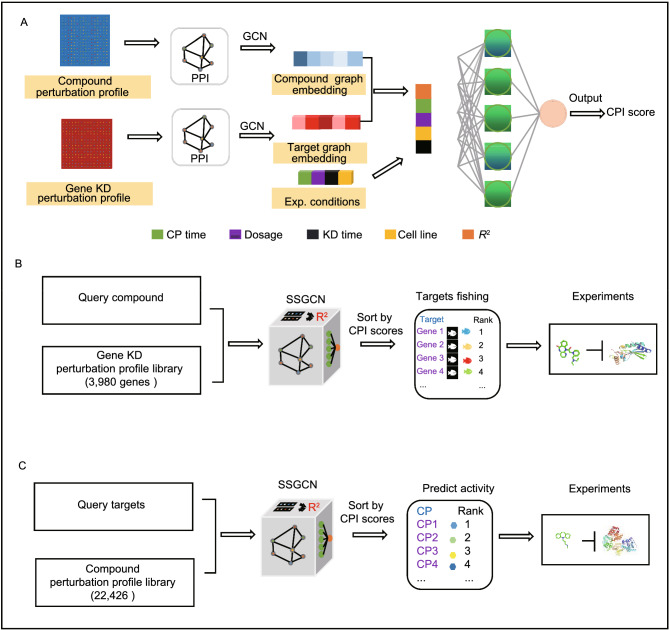
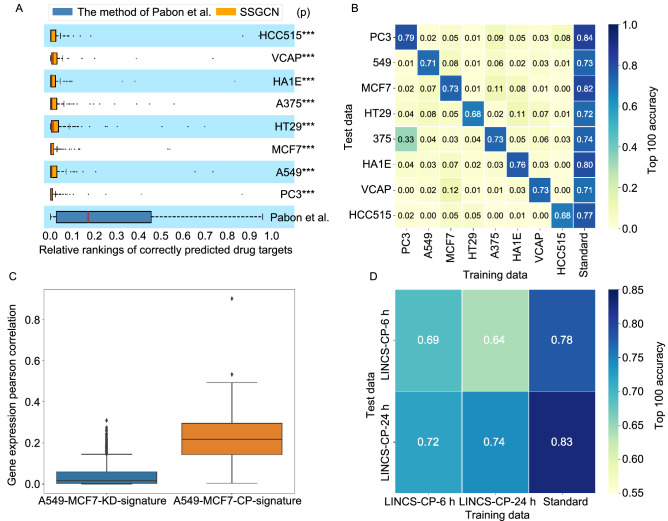
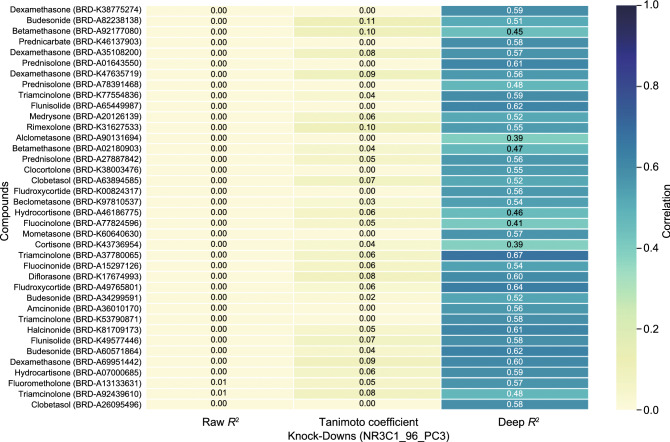
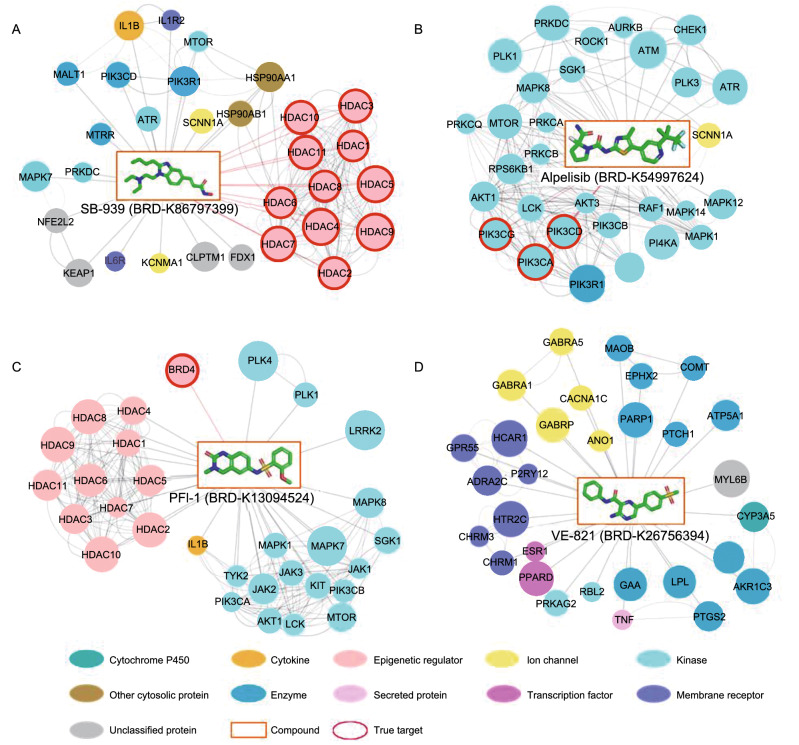
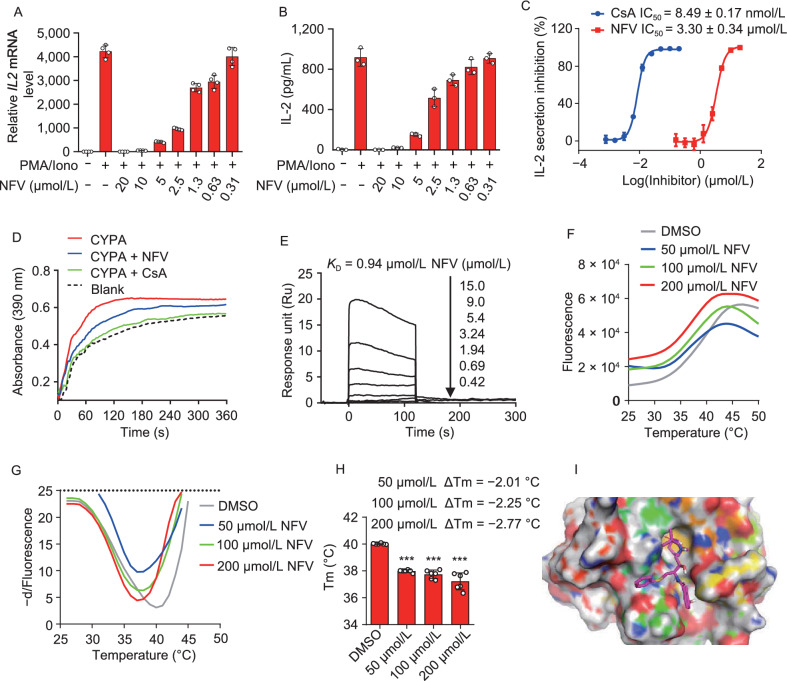
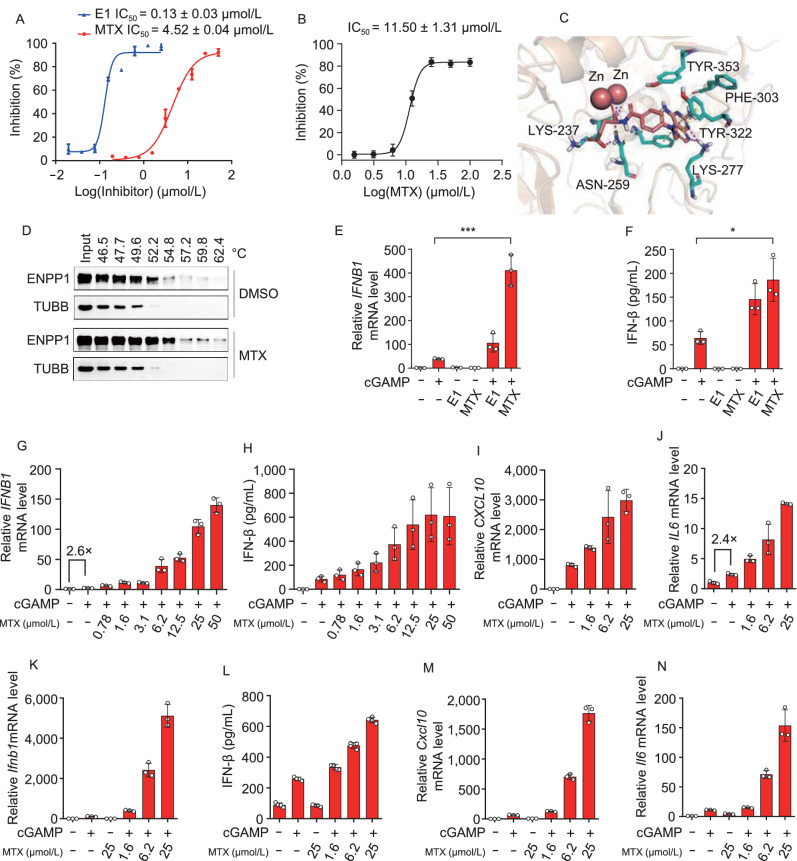
A fundamental challenge that arises in biomedicine is the need to characterize compounds in a relevant cellular context in order to reveal potential on-target or off-target effects. Recently, the fast accumulation of gene transcriptional profiling data provides us an unprecedented opportunity to explore the protein targets of chemical compounds from the perspective of cell transcriptomics and RNA biology. Here, we propose a novel Siamese spectral-based graph convolutional network (SSGCN) model for inferring the protein targets of chemical compounds from gene transcriptional profiles. Although the gene signature of a compound perturbation only provides indirect clues of the interacting targets, and the biological networks under different experiment conditions further complicate the situation, the SSGCN model was successfully trained to learn from known compound-target pairs by uncovering the hidden correlations between compound perturbation profiles and gene knockdown profiles. On a benchmark set and a large time-split validation dataset, the model achieved higher target inference accuracy as compared to previous methods such as Connectivity Map. Further experimental validations of prediction results highlight the practical usefulness of SSGCN in either inferring the interacting targets of compound, or reversely, in finding novel inhibitors of a given target of interest.
在生物医药领域,存在一个基本的挑战,即需要在相关的细胞环境中对化合物进行特征描述,以便揭示潜在的靶标或非靶标效应。最近,基因转录谱数据的快速积累为我们提供了一个前所未有的机会,从细胞转录组学和 RNA 生物学的角度探索化学化合物的蛋白质靶标。在这里,我们提出了一种新的基于孪生光谱的图卷积网络(SSGCN)模型,用于从基因转录谱推断化学化合物的蛋白质靶标。尽管化合物扰动的基因特征仅提供了相互作用靶标的间接线索,并且不同实验条件下的生物网络进一步使情况复杂化,但 SSGCN 模型通过揭示化合物扰动谱和基因敲低谱之间的隐藏相关性,成功地从已知的化合物-靶标对中进行了训练。在基准集和大的时间分割验证数据集上,与 Connectivity Map 等先前的方法相比,该模型实现了更高的靶标推断准确性。对预测结果的进一步实验验证突出了 SSGCN 在推断化合物的相互作用靶标或在反向寻找给定感兴趣靶标的新型抑制剂方面的实际用途。