Taniguchi Akihiko, Tsuge Mitsuru, Miyahara Nobuaki, Tsukahara Hirokazu
Department of Hematology, Oncology, Allergy and Respiratory Medicine, Okayama University Academic Field of Medicine, Dentistry, and Pharmaceutical Sciences, Okayama 700-8558, Japan.
Department of Pediatrics, Okayama University Academic Field of Medicine, Dentistry, and Pharmaceutical Sciences, Okayama 700-8558, Japan.
Antioxidants (Basel). 2021 Sep 28;10(10):1537. doi: 10.3390/antiox10101537.
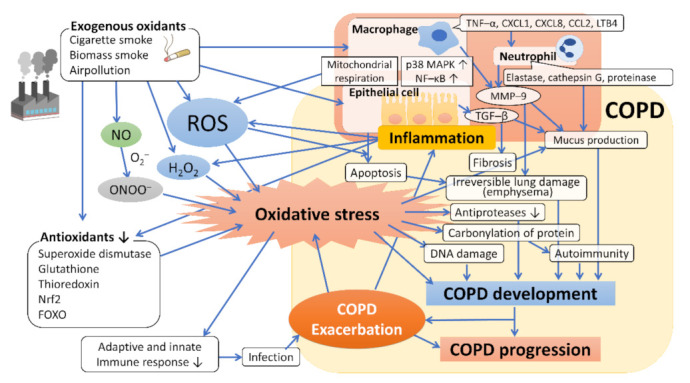
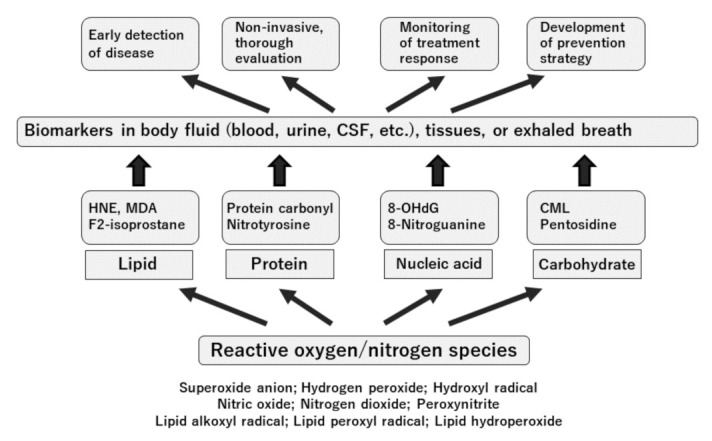
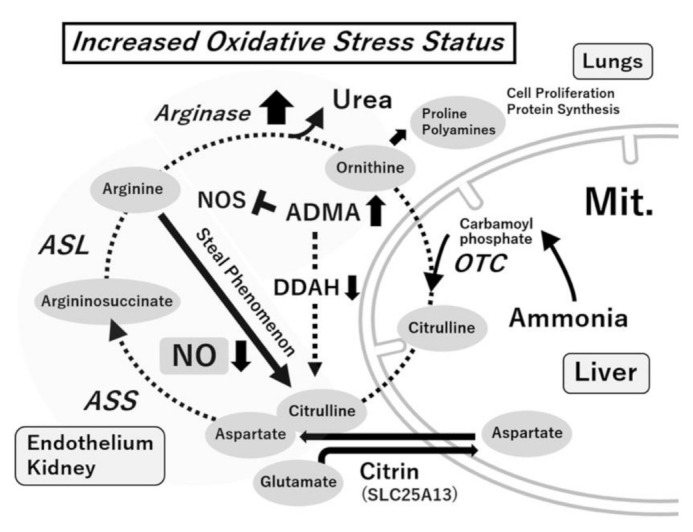
The respiratory system is continuously exposed to endogenous and exogenous oxidants. Chronic obstructive pulmonary disease (COPD) is characterized by chronic inflammation of the airways, leading to the destruction of lung parenchyma (emphysema) and declining pulmonary function. It is increasingly obvious that reactive oxygen species (ROS) and reactive nitrogen species (RNS) contribute to the progression and amplification of the inflammatory responses related to this disease. First, we described the association between cigarette smoking, the most representative exogenous oxidant, and COPD and then presented the multiple pathophysiological aspects of ROS and antioxidative defense systems in the development and progression of COPD. Second, the relationship between nitric oxide system (endothelial) dysfunction and oxidative stress has been discussed. Third, we have provided data on the use of these biomarkers in the pathogenetic mechanisms involved in COPD and its progression and presented an overview of oxidative stress biomarkers having clinical applications in respiratory medicine, including those in exhaled breath, as per recent observations. Finally, we explained the findings of recent clinical and experimental studies evaluating the efficacy of antioxidative interventions for COPD. Future breakthroughs in antioxidative therapy may provide a promising therapeutic strategy for the prevention and treatment of COPD.
呼吸系统持续暴露于内源性和外源性氧化剂中。慢性阻塞性肺疾病(COPD)的特征是气道慢性炎症,导致肺实质破坏(肺气肿)和肺功能下降。越来越明显的是,活性氧(ROS)和活性氮(RNS)促成了与该疾病相关的炎症反应的进展和放大。首先,我们描述了最具代表性的外源性氧化剂吸烟与COPD之间的关联,然后阐述了ROS和抗氧化防御系统在COPD发生发展过程中的多个病理生理方面。其次,讨论了一氧化氮系统(内皮)功能障碍与氧化应激之间的关系。第三,我们提供了这些生物标志物在COPD发病机制及其进展中的应用数据,并根据最近的观察结果概述了在呼吸医学中具有临床应用价值的氧化应激生物标志物,包括呼出气中的生物标志物。最后,我们解释了最近评估抗氧化干预对COPD疗效的临床和实验研究结果。抗氧化治疗的未来突破可能为COPD的预防和治疗提供一种有前景的治疗策略。