Luo Tianjiao, von der Ohe Juliane, Hass Ralf
Biochemistry and Tumor Biology Laboratory, Department of Obstetrics and Gynecology, Hannover Medical School, 30625 Hannover, Germany.
Cancers (Basel). 2021 Oct 18;13(20):5212. doi: 10.3390/cancers13205212.
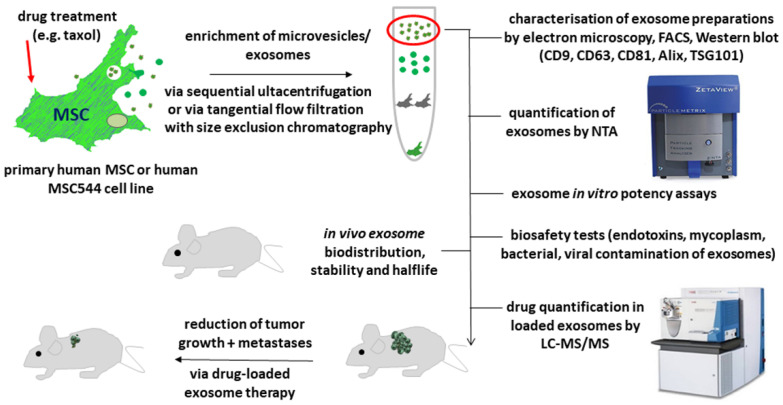
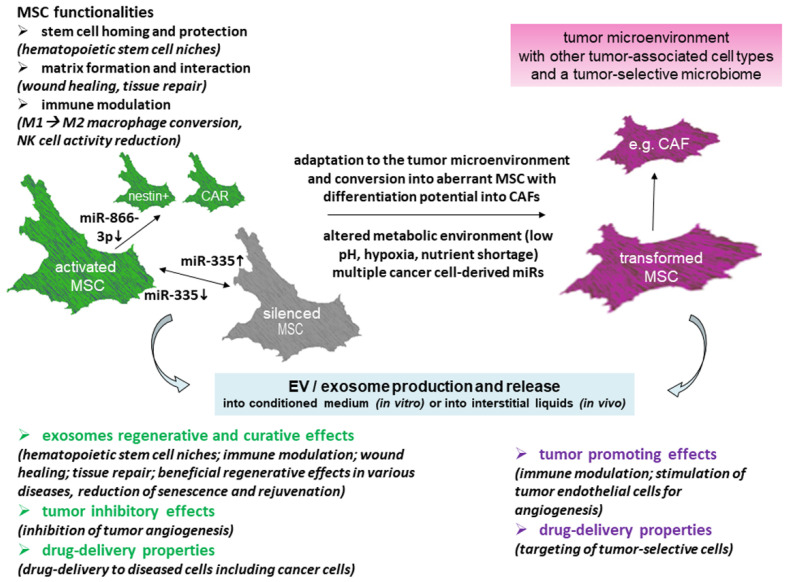
Exosomes derived from mesenchymal stroma-/stem-like cells (MSCs) as part of extracellular vesicles are considered cell-free biocompatible nanovesicles that promote repair activities of damaged tissues or organs by exhibiting low immunogenic and cytotoxic effects. Contributions to regenerative activities include wound healing, maintenance of stem cell niches, beneficial regenerative effects in various diseases, and reduction of senescence. However, the mode of action in MSC-derived exosomes strongly depends on the biological content like different regulatory microRNAs that are determined by the tissue origin of MSCs. In tumors, MSCs use indirect and direct pathways in a communication network to interact with cancer cells. This leads to mutual functional changes with the acquisition of an aberrant tumor-associated MSC phenotype accompanied by altered cargo in the exosomes. Consequently, MSC-derived exosomes either from normal tissue-originating MSCs or from aberrant tumor-associated MSCs can confer different actions on tumor development. These processes exhibiting tumor-inhibitory and tumor-supportive effects with a focus on exosome microRNA content will be discriminated and discussed within this review.
间充质基质样细胞(MSCs)来源的外泌体作为细胞外囊泡的一部分,被认为是无细胞的生物相容性纳米囊泡,通过表现出低免疫原性和细胞毒性作用来促进受损组织或器官的修复活动。其对再生活动的贡献包括伤口愈合、干细胞微环境的维持、对各种疾病的有益再生作用以及衰老的减轻。然而,MSCs来源外泌体的作用方式在很大程度上取决于生物学内容,如由MSCs的组织来源所决定的不同调控性微小RNA。在肿瘤中,MSCs在一个通信网络中利用间接和直接途径与癌细胞相互作用。这导致了相互的功能变化,伴随着异常肿瘤相关MSCs表型的获得以及外泌体中货物的改变。因此,来源于正常组织的MSCs或异常肿瘤相关MSCs的外泌体可对肿瘤发展产生不同的作用。本综述将区分并讨论这些以外泌体微小RNA含量为重点的具有肿瘤抑制和肿瘤支持作用的过程。