Department of Sports Medicine, Graduate School of Medicine, Nagoya University, Nagoya 464-8601, Aichi, Japan.
Undergraduate School of Medicine, Nagoya University, Nagoya 464-8601, Aichi, Japan.
Molecules. 2021 Oct 19;26(20):6310. doi: 10.3390/molecules26206310.
d-Allulose is a rare sugar with antiobesity and antidiabetic activities. However, its direct effect on insulin sensitivity and the underlying mechanism involved are unknown.
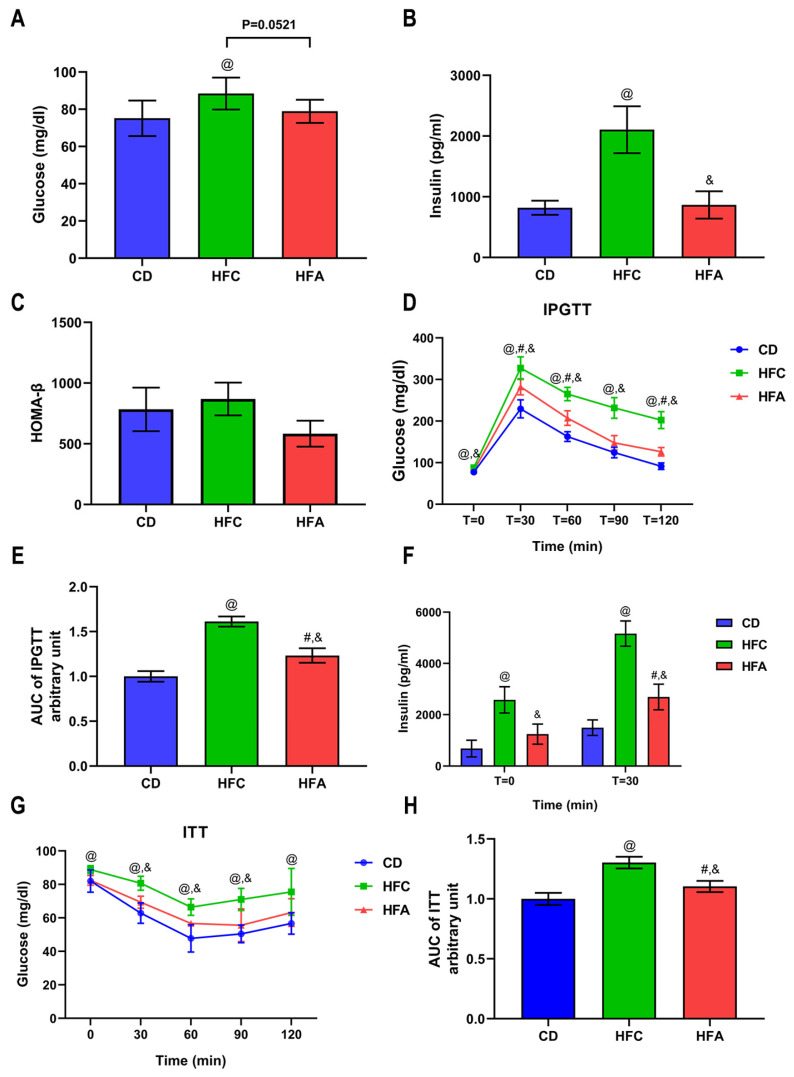
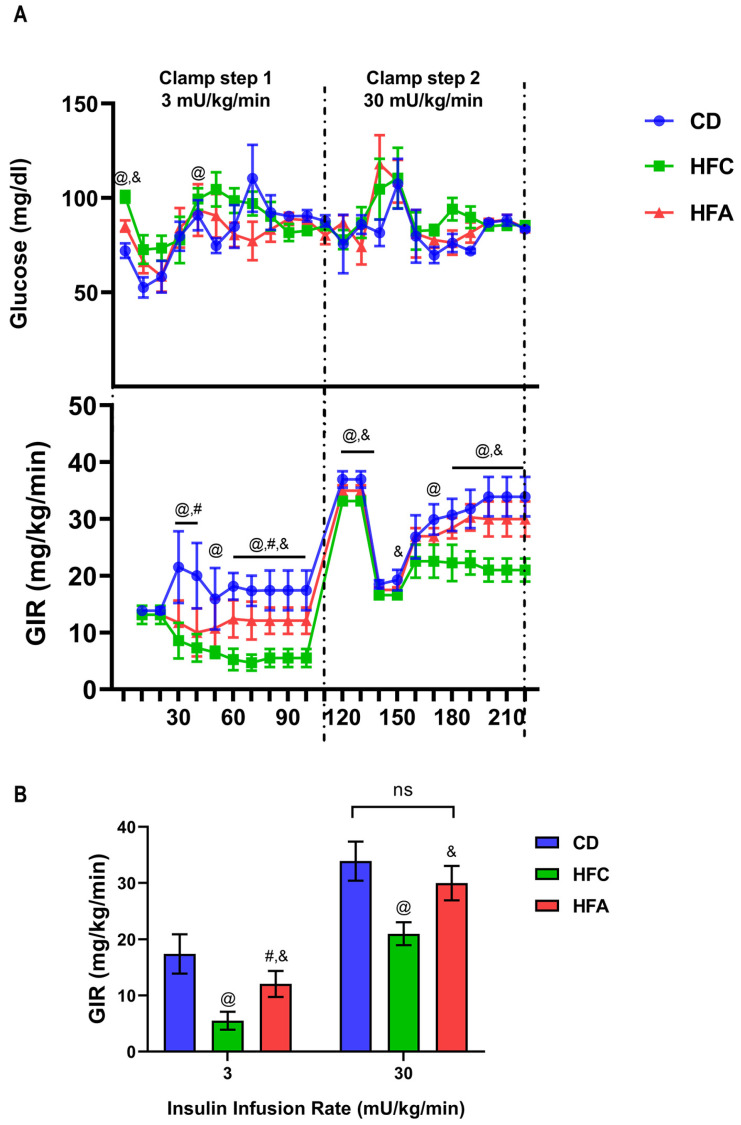
This study aimed to investigate the effect of d-allulose on high-fat diet (HFD)-induced insulin resistance using the hyperinsulinemic-euglycemic (HE)-clamp method and intramuscular signaling analysis.
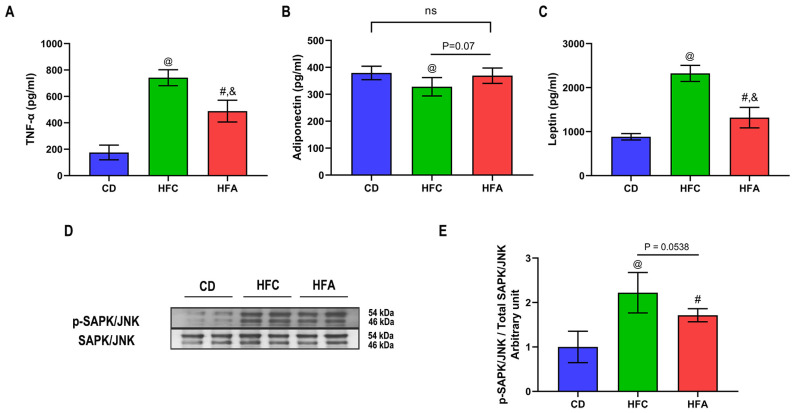
Wistar rats were randomly divided into three dietary groups: chow diet, HFD with 5% cellulose (HFC), and HFD with 5% d-allulose (HFA). After four weeks of feeding, the insulin tolerance test (ITT), intraperitoneal glucose tolerance test (IPGTT), and HE-clamp study were performed. The levels of plasma leptin, adiponectin, and tumor necrosis factor (TNF)-α were measured using the enzyme-linked immunosorbent assay. We analyzed the levels of cell signaling pathway components in the skeletal muscle using Western blotting.
d-allulose alleviated the increase in HFD-induced body weight and visceral fat and reduced the area under the curve as per ITT and IPGTT. d-Allulose increased the glucose infusion rate in the two-step HE-clamp test. Consistently, the insulin-induced phosphorylation of serine 307 in the insulin receptor substrate-1 and Akt and expression of glucose transporter 4 (Glut-4) in the muscle were higher in the HFA group than HFC group. Furthermore, d-allulose decreased plasma TNF-α concentration and insulin-induced phosphorylation of stress-activated protein kinase/Jun N-terminal kinase in the muscle and inhibited adiponectin secretion in HFD-fed rats.
d-allulose improved HFD-induced insulin resistance in Wistar rats. The reduction of the proinflammatory cytokine production, amelioration of adiponectin secretion, and increase in insulin signaling and Glut-4 expression in the muscle contributed to this effect.
d-阿洛酮糖是一种具有抗肥胖和抗糖尿病活性的稀有糖。然而,其对胰岛素敏感性的直接影响及其涉及的潜在机制尚不清楚。
本研究旨在通过高胰岛素-正葡萄糖钳夹法和肌内信号分析研究 d-阿洛酮糖对高脂肪饮食(HFD)诱导的胰岛素抵抗的影响。
Wistar 大鼠随机分为三组:普通饮食组、含 5%纤维素的 HFD 组(HFC)和含 5% d-阿洛酮糖的 HFD 组(HFA)。喂养 4 周后,进行胰岛素耐量试验(ITT)、腹腔内葡萄糖耐量试验(IPGTT)和高胰岛素-正葡萄糖钳夹研究。酶联免疫吸附试验测定血浆瘦素、脂联素和肿瘤坏死因子(TNF)-α水平。采用 Western blot 分析骨骼肌细胞信号通路成分的水平。
d-阿洛酮糖减轻了 HFD 引起的体重和内脏脂肪增加,并降低了 ITT 和 IPGTT 的曲线下面积。d-阿洛酮糖增加了两步高胰岛素-正葡萄糖钳夹试验中的葡萄糖输注率。同样,HFA 组胰岛素受体底物-1 和 Akt 的丝氨酸 307 磷酸化以及肌肉中的葡萄糖转运蛋白 4(Glut-4)表达在胰岛素诱导下均高于 HFC 组。此外,d-阿洛酮糖降低了 HFD 喂养大鼠的血浆 TNF-α浓度和胰岛素诱导的肌肉应激激活蛋白激酶/Jun N 末端激酶磷酸化,并抑制了脂联素的分泌。
d-阿洛酮糖改善了 Wistar 大鼠的 HFD 诱导的胰岛素抵抗。减少促炎细胞因子的产生、改善脂联素的分泌以及增加肌肉中的胰岛素信号和 Glut-4 表达有助于这种作用。