De Stefano Paola, Federici Angelica Silvia, Draghi Lorenza
Department of Chemistry, Materials and Chemical Engineering "G. Natta", Politecnico di Milano, Via Mancinelli 7, 20131 Milan, Italy.
Local Unit Politecnico di Milano, INSTM-National Interuniversity Consortium of Materials Science and Technology, P.zza Leonardo da Vinci 32, 20133 Milan, Italy.
Polymers (Basel). 2021 Oct 16;13(20):3573. doi: 10.3390/polym13203573.
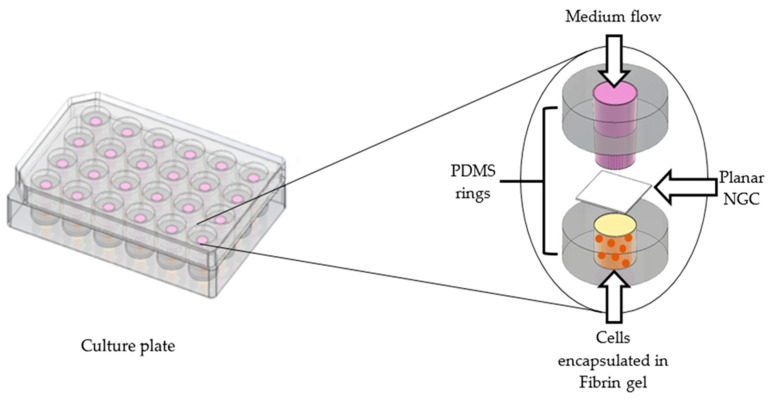
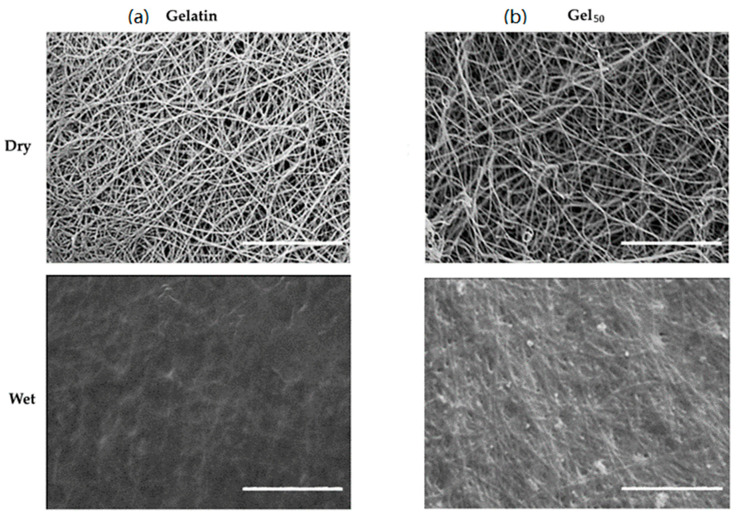
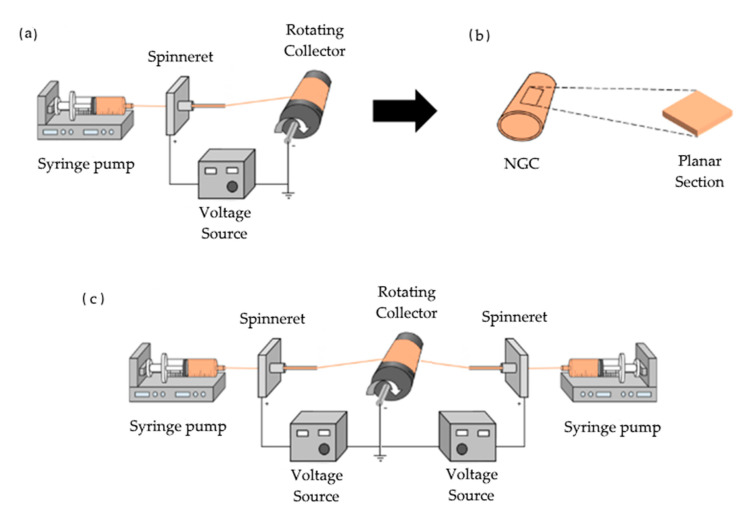
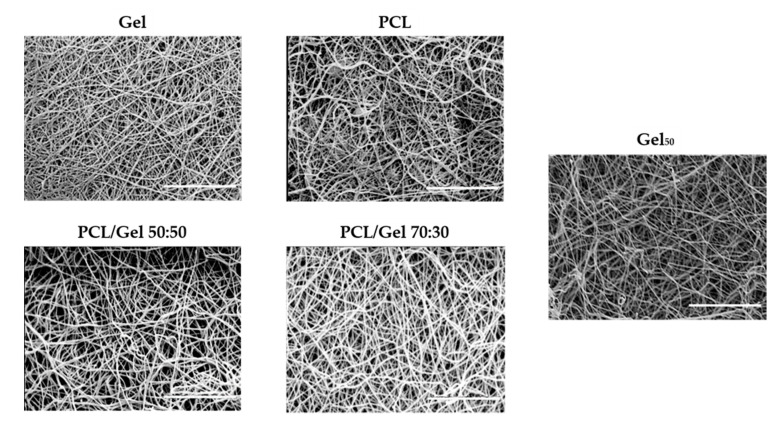
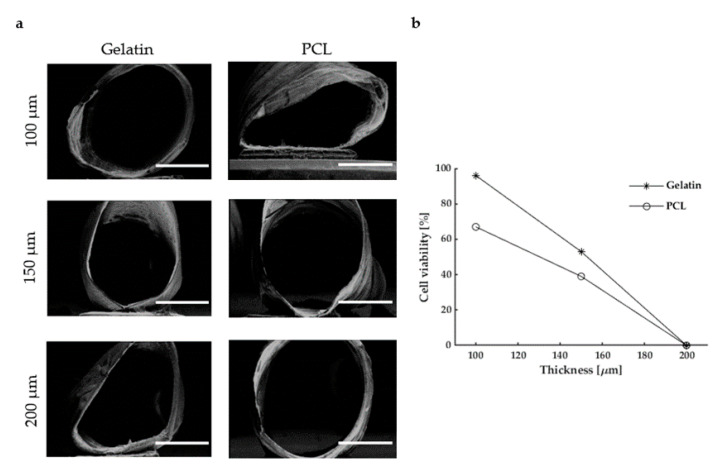
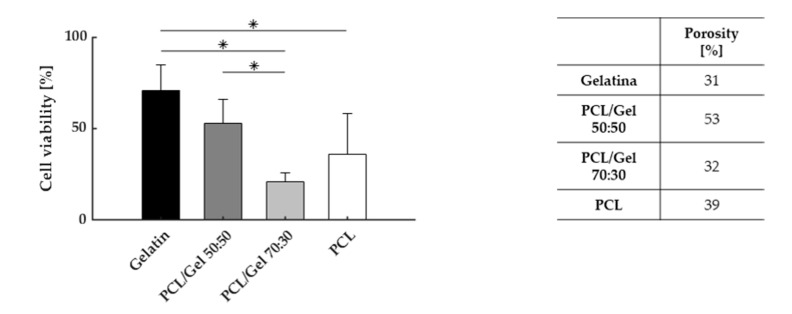
Current clinical strategies to repair peripheral nerve injuries draw on different approaches depending on the extent of lost tissue. Nerve guidance conduits (NGCs) are considered to be a promising, off-the-shelf alternative to autografts when modest gaps need to be repaired. Unfortunately, to date, the implantation of an NGC prevents the sacrifice of a healthy nerve at the price of suboptimal clinical performance. Despite the significant number of materials and fabrication strategies proposed, an ideal combination has not been yet identified. Validation and comparison of NGCs ultimately requires in vivo animal testing due to the lack of alternative models, but in the spirit of the 3R principles, a reliable in vitro model for preliminary screening is highly desirable. Nevertheless, more traditional in vitro tests, and direct cell seeding on the material in particular, are not representative of the actual regeneration scenario. Thus, we have designed a very simple set-up in the attempt to appreciate the relevant features of NGCs through in vitro testing, and we have verified its applicability using electrospun NGCs. To this aim, neural cells were encapsulated in a loose fibrin gel and enclosed within the NGC membrane. Different thicknesses and porosity values of two popular polymers (namely gelatin and polycaprolactone) were compared. Results indicate that, with specific implementation, the system might represent a useful tool to characterize crucial NGC design aspects.
目前修复周围神经损伤的临床策略根据组织缺失的程度采用不同的方法。当需要修复适度的间隙时,神经引导导管(NGCs)被认为是一种有前景的、现成的自体移植替代物。不幸的是,迄今为止,植入神经引导导管虽然避免了牺牲健康神经,但临床性能却不尽人意。尽管提出了大量的材料和制造策略,但尚未找到理想的组合。由于缺乏替代模型,神经引导导管的验证和比较最终需要进行体内动物试验,但本着3R原则的精神,非常需要一种可靠的体外模型进行初步筛选。然而,更传统的体外试验,特别是直接在材料上接种细胞,并不能代表实际的再生情况。因此,我们设计了一种非常简单的装置,试图通过体外试验了解神经引导导管的相关特征,并使用电纺神经引导导管验证了其适用性。为此,将神经细胞包裹在疏松的纤维蛋白凝胶中,并封装在神经引导导管膜内。比较了两种常用聚合物(明胶和聚己内酯)的不同厚度和孔隙率值。结果表明,通过特定的实施方式,该系统可能是表征神经引导导管关键设计方面的有用工具。