Institute of Biological and Chemical Systems-Biological Information Processing (IBCS-BIP), Karlsruhe Institute of Technology (KIT), Postfach 3640, 76021 Karlsruhe, Germany.
Diabète Athérothrombose Thérapies Réunion Océan Indien, INSERM, UMR 1188, Université de La Réunion, 97400 Saint-Denis de La Réunion, France.
Cells. 2021 Oct 19;10(10):2794. doi: 10.3390/cells10102794.
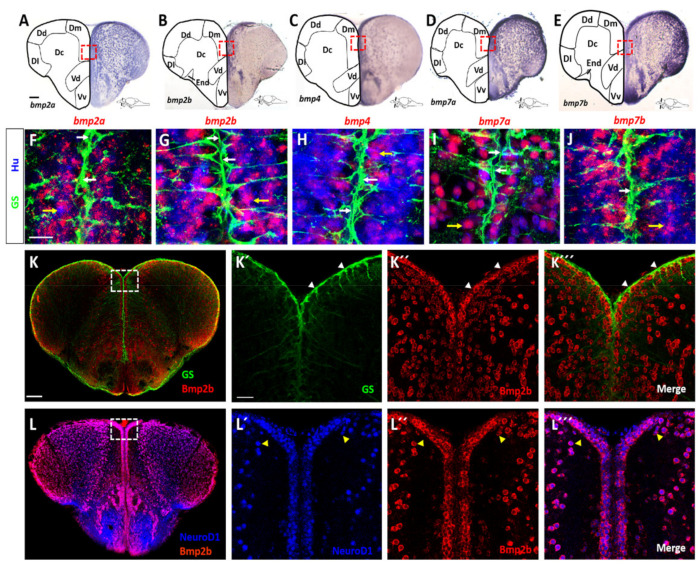
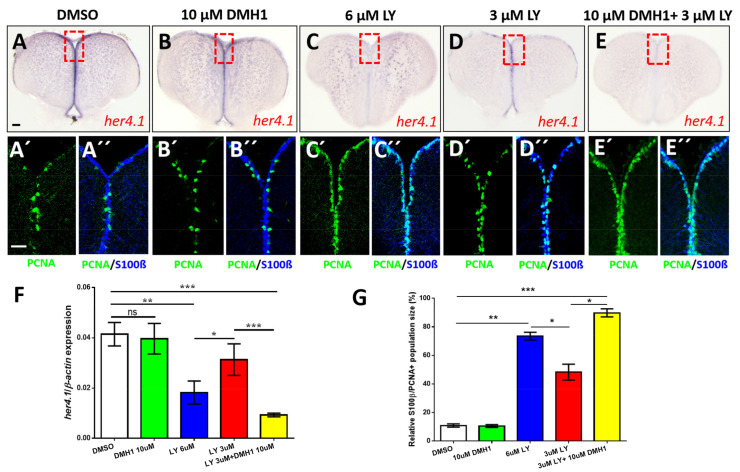
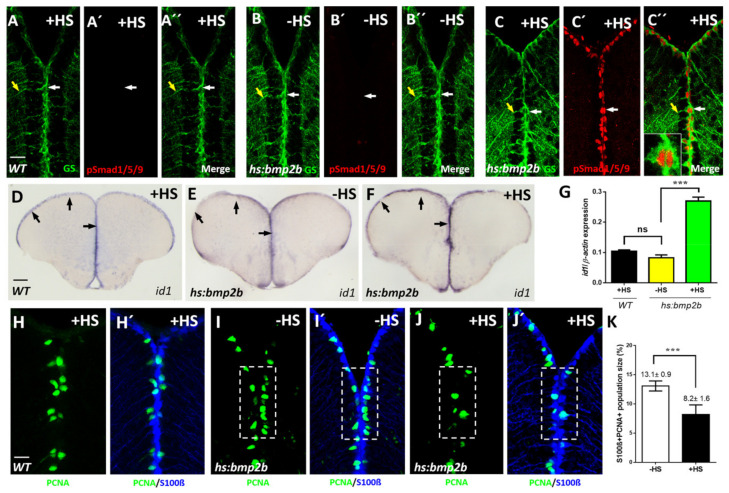
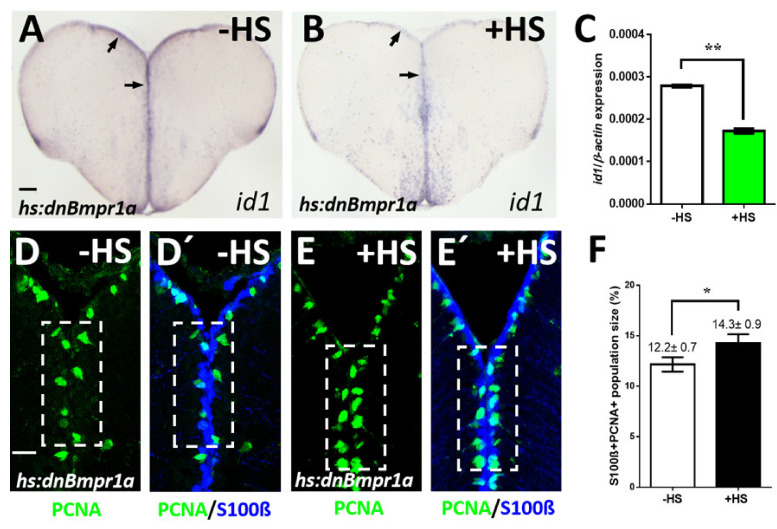
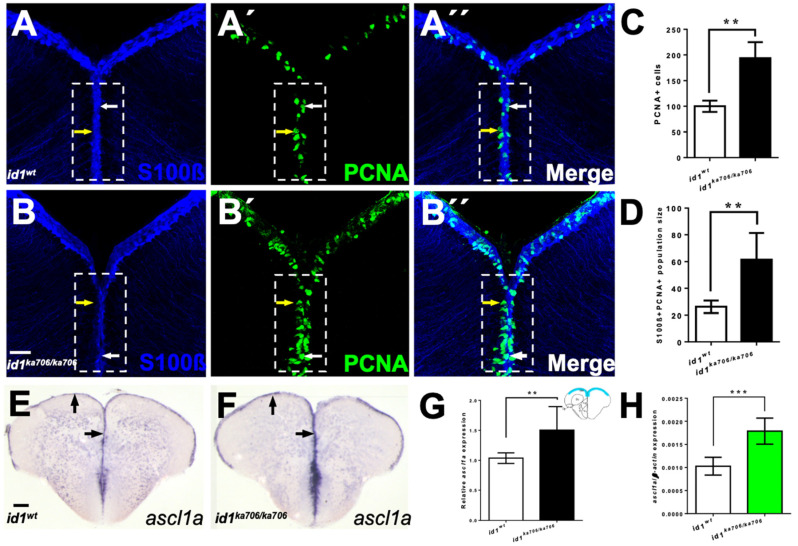
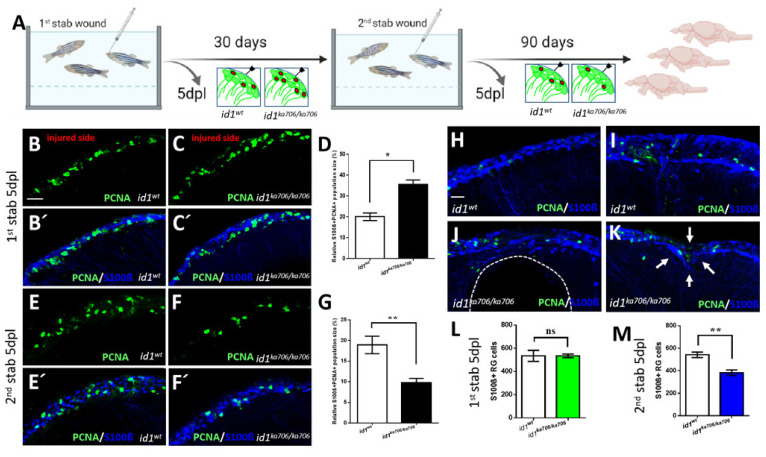
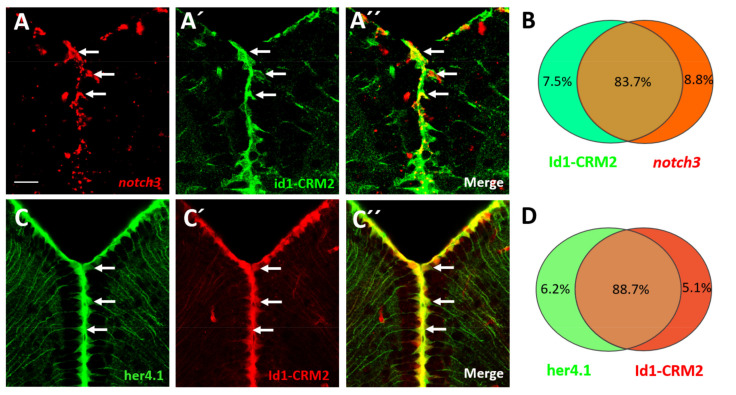
The central nervous system of adult zebrafish displays an extraordinary neurogenic and regenerative capacity. In the zebrafish adult brain, this regenerative capacity relies on neural stem cells (NSCs) and the careful management of the NSC pool. However, the mechanisms controlling NSC pool maintenance are not yet fully understood. Recently, Bone Morphogenetic Proteins (BMPs) and their downstream effector Id1 (Inhibitor of differentiation 1) were suggested to act as key players in NSC maintenance under constitutive and regenerative conditions. Here, we further investigated the role of BMP/Id1 signaling in these processes, using different genetic and pharmacological approaches. Our data show that BMPs are mainly expressed by neurons in the adult telencephalon, while is expressed in NSCs, suggesting a neuron-NSC communication via the BMP/Id1 signaling axis. Furthermore, manipulation of BMP signaling by conditionally inducing or repressing BMP signaling via heat-shock, lead to an increase or a decrease of expression in the NSCs, respectively. Induction of was followed by an increase in the number of quiescent NSCs, while knocking down expression caused an increase in NSC proliferation. In agreement, genetic ablation of function lead to increased proliferation of NSCs, followed by depletion of the stem cell pool with concomitant failure to heal injuries in repeatedly injured mutant telencephala. Moreover, pharmacological inhibition of BMP and Notch signaling suggests that the two signaling systems cooperate and converge onto the transcriptional regulator . Interestingly, brain injury lead to a depletion of NSCs in animals lacking BMP/Id1 signaling despite an intact Notch pathway. Taken together, our data demonstrate how neurons feedback on NSC proliferation and that BMP1/Id1 signaling acts as a safeguard of the NSC pool under regenerative conditions.
成年斑马鱼的中枢神经系统表现出非凡的神经发生和再生能力。在成年斑马鱼大脑中,这种再生能力依赖于神经干细胞(NSCs)和 NSC 池的精细管理。然而,控制 NSC 池维持的机制尚未完全了解。最近,骨形态发生蛋白(BMPs)及其下游效应物 Id1(分化抑制剂 1)被认为在组成型和再生条件下作为 NSC 维持的关键因子发挥作用。在这里,我们使用不同的遗传和药理学方法进一步研究了 BMP/Id1 信号在这些过程中的作用。我们的数据表明,BMPs 主要在成年端脑中的神经元中表达,而 在 NSCs 中表达,表明通过 BMP/Id1 信号轴进行神经元-NSC 通讯。此外,通过热休克条件性诱导或抑制 BMP 信号,对 BMP 信号的操纵分别导致 NSCs 中 的表达增加或减少。诱导 的表达后,静止 NSCs 的数量增加,而敲低 的表达导致 NSC 增殖增加。一致地, 功能的遗传缺失导致 NSCs 增殖增加,随后干细胞池耗尽,同时在反复受伤的突变端脑中未能治愈损伤。此外,BMP 和 Notch 信号转导的药理学抑制表明这两个信号系统合作并汇聚到转录调节剂 上。有趣的是,尽管 Notch 途径完整,但在缺乏 BMP/Id1 信号的动物中,脑损伤导致 NSCs 耗竭。总之,我们的数据证明了神经元如何反馈到 NSC 增殖,并且 BMP1/Id1 信号在再生条件下作为 NSC 池的保护者发挥作用。