Metin-Orta Irem, Demirtepe-Saygılı Dilek
Department of Psychology, Atilim University, Kizilcasar Mahallesi, Incek, Golbasi, 06830 Ankara, Turkey.
Curr Psychol. 2023;42(13):11101-11114. doi: 10.1007/s12144-021-02374-3. Epub 2021 Oct 19.
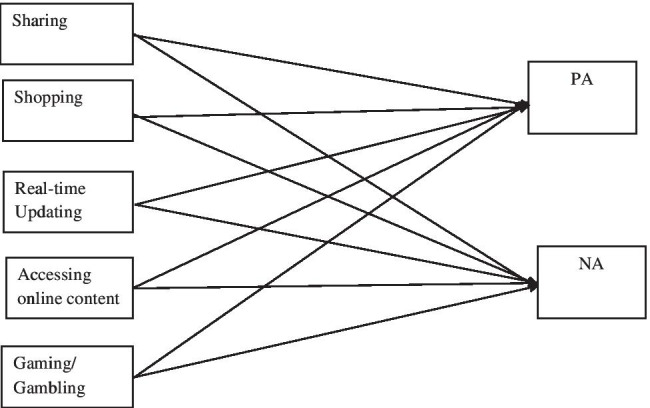
With the technological advances, the use of digital devices, such as laptops, tablets, or smartphones in the educational setting has become prevalent among young people. Accordingly, there has been an increased concern among scholars on students' in-class Internet use for personal purposes; namely, 'cyberloafing'. Considerable research has demonstrated the adverse effects of in-class Internet use on students' learning environment and academic performance. The present study particularly investigates the relationship between cyberloafing behaviors and positive and negative affect among university students. It examines five different online activities including sharing, shopping, real-time updating, accessing online content, and gaming/gambling separately to gain greater insight into students' cyberloafing behaviors. The sample consisted of 267 undergraduate students who filled out questionnaires measuring cyberloafing behaviors, positive and negative affect, and demographical information including the use of the Internet and mobile technologies. The initial analyses showed that male students had higher scores in shopping, accessing online content, and gaming/gambling than females. The latent variable analysis revealed that among different activities of cyberloafing, accessing online content and gaming/gambling were positively correlated with positive affect, while sharing was positively associated with negative affect among students. The findings emphasize the importance of evaluating cyberloafing as a part of students' psychological well-being rather than a variable merely related to academic achievement. The findings of the study also enlighten researchers and educators in developing appropriate policies and interventions to manage misuse of the Internet in class.
随着技术的进步,笔记本电脑、平板电脑或智能手机等数字设备在教育环境中的使用在年轻人中已变得十分普遍。因此,学者们越来越关注学生在课堂上出于个人目的使用互联网的情况,即“网络偷懒”。大量研究表明课堂上网对学生的学习环境和学业成绩有不利影响。本研究特别调查了大学生网络偷懒行为与正负情绪之间的关系。它分别考察了五种不同的在线活动,包括分享、购物、实时更新、访问在线内容以及游戏/赌博,以更深入地了解学生的网络偷懒行为。样本由267名本科生组成,他们填写了测量网络偷懒行为、正负情绪以及包括互联网和移动技术使用情况在内的人口统计学信息的问卷。初步分析表明,男生在购物、访问在线内容以及游戏/赌博方面的得分高于女生。潜在变量分析显示,在不同的网络偷懒活动中,访问在线内容和游戏/赌博与积极情绪呈正相关,而分享与学生的消极情绪呈正相关。研究结果强调了将网络偷懒评估为学生心理健康一部分的重要性,而不仅仅是一个与学业成绩相关的变量。该研究结果还为研究人员和教育工作者制定适当政策和干预措施以管理课堂上互联网的滥用提供了启示。