Wu Zhan-Yu, Lu Yan-Qiu, Li Jun-Tao, Zanna Sandrine, Seyeux Antoine, Huang Ling, Sun Shi-Gang, Marcus Philippe, Światowska Jolanta
PSL Research University, CNRS - Chimie ParisTech, Institut de Recherche de Chimie Paris (IRCP), 11 rue Pierre et Marie Curie, 75005 Paris, France.
College of Energy, Xiamen University, Xiamen 361005, China.
ACS Omega. 2021 Oct 5;6(41):27335-27350. doi: 10.1021/acsomega.1c04226. eCollection 2021 Oct 19.
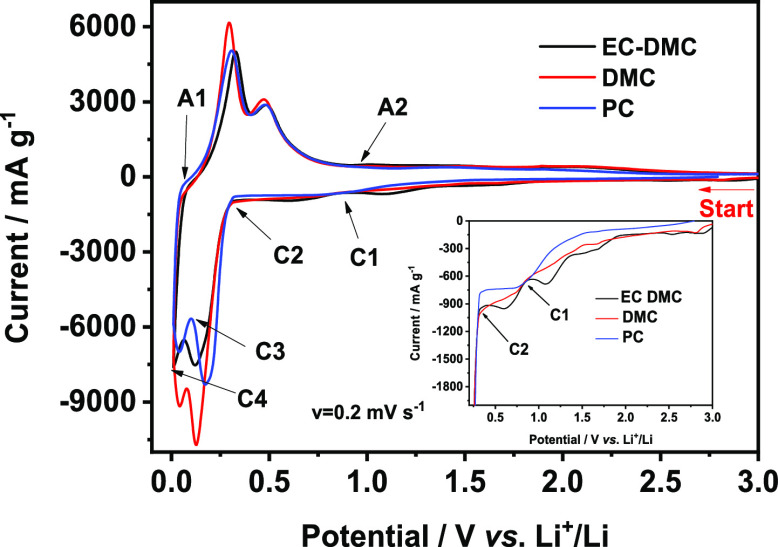
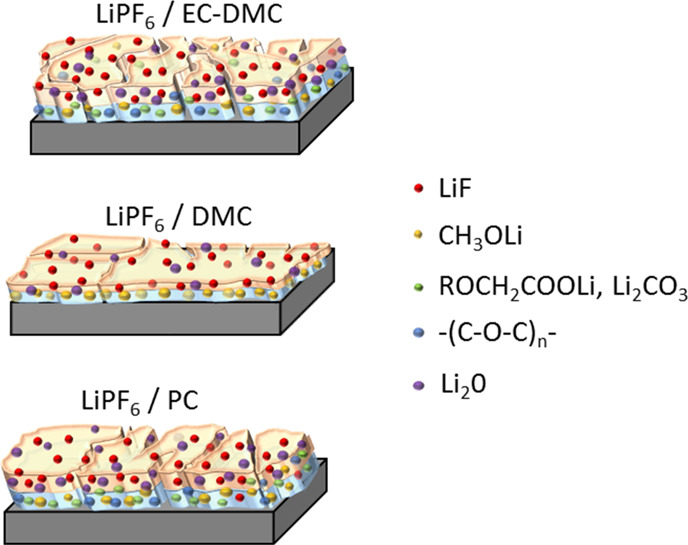
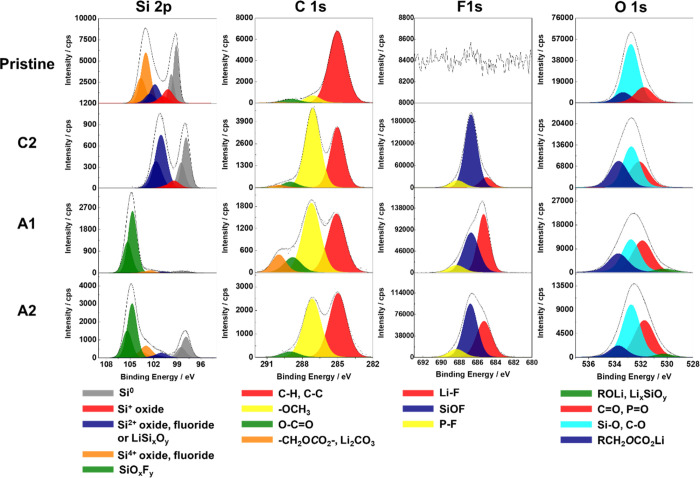
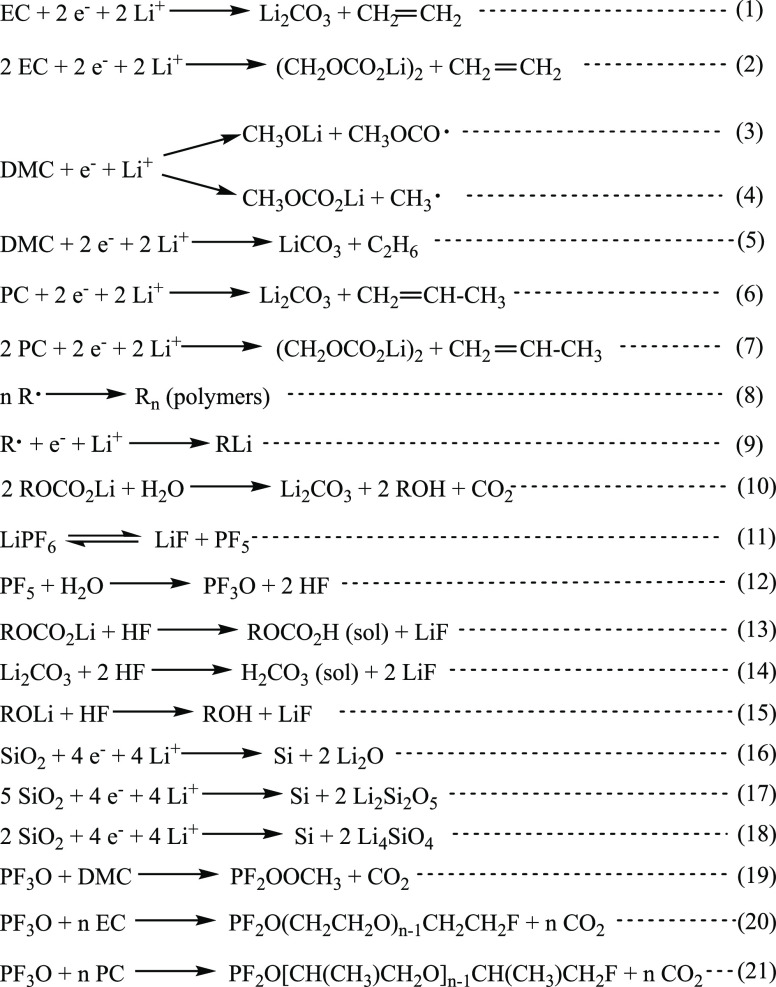
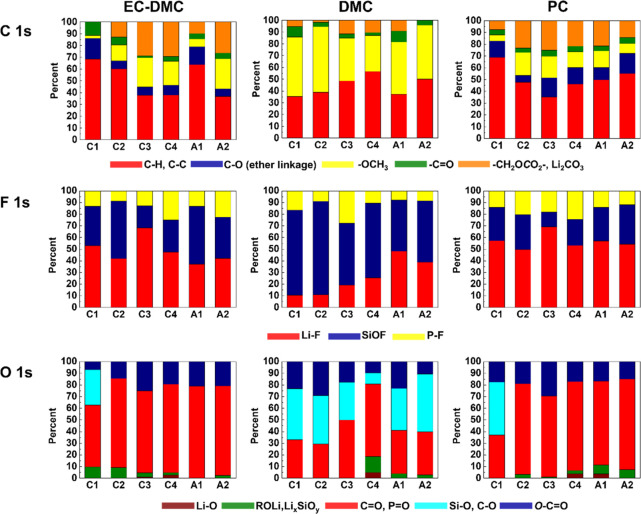
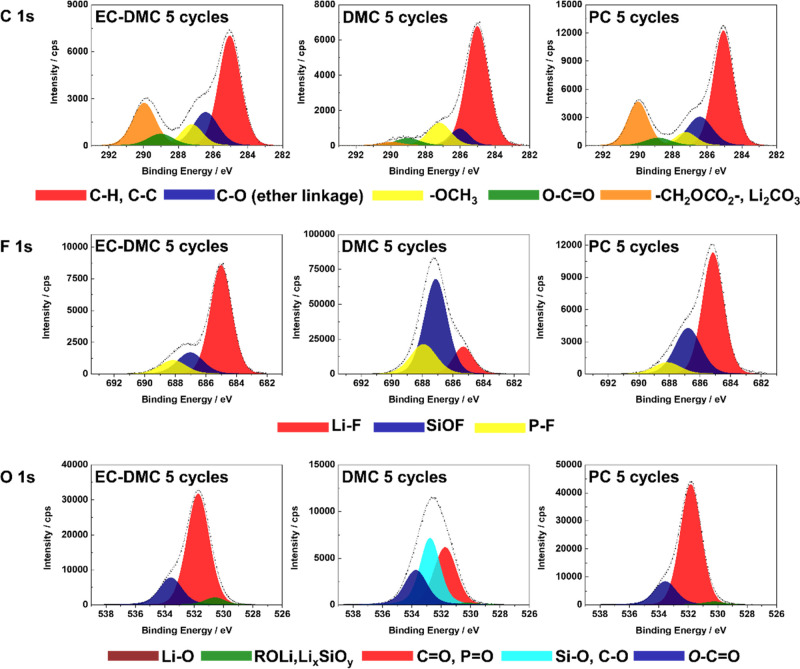
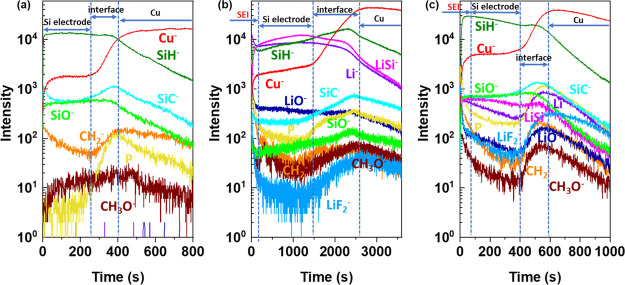
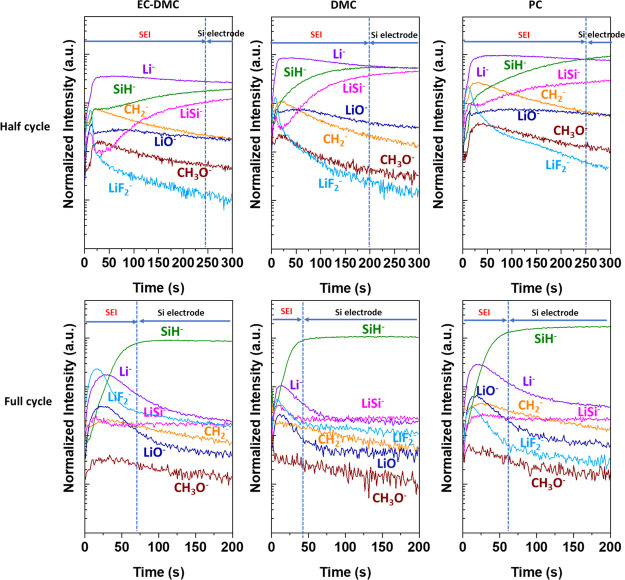
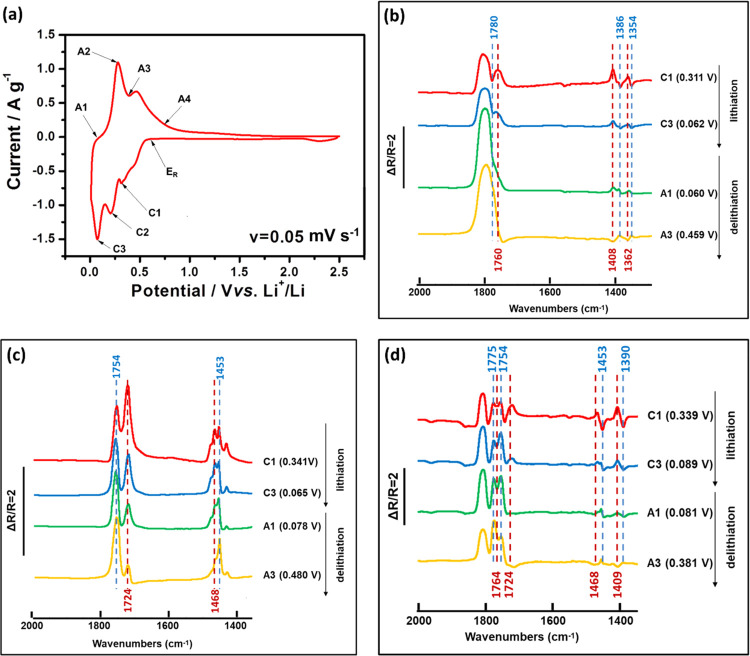
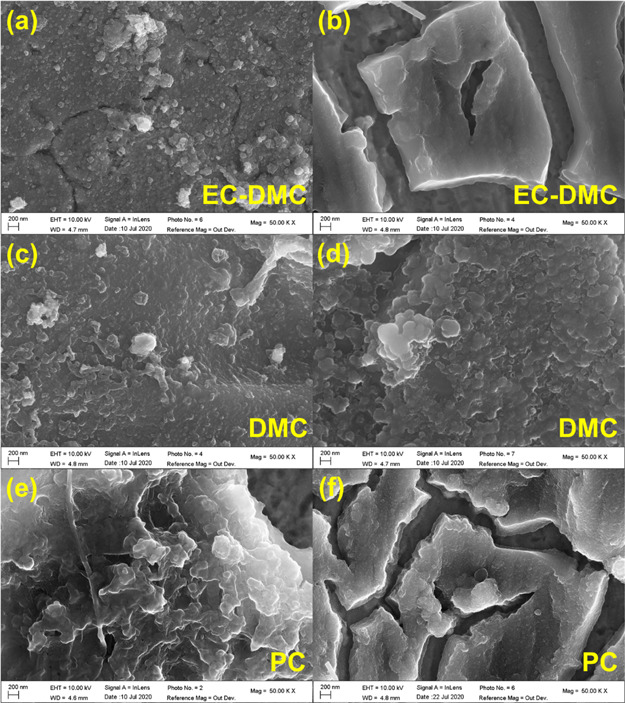
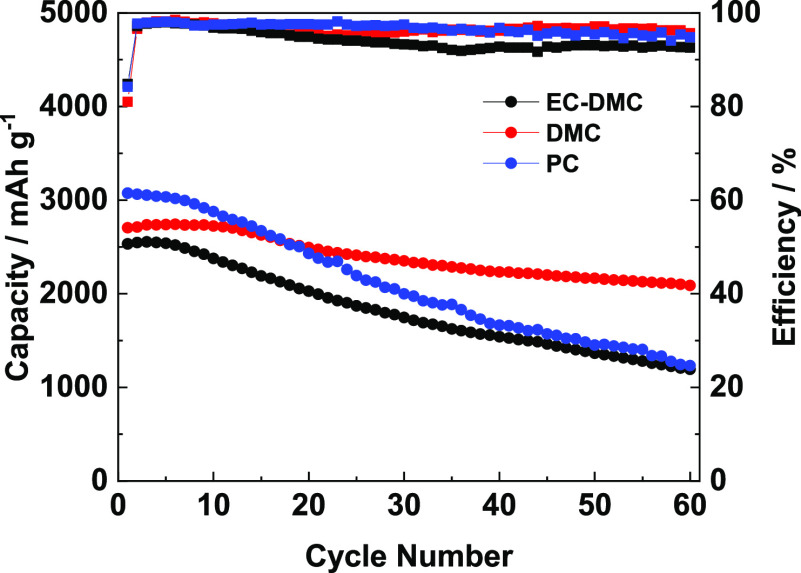
A solid electrolyte interphase (SEI) layer on Si-based anodes should have high mechanical properties to adapt the volume changes of Si with low thickness and good ionic conductivity. To better understand the influence of carbonate solvents on the SEI composition and mechanism of formation, systematic studies were performed using dimethyl carbonate (DMC) or propylene carbonate (PC) solvent and LiPF as a salt. A 1 M LiPF/EC-DMC was used for comparison. The surface chemical composition of the Si electrode was analyzed at different potentials of lithiation/delithiation and after a few cycles. X-ray photoelectron spectroscopy and time-of-flight secondary ion mass spectrometry results demonstrate that a thinner and more stable SEI layer is formed in LiPF/DMC. The Fourier transform infrared spectroscopy proves that the coordination between Li and DMC is weaker, and fewer DMC molecules take part in the formation of the SEI layer. The higher capacity retention during 60 cycles and less significant morphological modifications of the Si electrode in 1 M LiPF/DMC compared to other electrolytes were demonstrated, confirming a good and stable interfacial layer. The possible surface reactions are discussed, and the difference in the mechanisms of formation of SEI in these three various electrolytes is proposed.
硅基负极上的固体电解质界面(SEI)层应具有高机械性能,以适应硅的体积变化,同时具备低厚度和良好的离子导电性。为了更好地理解碳酸酯溶剂对SEI组成和形成机制的影响,使用碳酸二甲酯(DMC)或碳酸丙烯酯(PC)溶剂以及LiPF作为盐进行了系统研究。使用1 M LiPF/EC-DMC作为对照。在不同的锂化/脱锂电位以及经过几个循环后,对硅电极的表面化学成分进行了分析。X射线光电子能谱和飞行时间二次离子质谱结果表明,在LiPF/DMC中形成了更薄且更稳定的SEI层。傅里叶变换红外光谱证明,Li与DMC之间的配位较弱,参与SEI层形成的DMC分子较少。与其他电解质相比,在1 M LiPF/DMC中,硅电极在60个循环期间具有更高的容量保持率,且形态变化较小,这证实了其界面层良好且稳定。讨论了可能的表面反应,并提出了这三种不同电解质中SEI形成机制的差异。