• 文献检索
  • 文档翻译
  • 深度研究
  • 学术资讯
  • Suppr Zotero 插件Zotero 插件
  • 邀请有礼
  • 套餐&价格
  • 历史记录
应用&插件
Suppr Zotero 插件Zotero 插件浏览器插件Mac 客户端Windows 客户端微信小程序
定价
高级版会员购买积分包购买API积分包
服务
文献检索文档翻译深度研究API 文档MCP 服务
关于我们
关于 Suppr公司介绍联系我们用户协议隐私条款
关注我们

Suppr 超能文献

核心技术专利:CN118964589B侵权必究
粤ICP备2023148730 号-1Suppr @ 2026

文献检索

告别复杂PubMed语法,用中文像聊天一样搜索,搜遍4000万医学文献。AI智能推荐,让科研检索更轻松。

立即免费搜索

文件翻译

保留排版,准确专业,支持PDF/Word/PPT等文件格式,支持 12+语言互译。

免费翻译文档

深度研究

AI帮你快速写综述,25分钟生成高质量综述,智能提取关键信息,辅助科研写作。

立即免费体验

对与新冠疫情相关的推特帖子进行的高分辨率时空内容分析。

A high-resolution temporal and geospatial content analysis of Twitter posts related to the COVID-19 pandemic.

作者信息

Ntompras Charalampos, Drosatos George, Kaldoudi Eleni

机构信息

School of Medicine, Democritus University of Thrace, Alexandroupoli, Greece.

Institute for Language and Speech Processing, Athena Research Center, Xanthi, Greece.

出版信息

J Comput Soc Sci. 2022;5(1):687-729. doi: 10.1007/s42001-021-00150-8. Epub 2021 Oct 20.

DOI:10.1007/s42001-021-00150-8
PMID:34697602
原文链接:https://pmc.ncbi.nlm.nih.gov/articles/PMC8528186/
Abstract

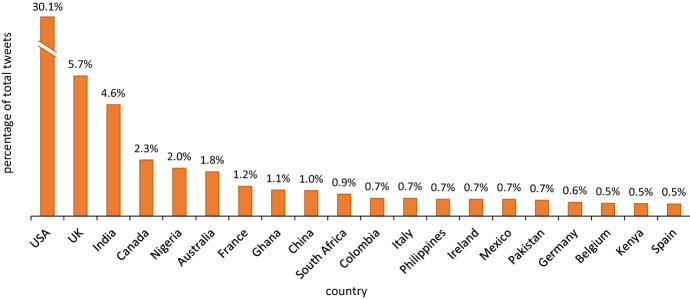
The COVID-19 pandemic has deeply impacted all aspects of social, professional, and financial life, with concerns and responses being readily published in online social media worldwide. This study employs probabilistic text mining techniques for a large-scale, high-resolution, temporal, and geospatial content analysis of Twitter related discussions. Analysis considered 20,230,833 English language original COVID-19-related tweets with global origin retrieved between January 25, 2020 and April 30, 2020. Fine grain topic analysis identified 91 meaningful topics. Most of the topics showed a temporal evolution with local maxima, underlining the short-lived character of discussions in Twitter. When compared to real-world events, temporal popularity curves showed a good correlation with and quick response to real-world triggers. Geospatial analysis of topics showed that approximately 30% of original English language tweets were contributed by USA-based users, while overall more than 60% of the English language tweets were contributed by users from countries with an official language other than English. High-resolution temporal and geospatial analysis of Twitter content shows potential for political, economic, and social monitoring on a global and national level.

摘要

新冠疫情对社会、职业和金融生活的各个方面都产生了深远影响,全球在线社交媒体上也纷纷发表了相关的担忧和应对措施。本研究采用概率文本挖掘技术,对推特上相关讨论进行大规模、高分辨率、时间和地理空间的内容分析。分析对象为2020年1月25日至2020年4月30日期间检索到的20,230,833条来自全球的与新冠疫情相关的英文原创推文。细粒度主题分析确定了91个有意义的主题。大多数主题呈现出随时间演变且有局部峰值的情况,凸显了推特讨论的短暂性。与现实世界事件相比,时间流行度曲线与现实世界的触发因素具有良好的相关性且反应迅速。主题的地理空间分析表明,约30%的英文原创推文由美国用户发布,而总体上超过60%的英文推文由母语非英语国家的用户发布。对推特内容进行高分辨率的时间和地理空间分析,显示出在全球和国家层面进行政治、经济和社会监测的潜力。
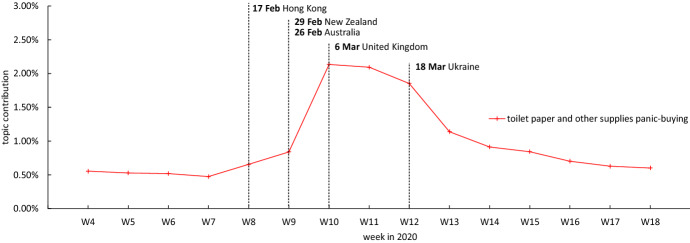
https://cdn.ncbi.nlm.nih.gov/pmc/blobs/e1ab/8528186/681485259284/42001_2021_150_Fig18_HTML.jpg
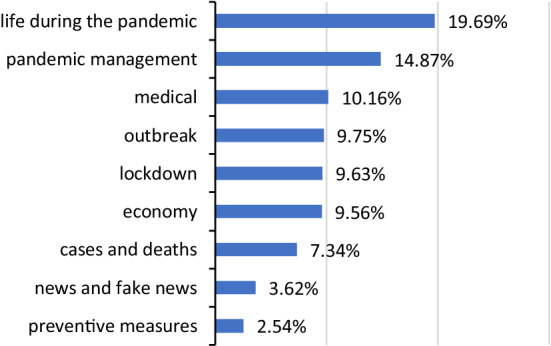
https://cdn.ncbi.nlm.nih.gov/pmc/blobs/e1ab/8528186/15e05c67f619/42001_2021_150_Fig1_HTML.jpg
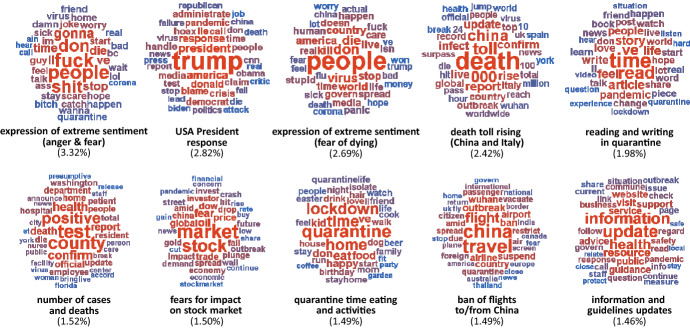
https://cdn.ncbi.nlm.nih.gov/pmc/blobs/e1ab/8528186/6952f7a200cb/42001_2021_150_Fig2_HTML.jpg
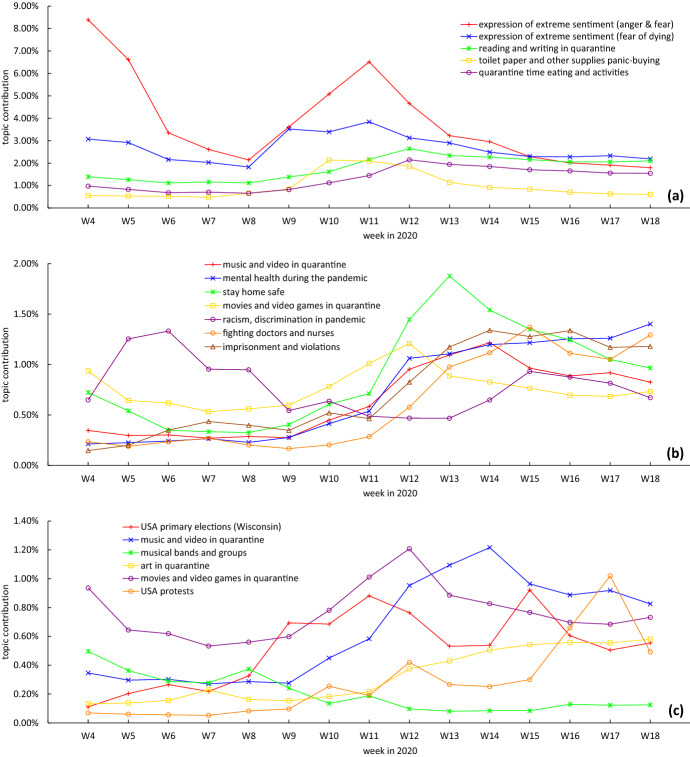
https://cdn.ncbi.nlm.nih.gov/pmc/blobs/e1ab/8528186/348b3eb87ae8/42001_2021_150_Fig3_HTML.jpg
https://cdn.ncbi.nlm.nih.gov/pmc/blobs/e1ab/8528186/a594e1f2868a/42001_2021_150_Fig4_HTML.jpg
https://cdn.ncbi.nlm.nih.gov/pmc/blobs/e1ab/8528186/b30d93b0e61c/42001_2021_150_Fig5_HTML.jpg
https://cdn.ncbi.nlm.nih.gov/pmc/blobs/e1ab/8528186/08efcf47041b/42001_2021_150_Fig6_HTML.jpg
https://cdn.ncbi.nlm.nih.gov/pmc/blobs/e1ab/8528186/e88273975500/42001_2021_150_Fig7_HTML.jpg
https://cdn.ncbi.nlm.nih.gov/pmc/blobs/e1ab/8528186/050f4d178d9c/42001_2021_150_Fig8_HTML.jpg
https://cdn.ncbi.nlm.nih.gov/pmc/blobs/e1ab/8528186/aec7a8295ce9/42001_2021_150_Fig9_HTML.jpg
https://cdn.ncbi.nlm.nih.gov/pmc/blobs/e1ab/8528186/e4d614f4c3a2/42001_2021_150_Fig10_HTML.jpg
https://cdn.ncbi.nlm.nih.gov/pmc/blobs/e1ab/8528186/6169b70fa9e8/42001_2021_150_Fig11_HTML.jpg
https://cdn.ncbi.nlm.nih.gov/pmc/blobs/e1ab/8528186/df0adf22ca7f/42001_2021_150_Fig12_HTML.jpg
https://cdn.ncbi.nlm.nih.gov/pmc/blobs/e1ab/8528186/72de015d5806/42001_2021_150_Fig13_HTML.jpg
https://cdn.ncbi.nlm.nih.gov/pmc/blobs/e1ab/8528186/33f160ca5ba9/42001_2021_150_Fig14_HTML.jpg
https://cdn.ncbi.nlm.nih.gov/pmc/blobs/e1ab/8528186/352d4b890a47/42001_2021_150_Fig15_HTML.jpg
https://cdn.ncbi.nlm.nih.gov/pmc/blobs/e1ab/8528186/61bba0dc14f7/42001_2021_150_Fig16_HTML.jpg
https://cdn.ncbi.nlm.nih.gov/pmc/blobs/e1ab/8528186/8400f8e1cdea/42001_2021_150_Fig17_HTML.jpg
https://cdn.ncbi.nlm.nih.gov/pmc/blobs/e1ab/8528186/681485259284/42001_2021_150_Fig18_HTML.jpg
https://cdn.ncbi.nlm.nih.gov/pmc/blobs/e1ab/8528186/15e05c67f619/42001_2021_150_Fig1_HTML.jpg
https://cdn.ncbi.nlm.nih.gov/pmc/blobs/e1ab/8528186/6952f7a200cb/42001_2021_150_Fig2_HTML.jpg
https://cdn.ncbi.nlm.nih.gov/pmc/blobs/e1ab/8528186/348b3eb87ae8/42001_2021_150_Fig3_HTML.jpg
https://cdn.ncbi.nlm.nih.gov/pmc/blobs/e1ab/8528186/a594e1f2868a/42001_2021_150_Fig4_HTML.jpg
https://cdn.ncbi.nlm.nih.gov/pmc/blobs/e1ab/8528186/b30d93b0e61c/42001_2021_150_Fig5_HTML.jpg
https://cdn.ncbi.nlm.nih.gov/pmc/blobs/e1ab/8528186/08efcf47041b/42001_2021_150_Fig6_HTML.jpg
https://cdn.ncbi.nlm.nih.gov/pmc/blobs/e1ab/8528186/e88273975500/42001_2021_150_Fig7_HTML.jpg
https://cdn.ncbi.nlm.nih.gov/pmc/blobs/e1ab/8528186/050f4d178d9c/42001_2021_150_Fig8_HTML.jpg
https://cdn.ncbi.nlm.nih.gov/pmc/blobs/e1ab/8528186/aec7a8295ce9/42001_2021_150_Fig9_HTML.jpg
https://cdn.ncbi.nlm.nih.gov/pmc/blobs/e1ab/8528186/e4d614f4c3a2/42001_2021_150_Fig10_HTML.jpg
https://cdn.ncbi.nlm.nih.gov/pmc/blobs/e1ab/8528186/6169b70fa9e8/42001_2021_150_Fig11_HTML.jpg
https://cdn.ncbi.nlm.nih.gov/pmc/blobs/e1ab/8528186/df0adf22ca7f/42001_2021_150_Fig12_HTML.jpg
https://cdn.ncbi.nlm.nih.gov/pmc/blobs/e1ab/8528186/72de015d5806/42001_2021_150_Fig13_HTML.jpg
https://cdn.ncbi.nlm.nih.gov/pmc/blobs/e1ab/8528186/33f160ca5ba9/42001_2021_150_Fig14_HTML.jpg
https://cdn.ncbi.nlm.nih.gov/pmc/blobs/e1ab/8528186/352d4b890a47/42001_2021_150_Fig15_HTML.jpg
https://cdn.ncbi.nlm.nih.gov/pmc/blobs/e1ab/8528186/61bba0dc14f7/42001_2021_150_Fig16_HTML.jpg
https://cdn.ncbi.nlm.nih.gov/pmc/blobs/e1ab/8528186/8400f8e1cdea/42001_2021_150_Fig17_HTML.jpg
https://cdn.ncbi.nlm.nih.gov/pmc/blobs/e1ab/8528186/681485259284/42001_2021_150_Fig18_HTML.jpg

相似文献

1
A high-resolution temporal and geospatial content analysis of Twitter posts related to the COVID-19 pandemic.对与新冠疫情相关的推特帖子进行的高分辨率时空内容分析。
J Comput Soc Sci. 2022;5(1):687-729. doi: 10.1007/s42001-021-00150-8. Epub 2021 Oct 20.
2
Top Concerns of Tweeters During the COVID-19 Pandemic: Infoveillance Study.新冠疫情期间推特用户的主要担忧:信息监测研究
J Med Internet Res. 2020 Apr 21;22(4):e19016. doi: 10.2196/19016.
3
Topics, Trends, and Sentiments of Tweets About the COVID-19 Pandemic: Temporal Infoveillance Study.关于新冠疫情的推文主题、趋势和情绪:时间信息监测研究
J Med Internet Res. 2020 Oct 23;22(10):e22624. doi: 10.2196/22624.
4
Detection of Hate Speech in COVID-19-Related Tweets in the Arab Region: Deep Learning and Topic Modeling Approach.检测阿拉伯地区与 COVID-19 相关推文的仇恨言论:深度学习和主题建模方法。
J Med Internet Res. 2020 Dec 8;22(12):e22609. doi: 10.2196/22609.
5
The State of Mind of Health Care Professionals in Light of the COVID-19 Pandemic: Text Analysis Study of Twitter Discourses.**新冠疫情下的医护人员心态研究:基于 Twitter 话语的文本分析**
J Med Internet Res. 2021 Oct 22;23(10):e30217. doi: 10.2196/30217.
6
Public Perception of the COVID-19 Pandemic on Twitter: Sentiment Analysis and Topic Modeling Study.公众对 Twitter 上 COVID-19 大流行的看法:情感分析和主题建模研究。
JMIR Public Health Surveill. 2020 Nov 11;6(4):e21978. doi: 10.2196/21978.
7
Topic detection and sentiment analysis in Twitter content related to COVID-19 from Brazil and the USA.来自巴西和美国的与新冠疫情相关的推特内容中的主题检测与情感分析。
Appl Soft Comput. 2021 Mar;101:107057. doi: 10.1016/j.asoc.2020.107057. Epub 2020 Dec 26.
8
Twitter Discussions and Emotions About the COVID-19 Pandemic: Machine Learning Approach.关于新冠疫情的推特讨论与情绪:机器学习方法
J Med Internet Res. 2020 Nov 25;22(11):e20550. doi: 10.2196/20550.
9
Concerns Expressed by Chinese Social Media Users During the COVID-19 Pandemic: Content Analysis of Sina Weibo Microblogging Data.新冠疫情期间中国社交媒体用户表达的担忧:对新浪微博数据的内容分析
J Med Internet Res. 2020 Nov 26;22(11):e22152. doi: 10.2196/22152.
10
The Impact of COVID-19 on Sport in Twitter: A Quantitative and Qualitative Content Analysis.新冠疫情对 Twitter 体育赛事的影响:一项定量和定性内容分析。
Int J Environ Res Public Health. 2021 Apr 25;18(9):4554. doi: 10.3390/ijerph18094554.

引用本文的文献

1
Machine Learning-based Analysis of Publications Funded by the National Institutes of Health's Initial COVID-19 Pandemic Response.基于机器学习对美国国立卫生研究院新冠疫情初期应对资助项目出版物的分析
Open Forum Infect Dis. 2024 Apr 24;11(4):ofae156. doi: 10.1093/ofid/ofae156. eCollection 2024 Apr.
2
Analysis of Pharmaceutical Companies' Social Media Activity during the COVID-19 Pandemic and Its Impact on the Public.新冠疫情期间制药公司社交媒体活动分析及其对公众的影响
Behav Sci (Basel). 2024 Feb 9;14(2):128. doi: 10.3390/bs14020128.
3
Enhanced sentiment analysis regarding COVID-19 news from global channels.

本文引用的文献

1
Electronic Cigarette Users' Perspective on the COVID-19 Pandemic: Observational Study Using Twitter Data.电子烟使用者对 COVID-19 大流行的看法:使用 Twitter 数据的观察性研究。
JMIR Public Health Surveill. 2021 Jan 5;7(1):e24859. doi: 10.2196/24859.
2
Twitter and the Credibility of Disseminated Medical Information During the COVID-19 Pandemic.推特与新冠疫情期间传播的医学信息的可信度
Am Surg. 2021 May;87(5):705-707. doi: 10.1177/0003134820973391. Epub 2020 Dec 19.
3
Challenges for plastic surgeons and estheticians during COVID-19: A Twitter study.
关于来自全球渠道的新冠疫情新闻的强化情感分析。
J Comput Soc Sci. 2023;6(1):19-57. doi: 10.1007/s42001-022-00189-1. Epub 2022 Nov 27.
4
Efficient and Reliable Geocoding of German Twitter Data to Enable Spatial Data Linkage to Official Statistics and Other Data Sources.德国推特数据的高效可靠地理编码,以实现空间数据与官方统计及其他数据源的链接。
Front Sociol. 2022 Jun 9;7:910111. doi: 10.3389/fsoc.2022.910111. eCollection 2022.
5
Temporal Variations and Spatial Disparities in Public Sentiment Toward COVID-19 and Preventive Practices in the United States: Infodemiology Study of Tweets.美国公众对新冠疫情的情绪及预防措施的时间变化与空间差异:推文的信息流行病学研究
JMIR Infodemiology. 2021 Dec 30;1(1):e31671. doi: 10.2196/31671. eCollection 2021 Jan-Dec.
新冠疫情期间整形外科医生和美容师面临的挑战:一项推特研究。
J Plast Reconstr Aesthet Surg. 2021 May;74(5):1101-1160. doi: 10.1016/j.bjps.2020.12.010. Epub 2020 Dec 13.
4
Sharing is caring: an analysis of #FOAMed Twitter posts during the COVID-19 pandemic.分享即关爱:COVID-19 大流行期间#FOAMed 推特帖子分析。
Postgrad Med J. 2022 Mar;98(1157):199-204. doi: 10.1136/postgradmedj-2020-139267. Epub 2020 Dec 14.
5
Monitoring the Spatial Spread of COVID-19 and Effectiveness of Control Measures Through Human Movement Data: Proposal for a Predictive Model Using Big Data Analytics.通过人类移动数据监测新冠病毒病的空间传播及控制措施的有效性:关于使用大数据分析的预测模型的建议
JMIR Res Protoc. 2020 Dec 18;9(12):e24432. doi: 10.2196/24432.
6
Social Media Insights Into US Mental Health During the COVID-19 Pandemic: Longitudinal Analysis of Twitter Data.社交媒体洞察美国在 COVID-19 大流行期间的心理健康状况:对 Twitter 数据的纵向分析。
J Med Internet Res. 2020 Dec 14;22(12):e21418. doi: 10.2196/21418.
7
Identifying public concerns and reactions during the COVID-19 pandemic on Twitter: A text-mining analysis.在 COVID-19 大流行期间通过 Twitter 识别公众关注和反应:一项文本挖掘分析。
Public Health Nurs. 2021 Mar;38(2):145-151. doi: 10.1111/phn.12843. Epub 2020 Nov 30.
8
Social Bots' Sentiment Engagement in Health Emergencies: A Topic-Based Analysis of the COVID-19 Pandemic Discussions on Twitter.社交媒体机器人在健康突发事件中的情感参与:基于主题的 COVID-19 大流行在 Twitter 上讨论分析
Int J Environ Res Public Health. 2020 Nov 23;17(22):8701. doi: 10.3390/ijerph17228701.
9
Detection of Hate Speech in COVID-19-Related Tweets in the Arab Region: Deep Learning and Topic Modeling Approach.检测阿拉伯地区与 COVID-19 相关推文的仇恨言论:深度学习和主题建模方法。
J Med Internet Res. 2020 Dec 8;22(12):e22609. doi: 10.2196/22609.
10
Uncovering temporal differences in COVID-19 tweets.揭示新冠疫情推文的时间差异。
Proc Assoc Inf Sci Technol. 2020;57(1):e233. doi: 10.1002/pra2.233. Epub 2020 Oct 22.