An Tian, Liu Jia-Xian, Yang Xiu-Yan, Lv Bo-Han, Wu Yan-Xiang, Jiang Guang-Jian
School of Traditional Chinese Medicine, Beijing University of Chinese Medicine, Beijing, China.
Zhongli Science and Technology Limited Company, Beijing, 100022, China.
Nutr Metab (Lond). 2021 Oct 26;18(1):95. doi: 10.1186/s12986-021-00622-8.
To explore the effects of the quinoa diet on glycolipid metabolism and endoplasmic reticulum (ER) stress in an obese mouse model.
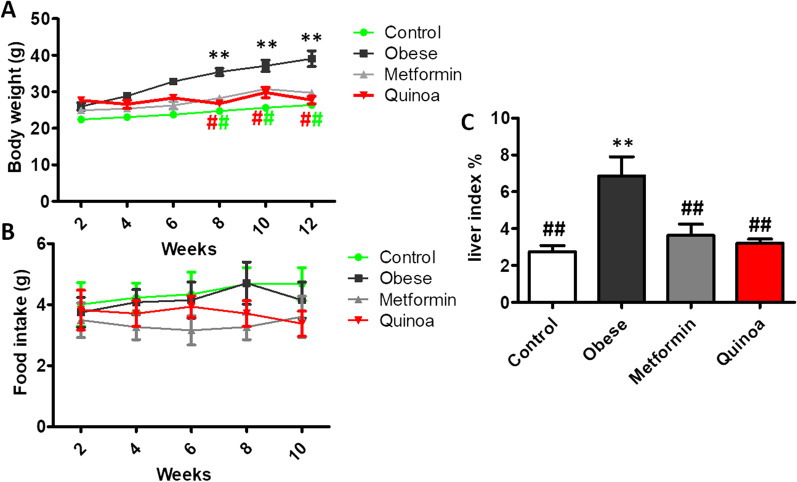
Six-week-old C57BL/6J female mice have received a high-fat diet (HFD) to induce obesity and subsequently were treated with a quinoa diet for 12 weeks. During this period, fasting blood glucose, body fat and insulin resistance were measured regularly. At the end of the experiment, mouse serum and liver tissue were collected. The differences in glucose and lipid metabolism were analyzed, and liver tissue pathological morphology, liver endoplasmic reticulum stress-related mRNA and protein levels, and serum oxidative stress levels were measured.
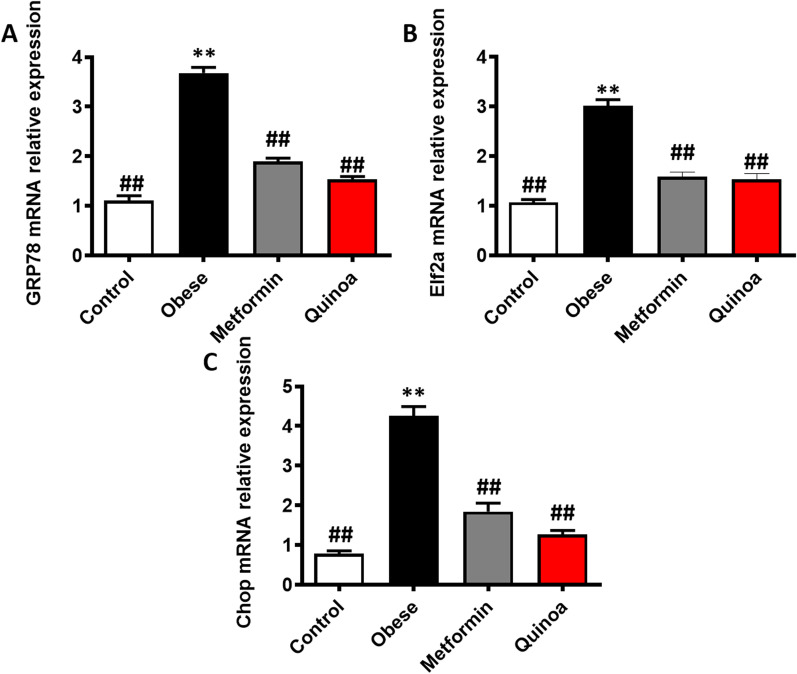
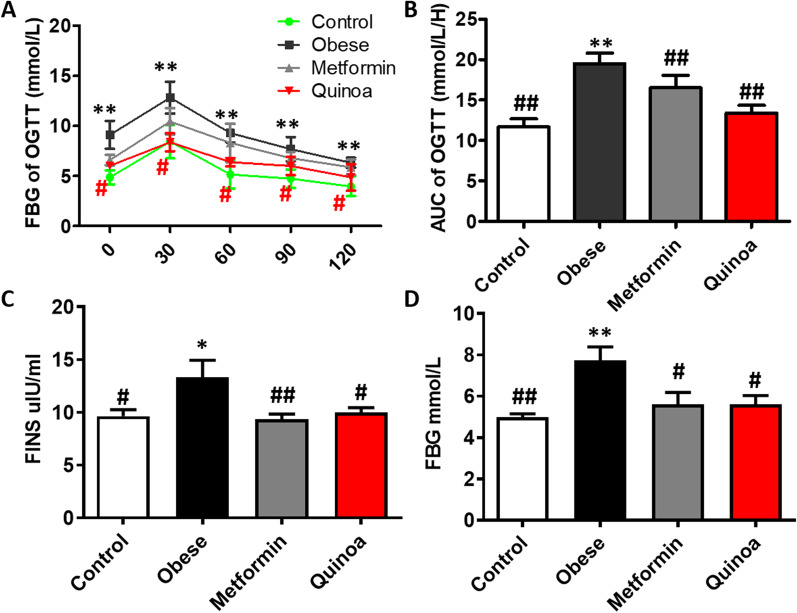
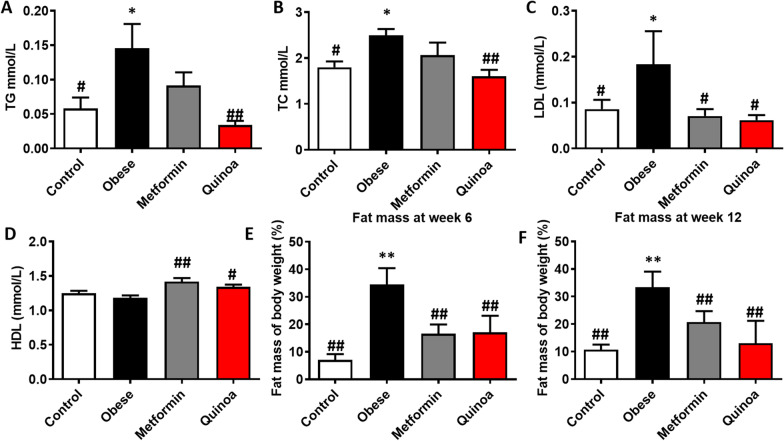
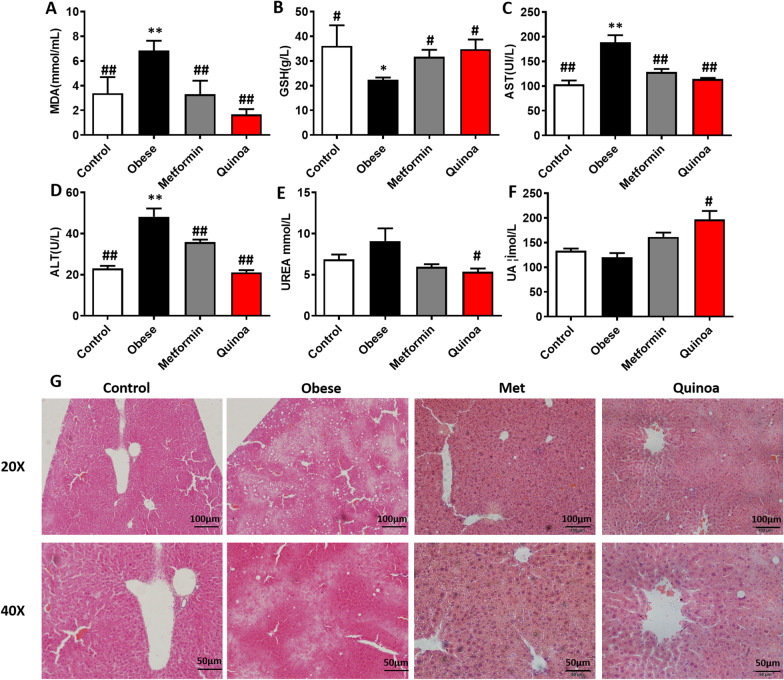
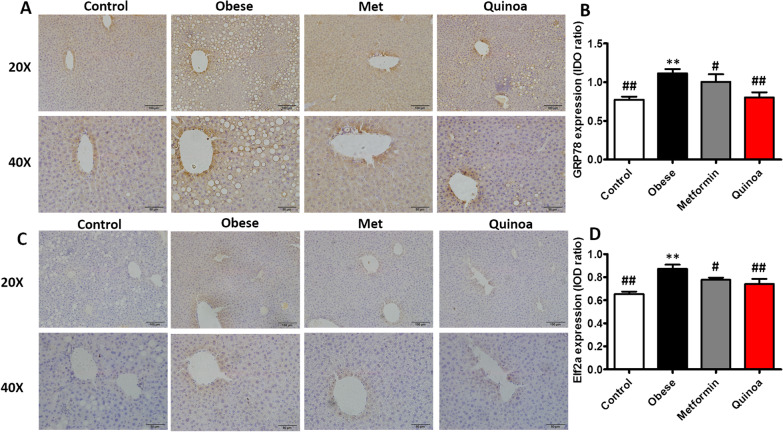
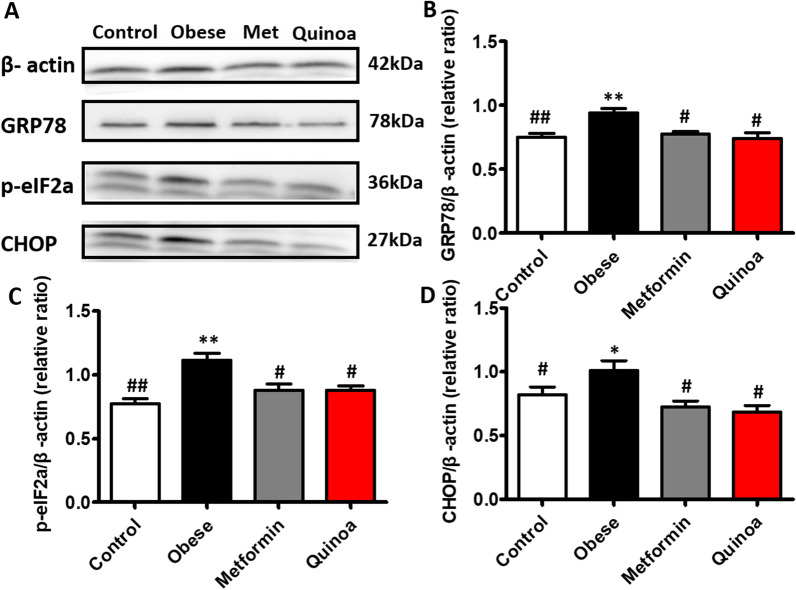
Quinoa diet could significantly reduce the level of blood glucose, triglyceride, cholesterol, low-density lipoprotein, improve glucose tolerance, as well as improve histological changes of liver tissues in obese mice (P < 0.05 or < 0.01). Besides, quinoa could improve oxidative stress indicators such as GSH, and MDA (P < 0.05 or < 0.01). Furthermore, quinoa can down-regulate mRNA expression of ER stress markers eIF2α, GRP78, and CHOP in the liver of obese mice (P < 0.05 or < 0.01).
Quinoa supplementation can improve glycolipid metabolism, regulate ER stress, and alleviate obesity in HFD-induced mice.
探讨藜麦饮食对肥胖小鼠模型糖脂代谢及内质网(ER)应激的影响。
六周龄C57BL/6J雌性小鼠接受高脂饮食(HFD)以诱导肥胖,随后用藜麦饮食治疗12周。在此期间,定期测量空腹血糖、体脂和胰岛素抵抗。实验结束时,收集小鼠血清和肝脏组织。分析糖脂代谢差异,并测量肝脏组织病理形态、肝脏内质网应激相关mRNA和蛋白水平以及血清氧化应激水平。
藜麦饮食可显著降低血糖、甘油三酯、胆固醇、低密度脂蛋白水平,改善糖耐量,以及改善肥胖小鼠肝脏组织学变化(P<0.05或<0.01)。此外,藜麦可改善谷胱甘肽(GSH)和丙二醛(MDA)等氧化应激指标(P<0.05或<0.01)。此外,藜麦可下调肥胖小鼠肝脏中内质网应激标志物真核细胞起始因子2α(eIF2α)、葡萄糖调节蛋白78(GRP78)和C/EBP同源蛋白(CHOP)的mRNA表达(P<0.05或<0.01)。
补充藜麦可改善高脂饮食诱导小鼠的糖脂代谢,调节内质网应激,并减轻肥胖。