Zhang Haoran, Li Peiran, Zhang Zhiwen, Li Wenjing, Chen Jinyu, Song Xuan, Shibasaki Ryosuke, Yan Jinyue
Center for Spatial Information Science, The University of Tokyo 5-1-5 Kashiwanoha, 277-8568 Kashiwa-shi, Chiba, Japan.
School of Business, Society & Engineering, Mälardalen University, SE-72123 Västerås, Sweden.
Cities. 2022 Jan;120:103502. doi: 10.1016/j.cities.2021.103502. Epub 2021 Oct 22.
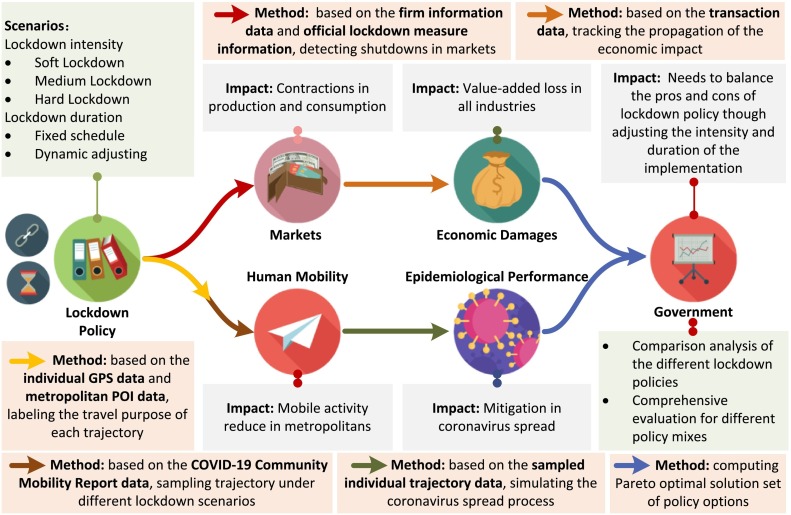
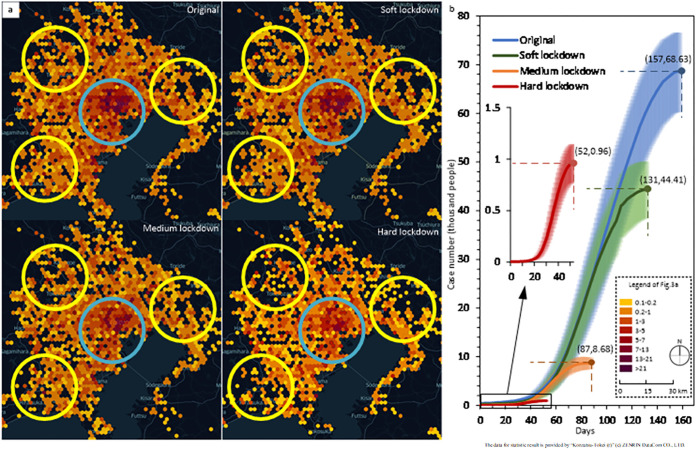
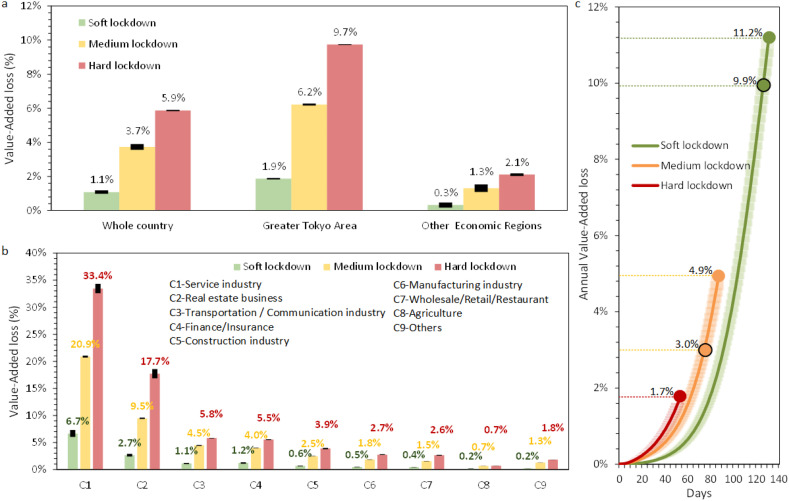
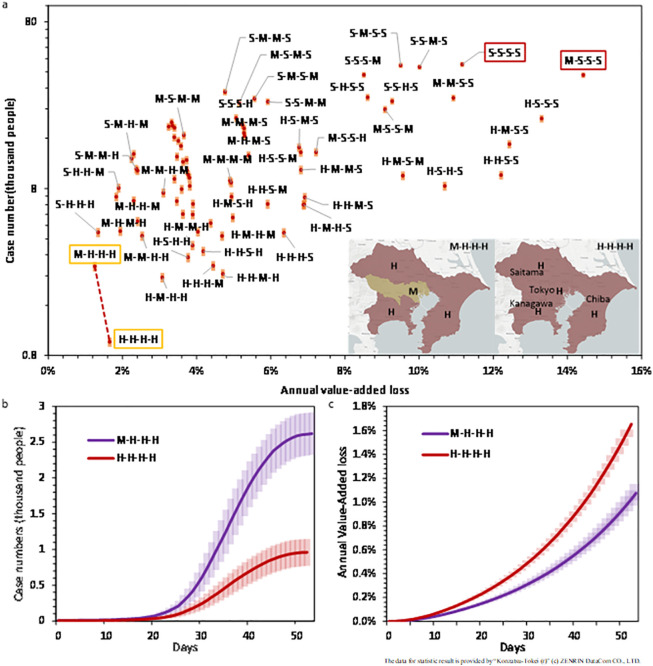
Lockdown measures have been a "panacea" for pandemic control but also a violent "poison" for economies. Lockdown policies strongly restrict human mobility but mobility reduce does harm to economics. Governments meet a thorny problem in balancing the pros and cons of lockdown policies, but lack comprehensive and quantified guides. Based on millions of financial transaction records, and billions of mobility data, we tracked spatio-temporal business networks and human daily mobility, then proposed a high-resolution two-sided framework to assess the epidemiological performance and economic damage of different lockdown policies. We found that the pandemic duration under the strictest lockdown is less about two months than that under the lightest lockdown, which makes the strictest lockdown characterize both epidemiologically and economically efficient. Moreover, based on the two-sided model, we explored the spatial lockdown strategy. We argue that cutting off intercity commuting is significant in both epidemiological and economical aspects, and finally helped governments figure out the Pareto optimal solution set of lockdown strategy.
封锁措施是疫情防控的“万灵药”,但也是经济的一剂猛“毒”。封锁政策极大地限制了人员流动,而人员流动的减少对经济造成了损害。政府在权衡封锁政策利弊时面临棘手问题,且缺乏全面且量化的指导。基于数百万笔金融交易记录和数十亿条出行数据,我们追踪了时空商业网络和人类日常出行,进而提出了一个高分辨率的双边框架,以评估不同封锁政策的流行病学表现和经济损害。我们发现,最严格封锁下的疫情持续时间比最宽松封锁下的少约两个月,这使得最严格封锁在流行病学和经济方面都具有效率。此外,基于双边模型,我们探索了空间封锁策略。我们认为,切断城市间通勤在流行病学和经济方面都意义重大,最终帮助政府找出了封锁策略的帕累托最优解集。