Department of Dermatology, School of Medicine, University of California, Davis, Sacramento, CA, United States.
Department of Pathology, Microbiology and Immunology, School of Veterinary Medicine, University of California, Davis, Davis, CA, United States.
Front Immunol. 2021 Oct 11;12:752484. doi: 10.3389/fimmu.2021.752484. eCollection 2021.
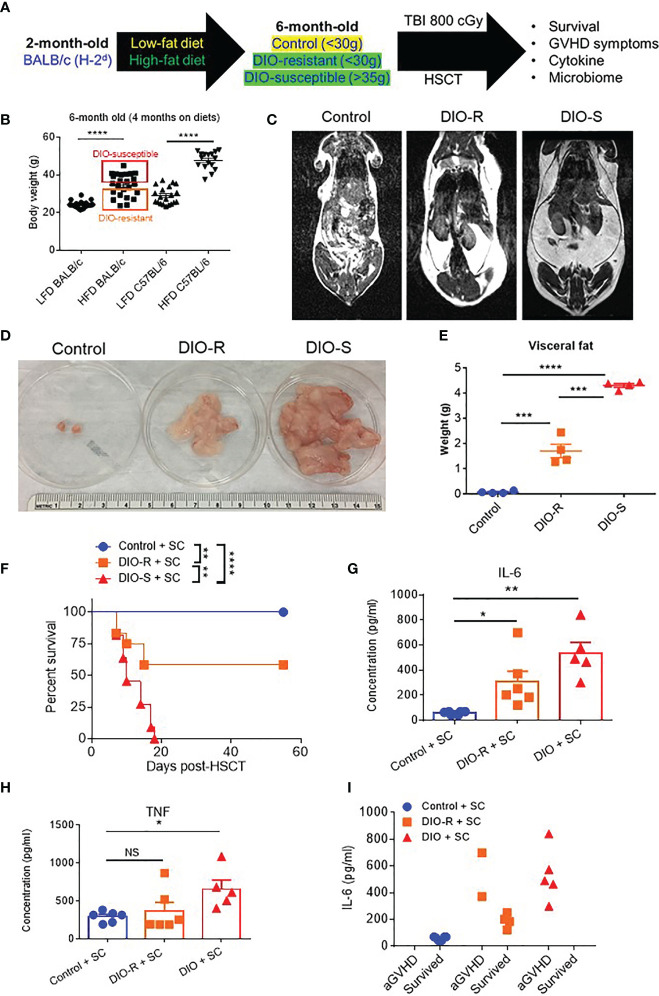
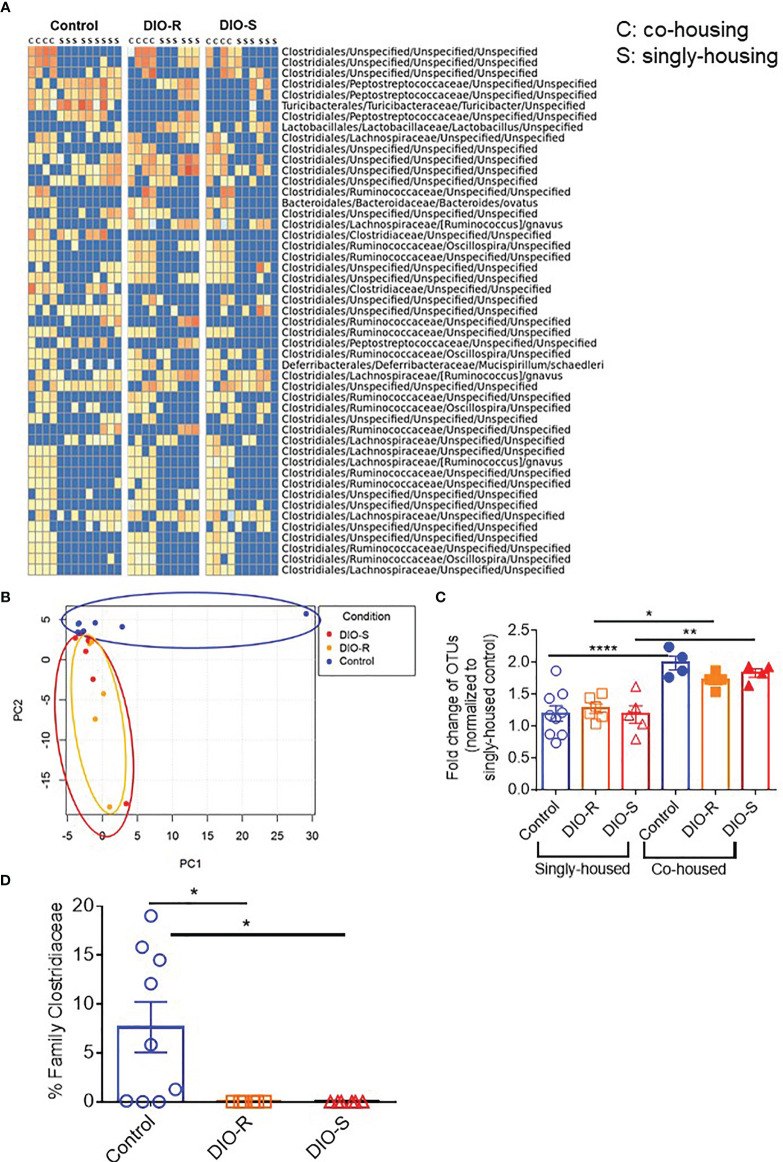
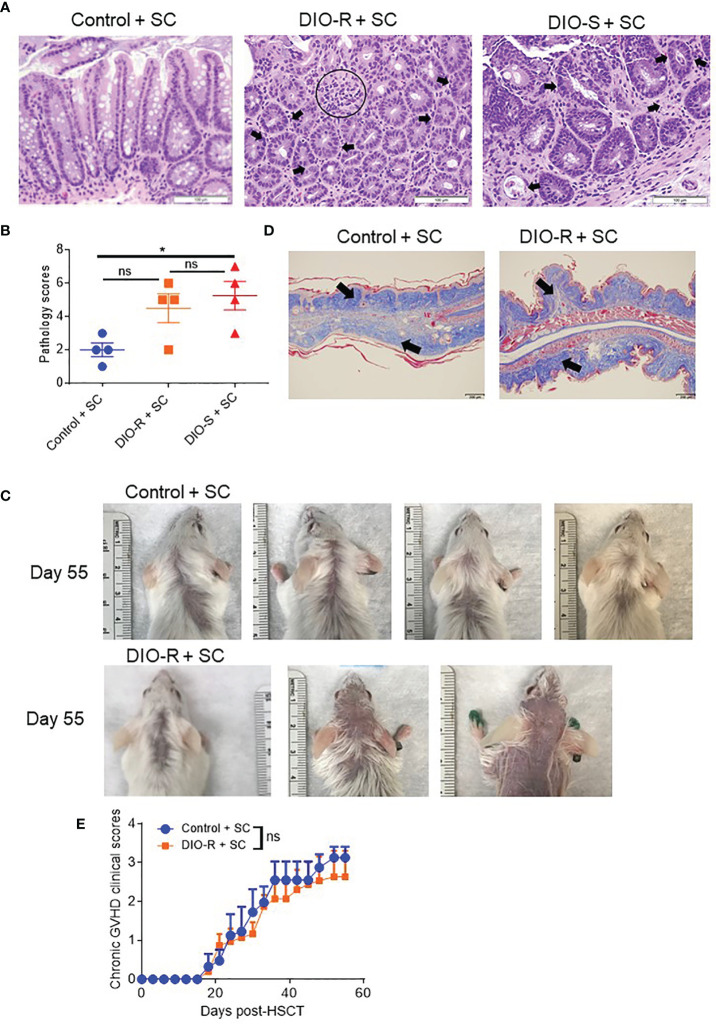
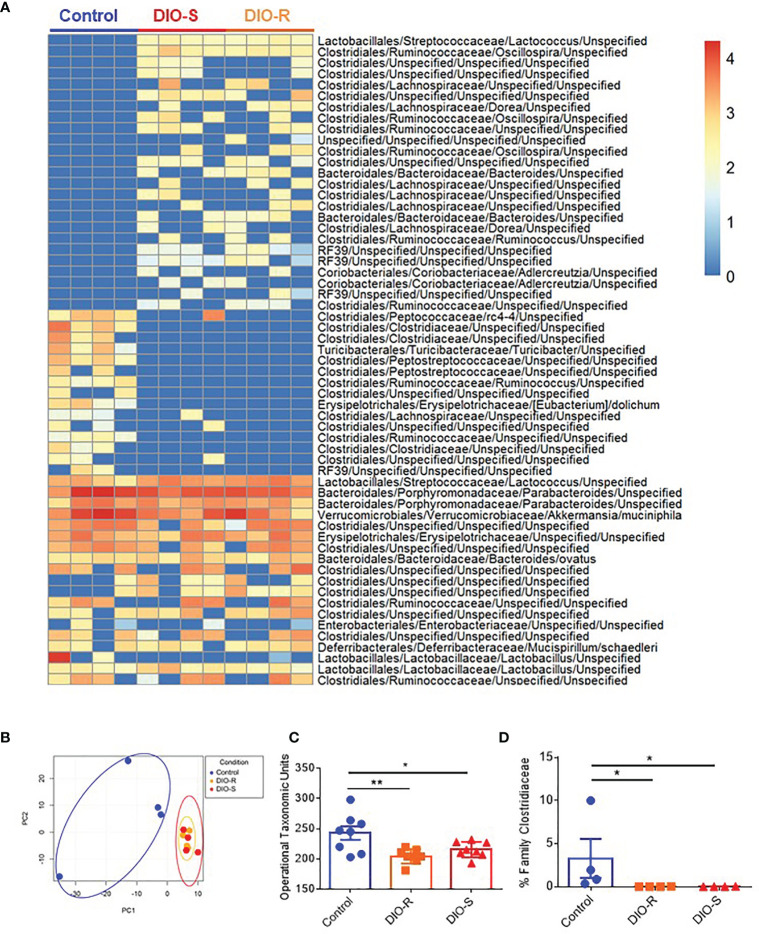
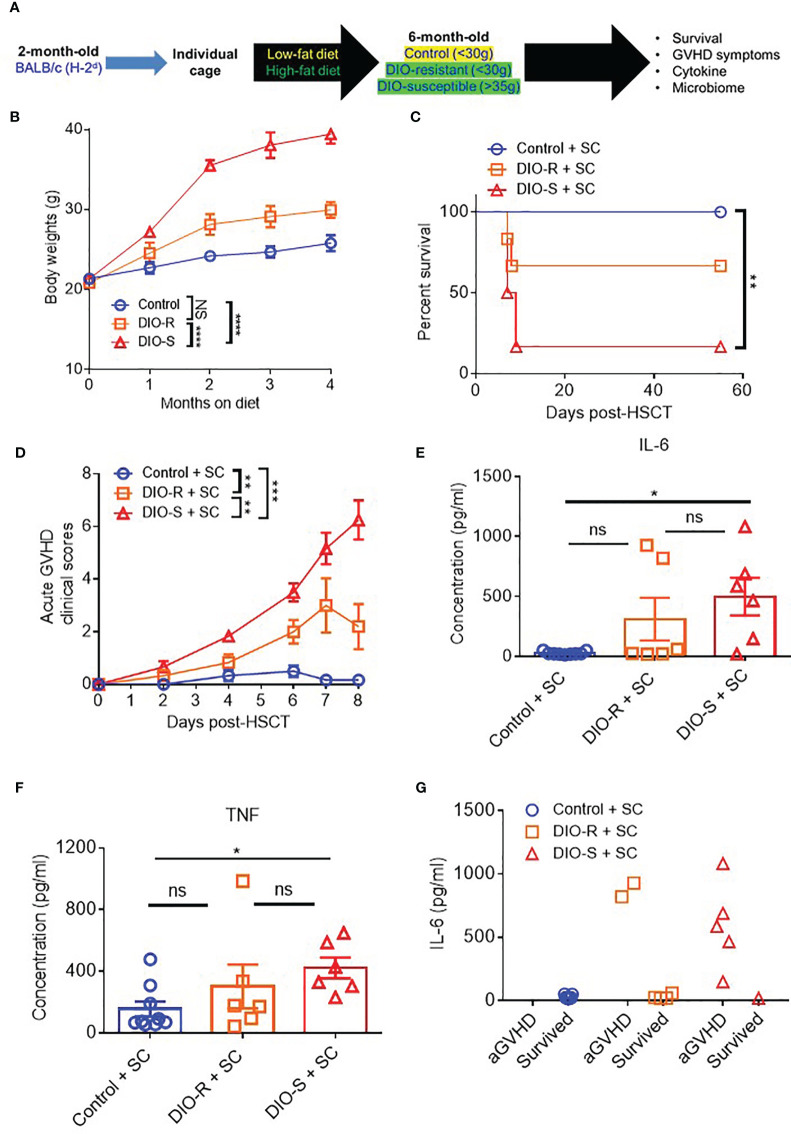
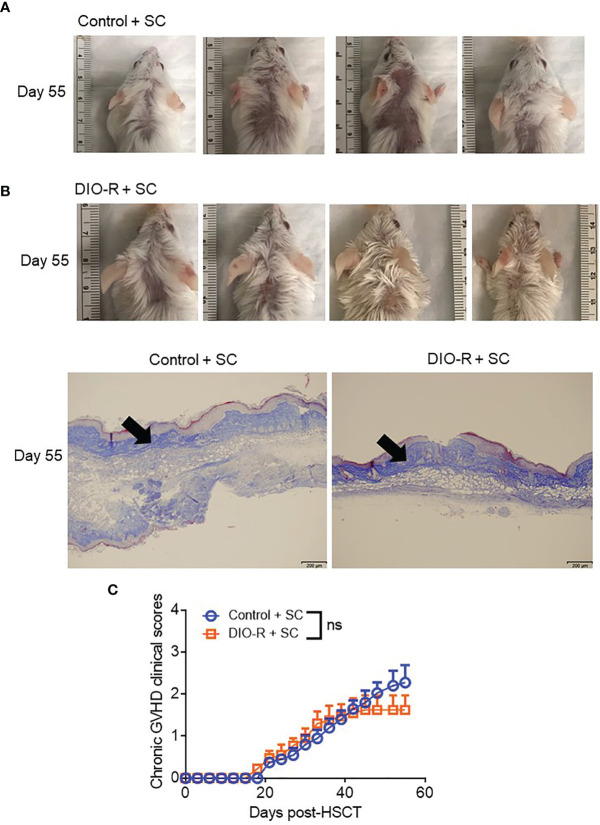
The efficacy of allogeneic hematopoietic stem cell transplantation (allo-HSCT) is limited by the occurrence of acute and chronic graft--host disease (GVHD). We have recently demonstrated that obesity results in exacerbated acute gastrointestinal GVHD in both mouse models and clinical outcomes due to increased pro-inflammatory cytokine responses and microbiota alterations. We therefore wanted to delineate the role of the various parameters in obesity, adiposity, effects of high-fat (HF) diet, and the role of microbiome on GVHD pathogenesis, by taking advantage of a mouse strain resistant to diet-induced obesity (DIO). Female BALB/c mice are resistant to DIO phenotype with approximately 50% becoming DIO under HF diets. The DIO-susceptible recipients rapidly succumb to acute gut GVHD, whereas the DIO-resistant recipient littermates, which do not become obese, are partially protected from GVHD, indicating that being on HF diet alone contributes to but is not the primary driver of GVHD. Microbiome assessment revealed restricted diversity in both cohorts of mice, but coprophagy normalizes the microbiota in mice housed together. We then individually housed DIO-resistant, DIO-susceptible, and lean control mice. Notably, each of the individually housed groups demonstrates marked restricted diversity that has been shown to occur from the stress of single housing. Despite the restricted microbiome diversity, the GVHD pathogenesis profile remains consistent in the group-housed mice, with the lean control single-housed mice exhibiting no acute GVHD and DIO-resistant recipients showing again partial protection. These results demonstrate that the deleterious effects of obesity on acute gut GVHD are critically dependent on adiposity with the HF diet also playing a lesser role, and the microbiome alterations with obesity instead appear to fuel ongoing acute GVHD processes.
同种异体造血干细胞移植(allo-HSCT)的疗效受到急性和慢性移植物抗宿主病(GVHD)的限制。我们最近的研究表明,肥胖会导致小鼠模型和临床结果中急性胃肠道 GVHD 加重,这是由于促炎细胞因子反应和微生物群的改变增加所致。因此,我们希望通过利用一种对饮食诱导肥胖(DIO)有抵抗力的小鼠品系,阐明肥胖、肥胖症、高脂肪(HF)饮食的影响以及微生物组在 GVHD 发病机制中的各种参数的作用。雌性 BALB/c 小鼠对 DIO 表型具有抗性,大约 50%的小鼠在 HF 饮食下会发生 DIO。易感 DIO 的接受者会迅速死于急性肠道 GVHD,而不易发生 DIO 的接受者同窝鼠则部分免受 GVHD 的影响,这表明仅 HF 饮食本身会促进但不是 GVHD 的主要驱动因素。微生物组评估显示,两组小鼠的多样性都受到限制,但共食可使共同饲养的小鼠的微生物组恢复正常。然后,我们将不易发生 DIO 的、易发生 DIO 的和瘦鼠的接受者分别单独饲养。值得注意的是,单独饲养的每组小鼠都表现出明显的多样性受限,这种受限是由单独饲养的应激引起的。尽管微生物组多样性受到限制,但群体饲养的小鼠的 GVHD 发病机制特征仍然一致,单独饲养的瘦鼠没有发生急性 GVHD,不易发生 DIO 的接受者再次显示部分保护。这些结果表明,肥胖对急性肠道 GVHD 的有害影响严重依赖于肥胖症,HF 饮食的作用较小,而肥胖症引起的微生物群改变似乎加剧了急性 GVHD 过程。