Heinke Reinhard, Chevallay Eric, Chrysalidis Katerina, Cocolios Thomas E, Duchemin Charlotte, Fedosseev Valentin N, Hurier Sophie, Lambert Laura, Leenders Benji, Marsh Bruce A, van der Meulen Nicholas P, Sprung Peter, Stora Thierry, Tosato Marianna, Wilkins Shane G, Zhang Hui, Talip Zeynep
Institute for Nuclear and Radiation Physics, KU Leuven, Leuven, Belgium.
European Organization for Nuclear Research CERN, Geneva, Switzerland.
Front Med (Lausanne). 2021 Oct 12;8:712374. doi: 10.3389/fmed.2021.712374. eCollection 2021.
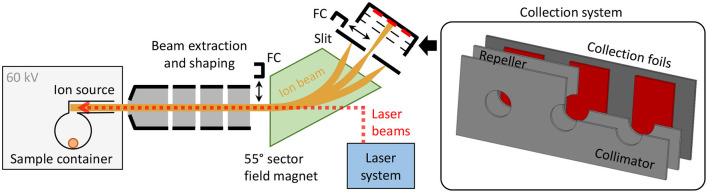
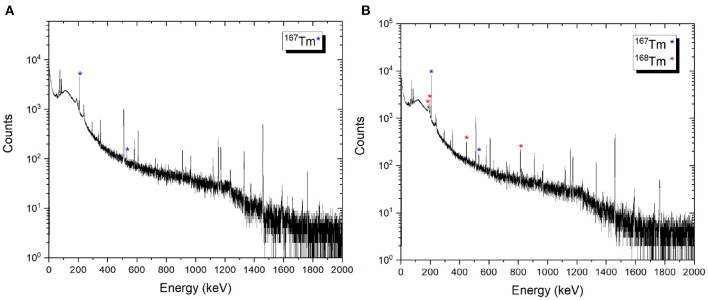
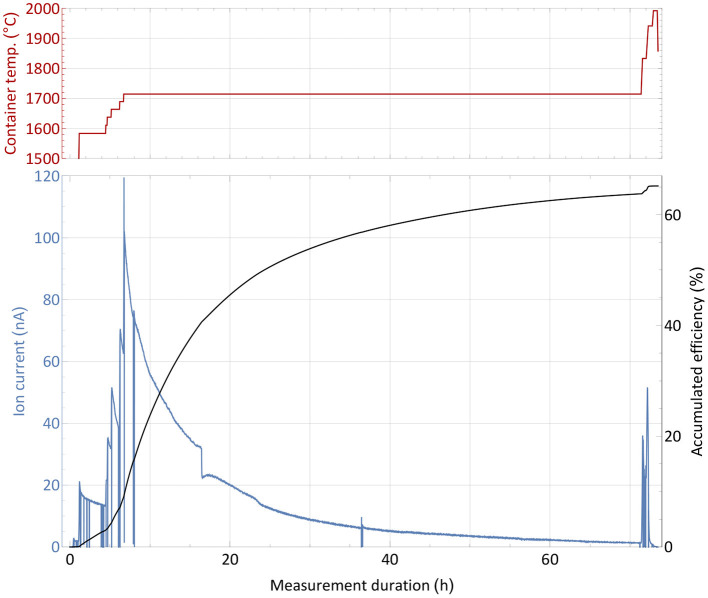
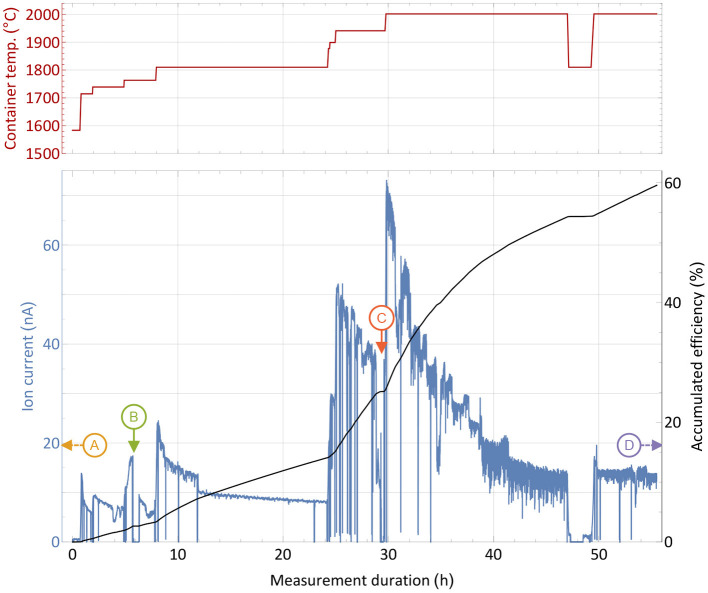
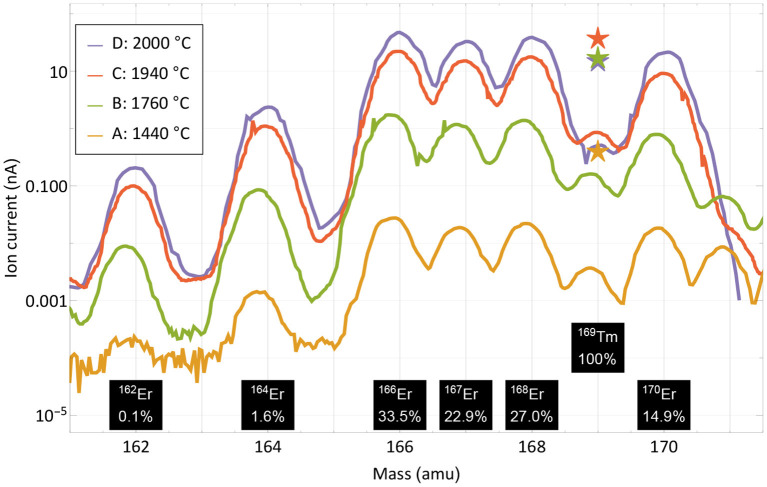
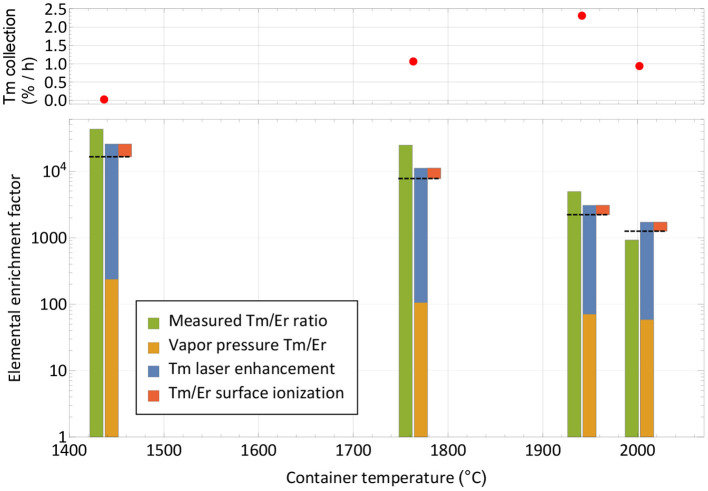
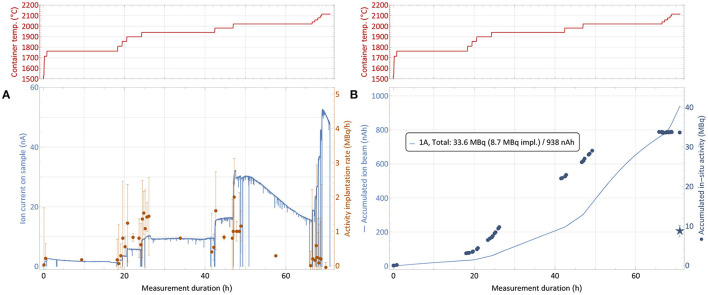
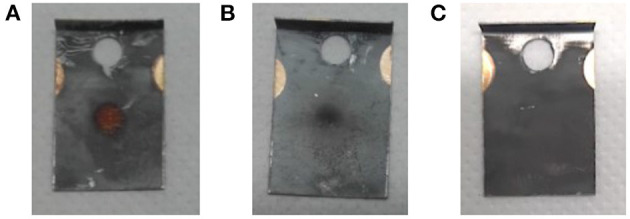
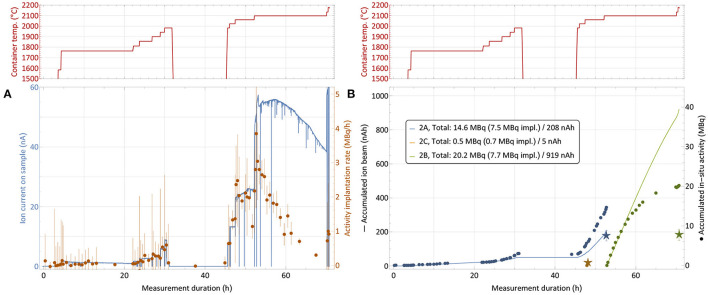
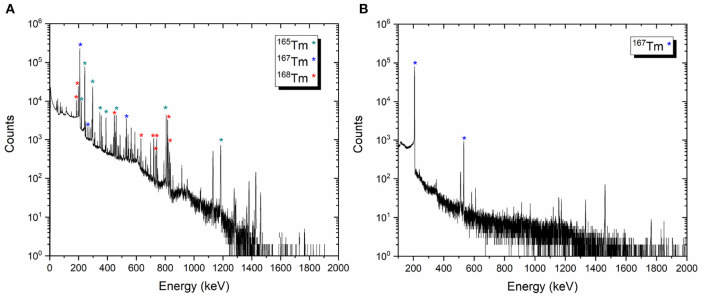
Thulium-167 is a promising radionuclide for nuclear medicine applications with potential use for both diagnosis and therapy ("theragnostics") in disseminated tumor cells and small metastases, due to suitable gamma-line as well as conversion/Auger electron energies. However, adequate delivery methods are yet to be developed and accompanying radiobiological effects to be investigated, demanding the availability of Tm in appropriate activities and quality. We report herein on the production of radionuclidically pure Tm from proton-irradiated natural erbium oxide targets at a cyclotron and subsequent ion beam mass separation at the CERN-MEDICIS facility, with a particular focus on the process efficiency. Development of the mass separation process with studies on stable Tm yielded 65 and 60% for pure and erbium-excess samples. An enhancement factor of thulium ion beam over that of erbium of up to several 10 was shown by utilizing laser resonance ionization and exploiting differences in their vapor pressures. Three Tm samples produced at the IP2 irradiation station, receiving 22.8 MeV protons from Injector II at Paul Scherrer Institute (PSI), were mass separated with collected radionuclide efficiencies between 11 and 20%. Ion beam sputtering from the collection foils was identified as a limiting factor. gamma-measurements showed that up to 45% separation efficiency could be fully collected if these limits are overcome. Comparative analyses show possible neighboring mass suppression factors of more than 1,000, and overall Tm/Er purity increase in the same range. Both the actual achieved collection and separation efficiencies present the highest values for the mass separation of external radionuclide sources at MEDICIS to date.
铥-167是一种在核医学应用中很有前景的放射性核素,由于其具有合适的γ射线以及转换/俄歇电子能量,在弥散性肿瘤细胞和小转移灶的诊断和治疗(“诊疗一体化”)方面具有潜在用途。然而,尚未开发出合适的输送方法,伴随的放射生物学效应也有待研究,这就需要有适当活度和质量的铥。我们在此报告了在回旋加速器中用质子辐照天然氧化铒靶产生放射性纯铥,以及随后在欧洲核子研究中心的MEDICIS设施进行离子束质量分离的过程,特别关注过程效率。通过对稳定铥的研究开发质量分离过程,纯样品和铒过量样品的产率分别为65%和60%。利用激光共振电离并利用铥和铒蒸气压的差异,铥离子束相对于铒离子束的增强因子高达几十。在保罗·谢尔研究所(PSI)的IP2辐照站产生的三个铥样品,接收来自注入器II的22.8 MeV质子,进行了质量分离,收集到的放射性核素效率在11%至20%之间。从收集箔上的离子束溅射被确定为一个限制因素。γ测量表明,如果克服这些限制,高达45%的分离效率可以完全收集。比较分析表明,可能的相邻质量抑制因子超过1000,铥/铒的整体纯度提高幅度在同一范围内。实际实现的收集和分离效率均是MEDICIS目前对外源放射性核素源进行质量分离的最高值。