Department of Biochemistry and Molecular Biology, Key Laboratory of Fertility Preservation and Maintenance of Ministry of Education, School of Basic Medical Science, Ningxia Medical University, Yinchuan, 750004, China.
School of Clinical Medicine, Hainan Medical University, Haikou, 571199, China.
Virol J. 2021 Oct 29;18(1):212. doi: 10.1186/s12985-021-01682-1.
Pneumonia has a high incidence rate and is a major cause of mortality in children, mostly community-acquired pneumonia (CAP). Human bocavirus (HBoV), since it first identified in 2005, has been repeatedly associated with respiratory tract infections. Nevertheless, the role and related information of HBoV as a pathogen of CAP has not been fulfilled. Here our study is to assess the epidemiological and clinical features in HBoV-positive children with CAP.
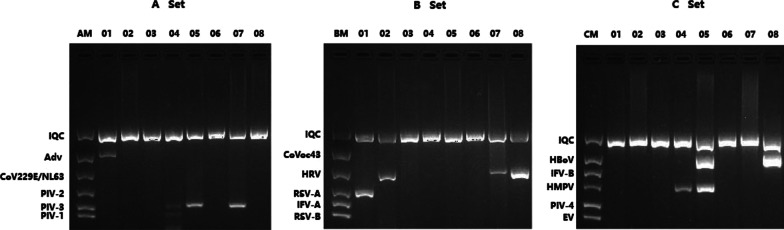
A total of 878 secretions of lower respiratory samples were obtained, multiplex PCR was used to detect HBoV and other respiratory viruses.
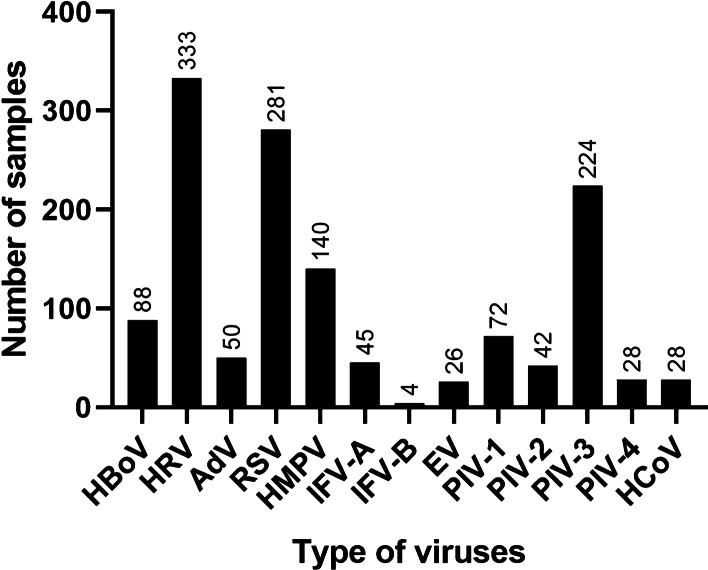
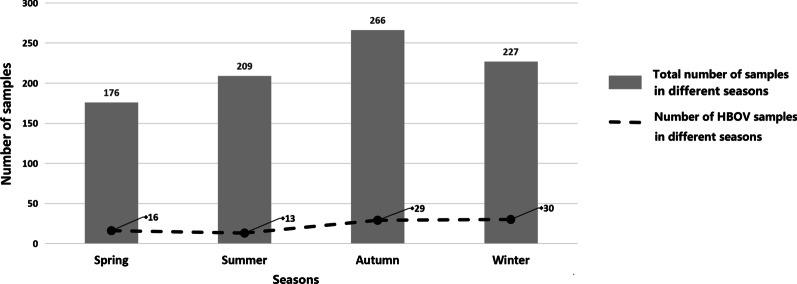
Of all cases, HBoV was detected in 10.0%, with a peak incidence of infection among children < 2 year old, and predominantly noted in autumn and winter. Only 8 patients were HBoV single infection. Co-infection with other respiratory viruses was observed in 86.4%. Moreover, co-infection with bacteria occurred in 27.3% and with Mycoplasma pneumoniae (MP) in 33.0% of HBoV-positive patients. Among all HBoV-positive samples co-infected with bacteria, 87.5% are gram negative bacteria. Compared with HBoV-negative group, age (P = 0.048), wheezing (P = 0.015), tachypnea (P = 0.016), lactate dehydrogenase (P = 0.026) and severe pneumonia (P = 0.023) were statistically significant in HBoV-positive patients. Furthermore, HBoV-positive patients less than 1 year old were more likely to have co-infection with bacteria (P = 0.007).
HBoV can be detected alone in respiratory samples of children with CAP, maybe it is one of the causes of CAP in infants. The high incidence of severe pneumonia was found in HBoV-positive patients compared with HBoV-negative cases may indicate a relationship between severe pneumonia and HBoV.
肺炎发病率高,是儿童死亡的主要原因,主要为社区获得性肺炎(CAP)。自 2005 年首次发现以来,人博卡病毒(HBoV)已反复与呼吸道感染相关。然而,HBoV 作为 CAP 病原体的作用及相关信息尚未得到充分阐明。本研究旨在评估 HBoV 阳性 CAP 患儿的流行病学和临床特征。
共采集 878 例下呼吸道分泌物,采用多重 PCR 法检测 HBoV 和其他呼吸道病毒。
所有病例中,HBoV 检出率为 10.0%,感染高峰为<2 岁儿童,主要发生于秋冬季节。仅 8 例为 HBoV 单纯感染。86.4%患儿存在其他呼吸道病毒混合感染。此外,27.3%的 HBoV 阳性患儿合并细菌感染,33.0%合并肺炎支原体(MP)感染。在所有 HBoV 阳性合并细菌感染的患儿中,87.5%为革兰阴性菌。与 HBoV 阴性组相比,HBoV 阳性组年龄(P=0.048)、喘鸣(P=0.015)、呼吸急促(P=0.016)、乳酸脱氢酶(P=0.026)和重症肺炎(P=0.023)差异有统计学意义。此外,1 岁以下 HBoV 阳性患儿更易合并细菌感染(P=0.007)。
HBoV 可单独检测到呼吸道样本中 CAP 患儿,可能是婴儿 CAP 的病因之一。与 HBoV 阴性组相比,HBoV 阳性患儿重症肺炎发生率较高,HBoV 与重症肺炎之间可能存在一定关系。