Modus Outcomes, Letchworth Garden City, UK.
UCB S.A., Allée de la Recherche, 60, 1070, Brussels, Belgium.
Orphanet J Rare Dis. 2021 Oct 30;16(1):457. doi: 10.1186/s13023-021-02064-0.
Myasthenia gravis (MG) is a chronic autoimmune neuromuscular disease, characterised by fluctuating muscle weakness which makes it challenging to assess symptom severity. Mixed methods psychometrics (MMP), which combines evidence from qualitative research and modern psychometrics, is a versatile approach to the development of patient-centred outcome measures (PCOM) in the context of rare disease. Our objective was to develop the MG Symptom patient-reported outcome (PRO) to assess key aspects of MG severity from the patient perspective.
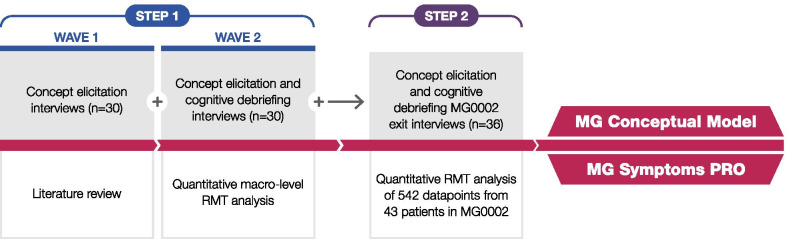
We used MMP to develop a novel PRO instrument in a multi-step process. An initial conceptual model for MG patient experience was developed and expanded based on preliminary literature review and two waves of concept elicitation interviews with people with MG (Step 1). Based on this, the novel PRO instrument, the MG Symptoms PRO, was drafted. The draft instrument was refined by combining qualitative and quantitative data collected in a Phase 2 clinical study (Step 2).
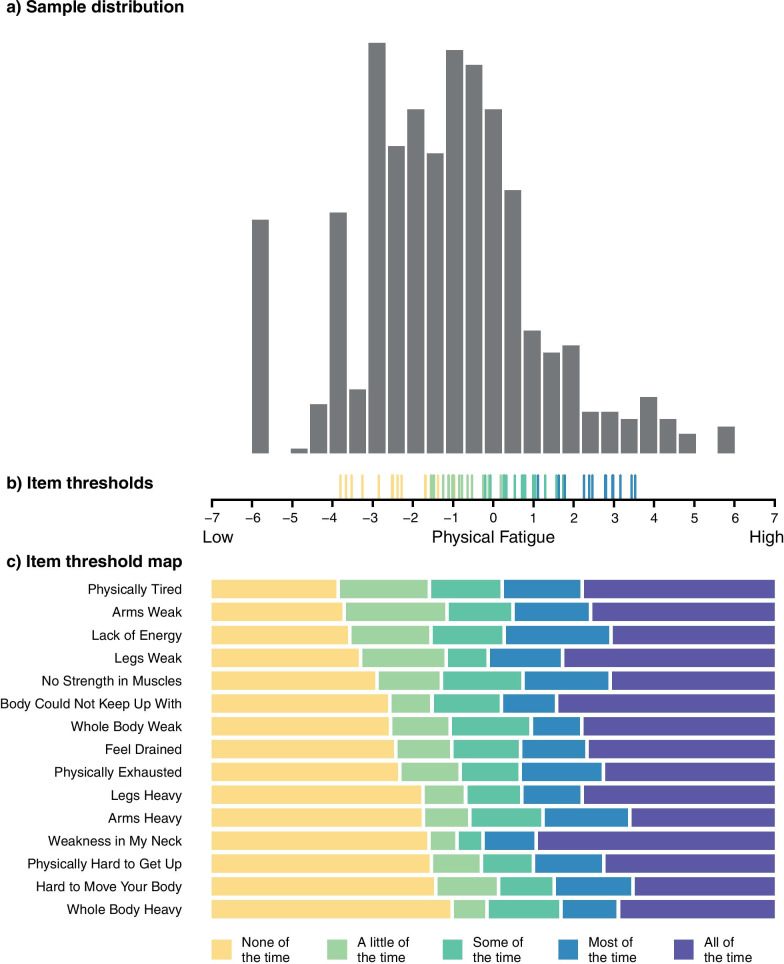
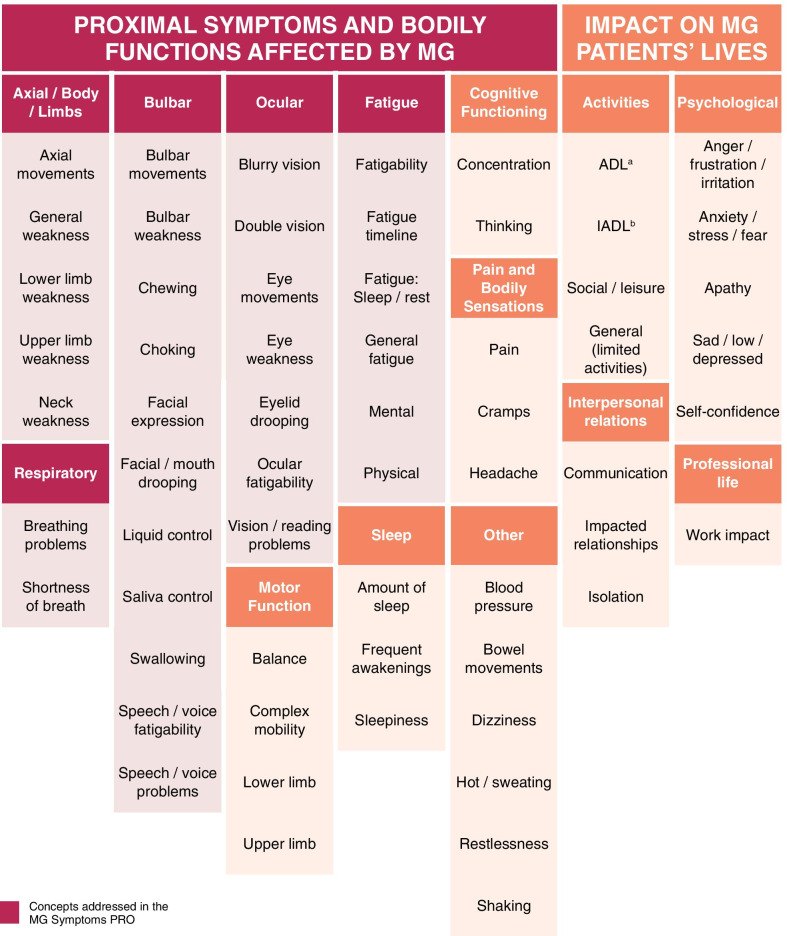
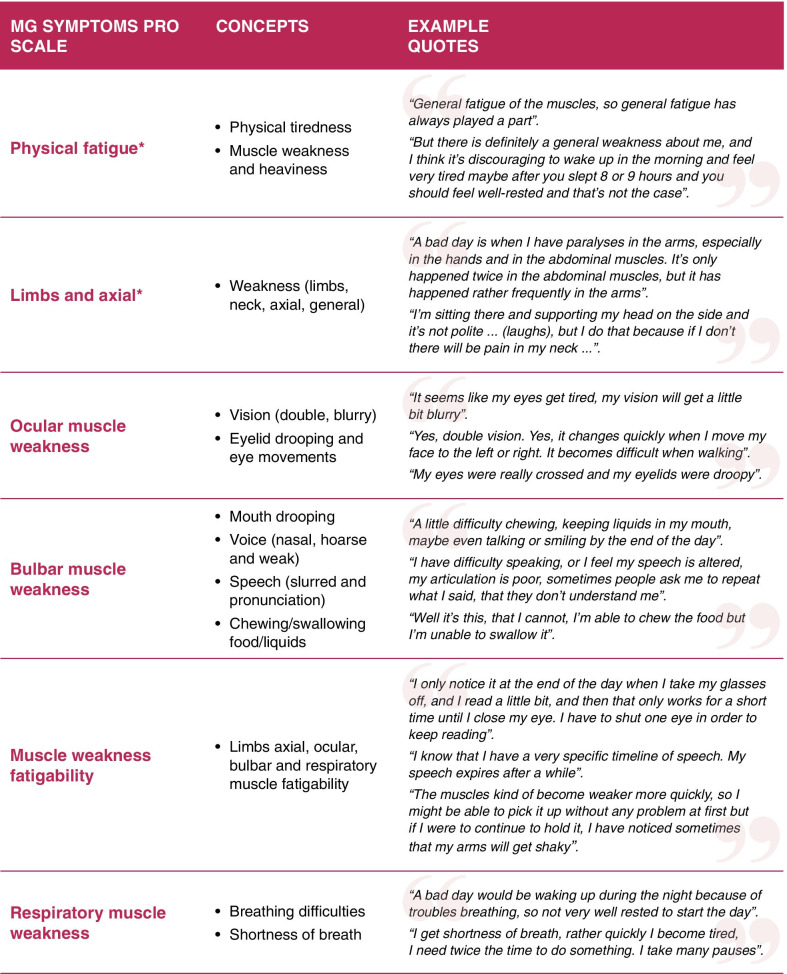
Findings from the literature review and concept elicitation interviews (n = 96) indicated that patient experience in MG includes proximal muscle weakness symptoms related to several body parts, along with muscle weakness fatigability and general fatigue. Then, a set of 42 items across five scales (ocular-, bulbar-, and respiratory muscle weakness, physical fatigue, and muscle weakness fatigability) was developed. Qualitative evidence endorsed its relevance, clarity, and ease of completion; quantitative analysis with Rasch measurement theory methods demonstrated strong measurement properties, including good targeting and high reliability. Classical test theory analyses showed adequate reliability of the instrument and mild to moderate correlations with other widely used MG-specific outcome measures.
The MG Symptoms PRO has potential to be used both to measure treatment benefit in clinical trials and monitor symptom severity in clinical practice. Its component scales were purposefully designed to stand alone, enhancing interpretability of scores given the heterogeneity of MG, and enabling modular use. Compared with existing MG PROs, it contains more detailed assessments of muscle weakness and muscle weakness fatigability symptoms, which are of key importance to people with MG. The MMP approach used may serve as a case study for developing PCOMs across rare disease indications.
重症肌无力(MG)是一种慢性自身免疫性神经肌肉疾病,其特征是肌肉无力波动,这使得评估症状严重程度具有挑战性。混合方法心理测量学(MMP)结合了定性研究和现代心理测量学的证据,是一种在罕见疾病背景下开发以患者为中心的结局测量(PCOM)的通用方法。我们的目标是开发重症肌无力症状患者报告结局(PRO),从患者角度评估重症肌无力严重程度的关键方面。
我们使用 MMP 在多步骤过程中开发了一种新的 PRO 工具。基于初步文献回顾和两轮与重症肌无力患者的概念启发访谈,开发了初始重症肌无力患者体验概念模型,并进行了扩展(步骤 1)。在此基础上,起草了新型 PRO 工具,即重症肌无力症状 PRO。通过结合第二阶段临床研究中收集的定性和定量数据对草案工具进行了细化(步骤 2)。
文献回顾和概念启发访谈(n=96)的结果表明,MG 患者体验包括与多个身体部位相关的近端肌肉无力症状,以及肌肉无力疲劳和一般疲劳。然后,开发了一套 42 个项目,涵盖五个量表(眼肌、延髓肌和呼吸肌无力、身体疲劳和肌肉无力疲劳)。定性证据支持其相关性、清晰度和完成的简便性;使用 Rasch 测量理论方法进行的定量分析显示出良好的测量特性,包括良好的靶向性和较高的可靠性。经典测试理论分析表明,该工具具有足够的可靠性,并且与其他广泛使用的重症肌无力特定结局测量工具具有轻度至中度相关性。
重症肌无力症状 PRO 具有在临床试验中衡量治疗效果和在临床实践中监测症状严重程度的潜力。其组成量表是专门设计的,可以单独使用,提高了 MG 异质性下评分的可解释性,并实现了模块化使用。与现有的重症肌无力 PRO 相比,它包含了对肌肉无力和肌肉无力疲劳症状更详细的评估,这对重症肌无力患者至关重要。使用的 MMP 方法可以作为在罕见疾病适应症中开发 PCOM 的案例研究。