Institute of Physiology, University of Zurich, Zürich, Switzerland.
National Center of Competence in Research NCCR Kidney.CH, Zürich, Switzerland.
Nephrol Dial Transplant. 2021 Dec 28;37(Suppl 2):ii4-ii12. doi: 10.1093/ndt/gfab216.
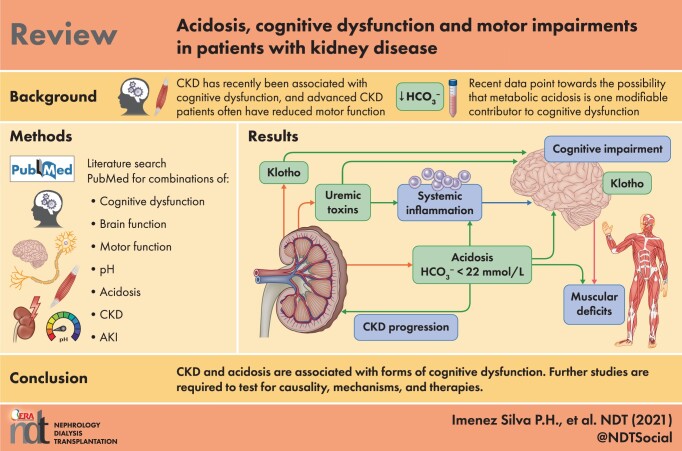
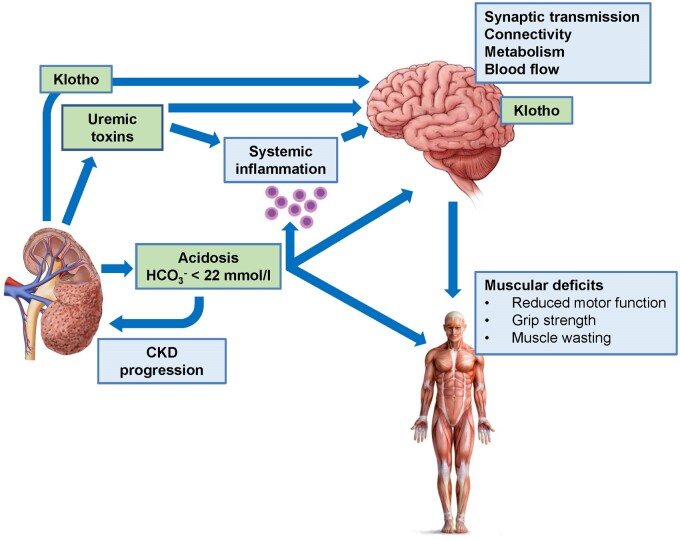
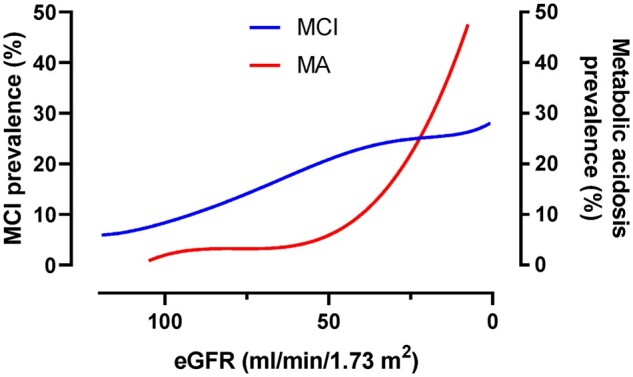
Metabolic acidosis, defined as a plasma or serum bicarbonate concentration <22 mmol/L, is a frequent consequence of chronic kidney disease (CKD) and occurs in ~10-30% of patients with advanced stages of CKD. Likewise, in patients with a kidney transplant, prevalence rates of metabolic acidosis range from 20% to 50%. CKD has recently been associated with cognitive dysfunction, including mild cognitive impairment with memory and attention deficits, reduced executive functions and morphological damage detectable with imaging. Also, impaired motor functions and loss of muscle strength are often found in patients with advanced CKD, which in part may be attributed to altered central nervous system (CNS) functions. While the exact mechanisms of how CKD may cause cognitive dysfunction and reduced motor functions are still debated, recent data point towards the possibility that acidosis is one modifiable contributor to cognitive dysfunction. This review summarizes recent evidence for an association between acidosis and cognitive dysfunction in patients with CKD and discusses potential mechanisms by which acidosis may impact CNS functions. The review also identifies important open questions to be answered to improve prevention and therapy of cognitive dysfunction in the setting of metabolic acidosis in patients with CKD.
代谢性酸中毒定义为血浆或血清碳酸氢盐浓度<22mmol/L,是慢性肾脏病(CKD)的常见后果,约 10-30%的 CKD 晚期患者发生代谢性酸中毒。同样,在接受肾移植的患者中,代谢性酸中毒的患病率从 20%到 50%不等。最近的研究表明,CKD 与认知功能障碍有关,包括伴有记忆和注意力缺陷的轻度认知障碍、执行功能降低以及影像学可检测到的形态学损伤。此外,在晚期 CKD 患者中,经常会发现运动功能受损和肌肉力量丧失,这在一定程度上可能归因于中枢神经系统(CNS)功能改变。虽然 CKD 导致认知功能障碍和运动功能降低的确切机制仍存在争议,但最近的数据表明,酸中毒是导致认知功能障碍的一个可改变的因素。本文综述了酸中毒与 CKD 患者认知功能障碍之间的关联的最新证据,并讨论了酸中毒可能影响 CNS 功能的潜在机制。本文还确定了需要回答的重要开放性问题,以改善代谢性酸中毒患者 CKD 认知功能障碍的预防和治疗。