Department of Neurology, UT Southwestern Medical Center, Dallas, TX, USA.
Department of Pediatrics, UT Southwestern Medical Center, 5323 Harry Hines Blvd, Dallas, TX, 75390-8548, USA.
Inflammation. 2022 Apr;45(2):800-811. doi: 10.1007/s10753-021-01585-x. Epub 2021 Oct 31.
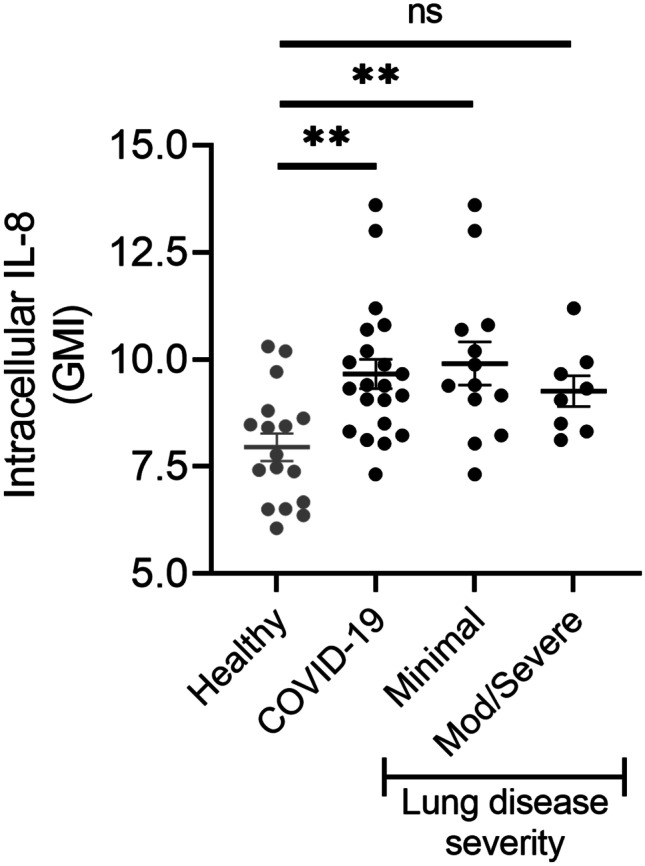
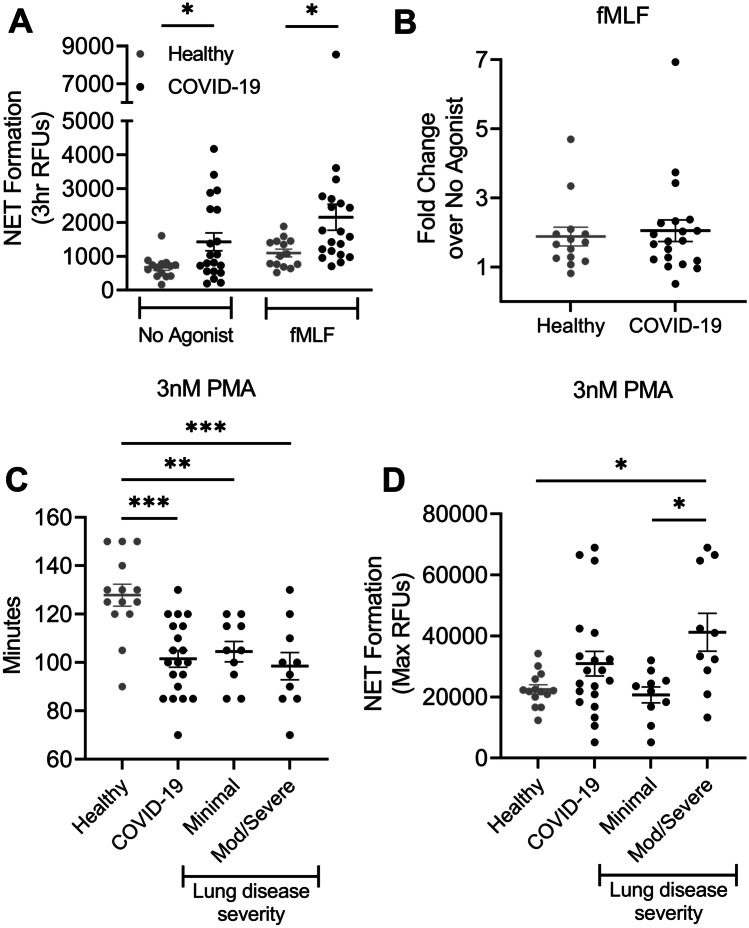
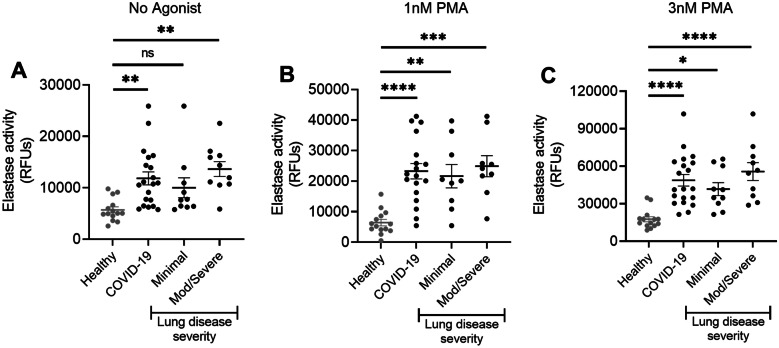
Severe lung inflammation is common in life-threatening coronavirus disease 2019 (COVID-19). This study tested the hypothesis that polymorphonuclear (PMN, neutrophil) phenotype early in the course of disease progression would predict peak lung disease severity in patients infected with severe acute respiratory syndrome coronavirus 2 (SARS-CoV-2). It is increasingly evident that PMN activation contributes to tissue injury resulting from extracellular reactive oxygen species generation, granule exocytosis with release of proteases, neutrophil extracellular trap (NET) formation, and release of cytokines. The current study focuses on PMN activation in response to SARS-CoV-2 infection, specifically, the association between NETs and lung disease. This is a prospective cohort study at an academic medical center with patients enrolled within 4 days of admission at 3 tertiary hospitals: Clements University Hospital, Parkland Memorial Hospital, and Children's Health in Dallas, TX. Patients were categorized as having minimal or moderate to severe lung disease based on peak respiratory support. Healthy donor controls matched for age, sex, race, and ethnicity were also enrolled. Neutrophils from COVID-19 patients displayed greater IL-8 expression, elastase release, and NET formation as compared with neutrophils from healthy donors. Importantly, neutrophils from COVID-19 patients had enhanced NET formation in the absence of any additional stimulus, not seen in PMN from healthy donors. Moreover, PMA-elicited NET formation by circulating PMN correlated with severity of lung disease. We speculate that neutrophil immuno-phenotyping can be used to predict lung disease severity in COVID-19 patients.
严重的肺部炎症在危及生命的 2019 年冠状病毒病(COVID-19)中很常见。本研究检验了这样一个假设,即在疾病进展的早期,多形核(PMN,中性粒细胞)表型将预测严重急性呼吸综合征冠状病毒 2(SARS-CoV-2)感染患者的肺部疾病严重程度峰值。越来越明显的是,PMN 的激活会导致组织损伤,这是由细胞外活性氧物质的产生、颗粒外排和蛋白酶释放、中性粒细胞胞外陷阱(NET)的形成以及细胞因子的释放引起的。本研究重点关注 SARS-CoV-2 感染引起的 PMN 激活,特别是 NET 与肺部疾病之间的关联。这是在学术医疗中心进行的一项前瞻性队列研究,在达拉斯的 3 家三甲医院(克莱门茨大学医院、帕克兰纪念医院和儿童健康)住院 4 天内入组患者。根据呼吸支持的峰值,将患者分为肺部疾病轻微或中度至重度。还招募了年龄、性别、种族和民族相匹配的健康供体对照。与健康供体的中性粒细胞相比,COVID-19 患者的中性粒细胞表现出更高的 IL-8 表达、弹性蛋白酶释放和 NET 形成。重要的是,与健康供体的中性粒细胞不同,COVID-19 患者的中性粒细胞在没有任何额外刺激的情况下增强了 NET 的形成。此外,循环 PMN 中 PMA 诱导的 NET 形成与肺部疾病的严重程度相关。我们推测,中性粒细胞免疫表型可用于预测 COVID-19 患者的肺部疾病严重程度。