Li Sizheng, Zhang Shengpei, Li Bing, Li He
Key Laboratory of National Forestry and Grassland Administration for Control of Diseases and Pests of South Plantation, Hunan Provincial Key Laboratory for Control of Forest Diseases and Pests, Key Laboratory for Non-Wood Forest Cultivation and Conservation of Ministry of Education, Central South University of Forestry and Technology, Changsha, China.
School of Agricultural Sciences, Zhengzhou University, Zhengzhou, China.
Front Microbiol. 2021 Oct 14;12:736066. doi: 10.3389/fmicb.2021.736066. eCollection 2021.
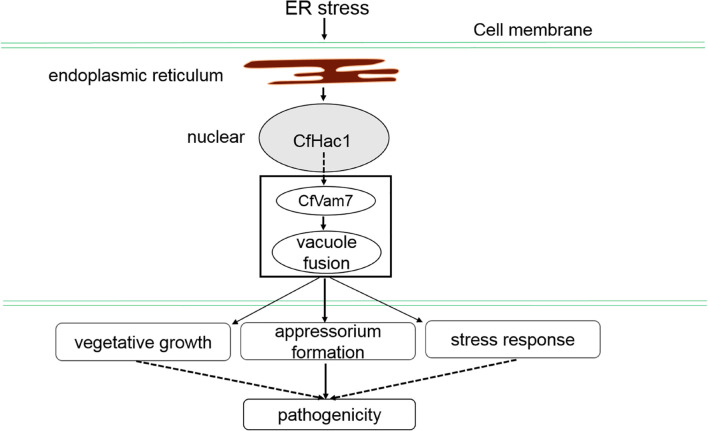
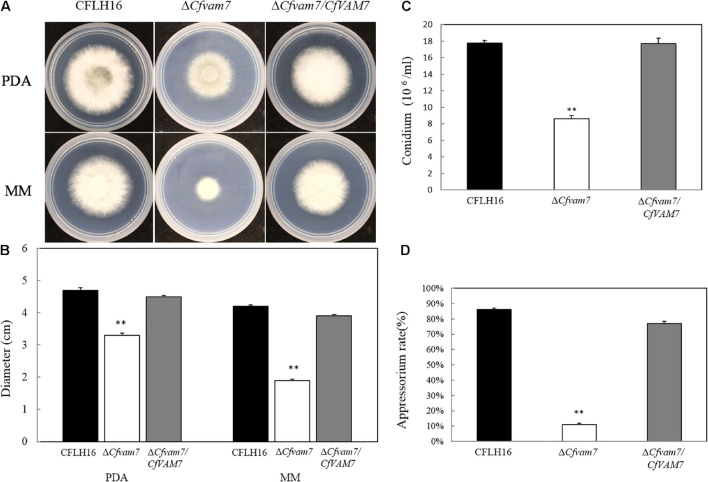
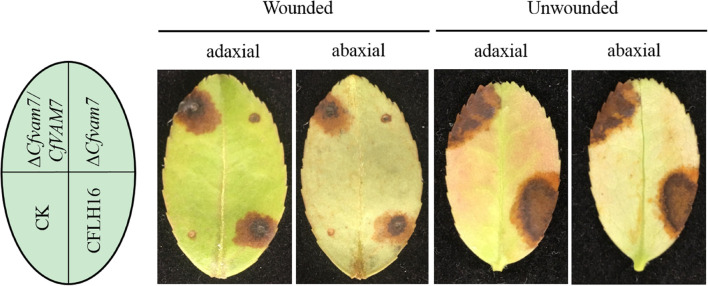
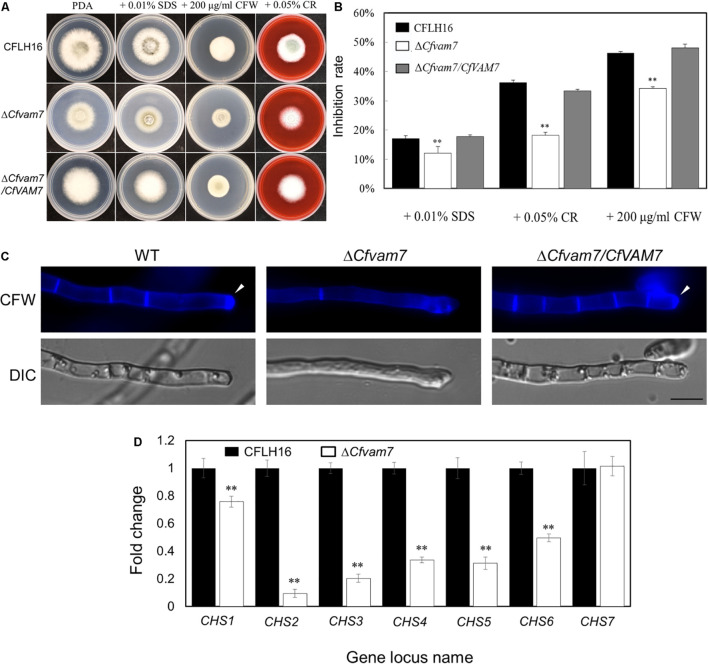
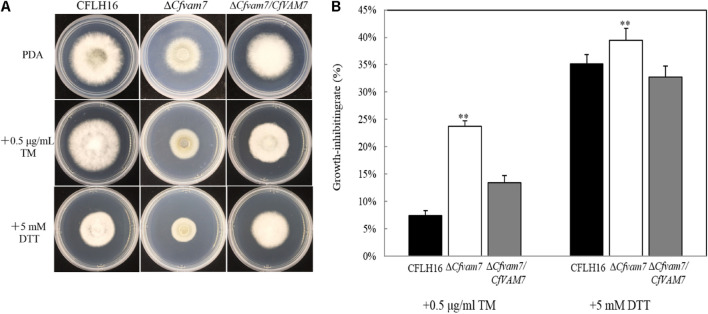
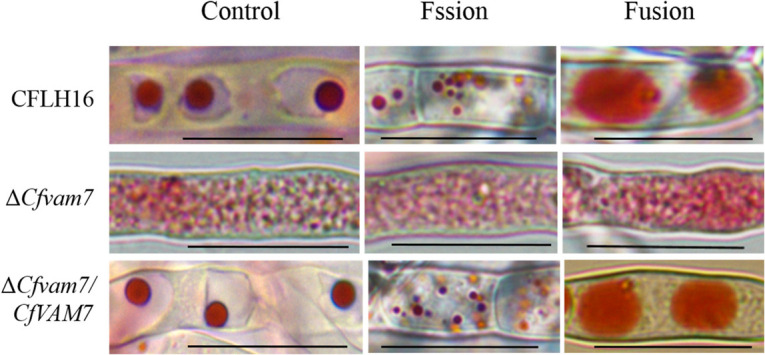
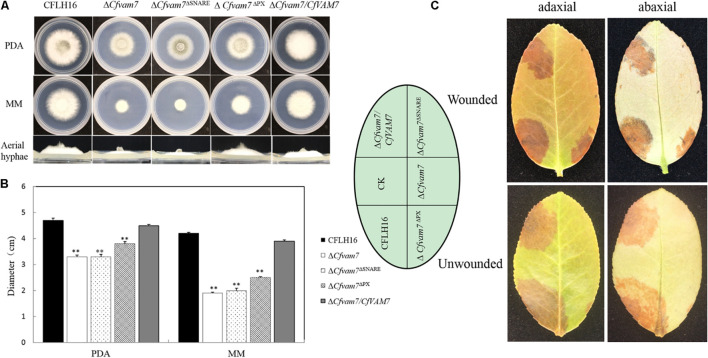
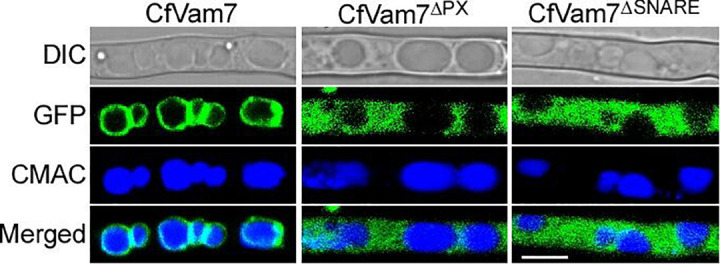
The tea-oil tree is native to China and is cultivated in many parts of southern China. This plant has been grown for over 2,000 years, mainly for its high-quality cooking oil. Anthracnose is the main disease of tea-oil tree and results in a huge loss annually. is a major pathogen causing anthracnose on tea-oil tree. In a previous study, we characterized that the bZIP transcription factor CfHac1 controlled the development and pathogenicity of . Here, we identified and characterized the function of gene, which was significantly downregulated at the transcriptional level in the Δ strain under dithiothreitol stress. Targeted gene deletion revealed that CfVam7 is important in growth, pathogenicity, and responses to endoplasmic reticulum-related stresses. Further analysis revealed that CfVam7 is required for appressorium formation and homotypic vacuole fusion, which are important for fungal pathogen invasion. Cytological examinations revealed that CfVam7 is localized to vacuole membranes in the hyphal stage. The Phox homology (PX) and SNARE domains of CfVam7 were indispensable for normal cellular localization and biological function. Taken together, our results suggested that CfVam7-mediated vacuole membrane fusion promotes growth, stress response, and pathogenicity of .
油茶树原产于中国,在中国南方多地均有种植。这种植物已种植了2000多年,主要用于生产高品质的食用油。炭疽病是油茶树的主要病害,每年都会造成巨大损失。[具体病原体名称未给出]是导致油茶树炭疽病的主要病原菌。在之前的一项研究中,我们发现bZIP转录因子CfHac1控制[具体病原体名称未给出]的发育和致病性。在此,我们鉴定并表征了[具体基因名称未给出]基因的功能,该基因在二硫苏糖醇胁迫下,在Δ菌株的转录水平上显著下调。靶向基因缺失表明CfVam7在生长、致病性以及对内质网相关胁迫的反应中起重要作用。进一步分析表明,CfVam7是附着胞形成和同型液泡融合所必需的,而这对于真菌病原体的入侵很重要。细胞学检查表明,CfVam7在菌丝阶段定位于液泡膜。CfVam7的PX(Phox同源)结构域和SNARE结构域对于正常的细胞定位和生物学功能不可或缺。综上所述,我们的结果表明CfVam7介导的液泡膜融合促进了[具体病原体名称未给出]的生长、应激反应和致病性。