Institut de Pharmacologie et de Biologie Structurale (IPBS), Université de Toulouse, CNRS, UPS, Toulouse, France.
Institut de Mathématiques de Toulouse, UMR5219, Université de Toulouse, CNRS, UPS, Toulouse, France.
PLoS Pathog. 2021 Nov 1;17(11):e1010020. doi: 10.1371/journal.ppat.1010020. eCollection 2021 Nov.
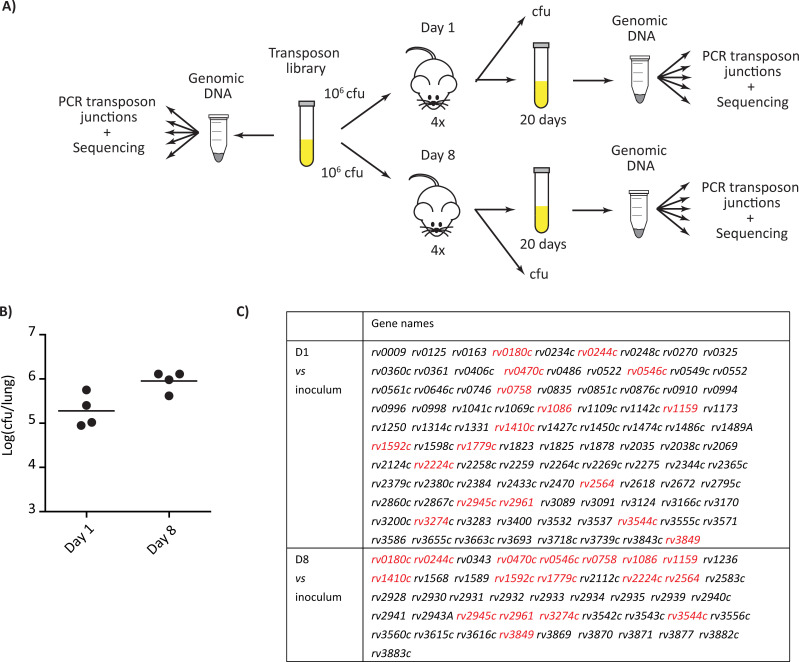
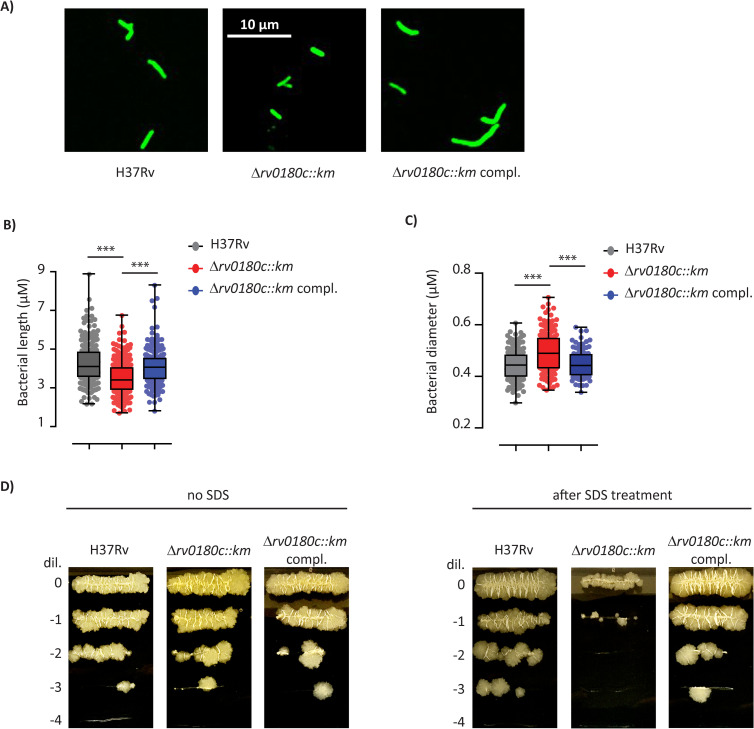
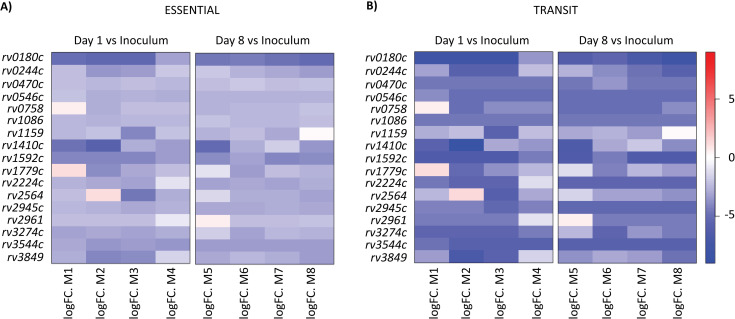
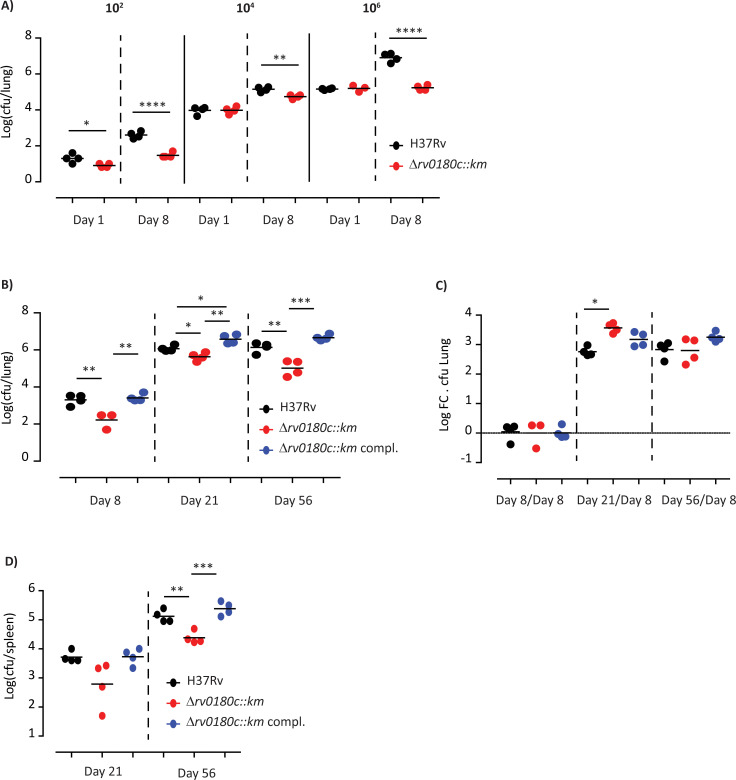
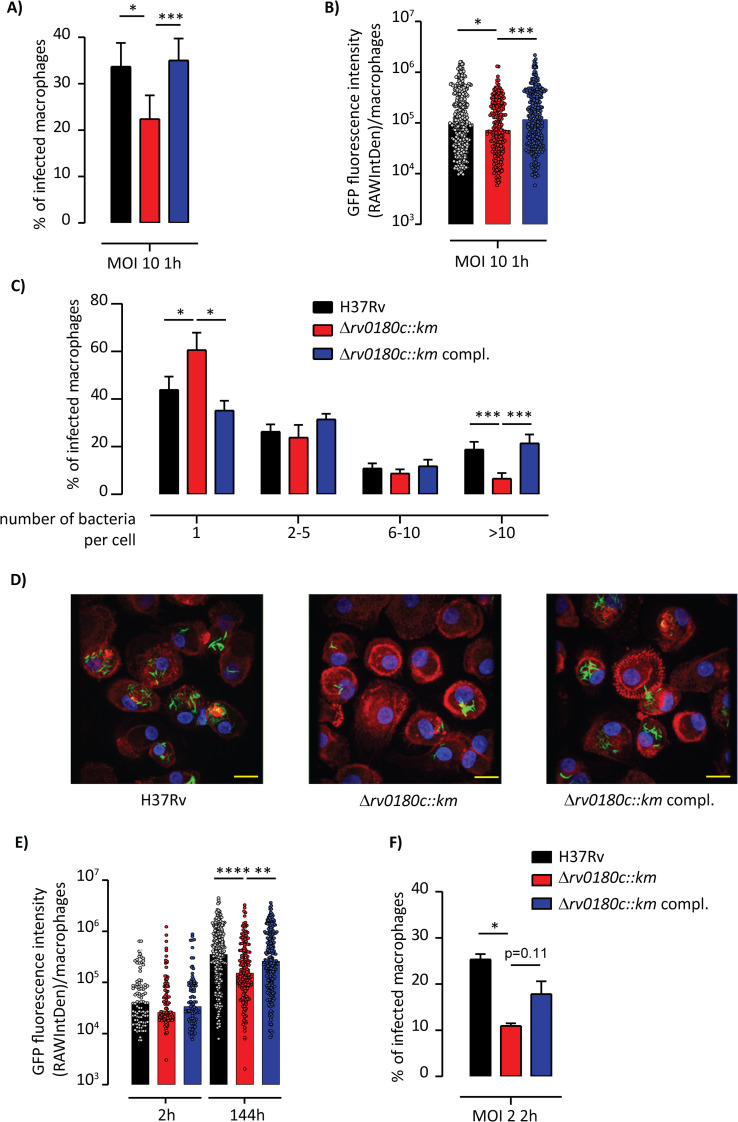
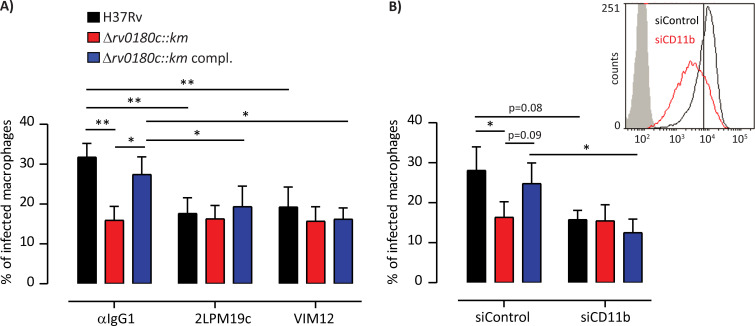
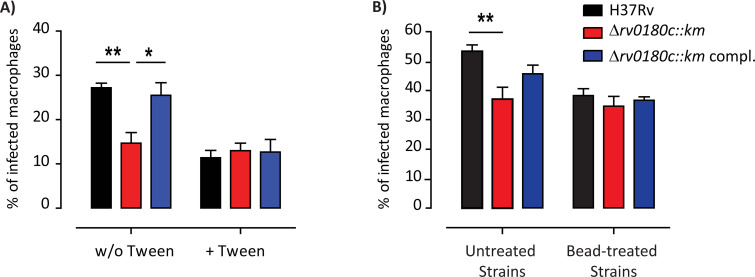
Mycobacterium tuberculosis, the main causative agent of human tuberculosis, is transmitted from person to person via small droplets containing very few bacteria. Optimizing the chance to seed in the lungs is therefore a major adaptation to favor survival and dissemination in the human population. Here we used TnSeq to identify genes important for the early events leading to bacterial seeding in the lungs. Beside several genes encoding known virulence factors, we found three new candidates not previously described: rv0180c, rv1779c and rv1592c. We focused on the gene, rv0180c, of unknown function. First, we found that deletion of rv0180c in M. tuberculosis substantially reduced the initiation of infection in the lungs of mice. Next, we established that Rv0180c enhances entry into macrophages through the use of complement-receptor 3 (CR3), a major phagocytic receptor for M. tuberculosis. Silencing CR3 or blocking the CR3 lectin site abolished the difference in entry between the wild-type parental strain and the Δrv0180c::km mutant. However, we detected no difference in the production of both CR3-known carbohydrate ligands (glucan, arabinomannan, mannan), CR3-modulating lipids (phthiocerol dimycocerosate), or proteins in the capsule of the Δrv0180c::km mutant in comparison to the wild-type or complemented strains. By contrast, we established that Rv0180c contributes to the functionality of the bacterial cell envelope regarding resistance to toxic molecule attack and cell shape. This alteration of bacterial shape could impair the engagement of membrane receptors that M. tuberculosis uses to invade host cells, and open a new perspective on the modulation of bacterial infectivity.
结核分枝杆菌是人类结核病的主要病原体,通过含有极少数细菌的小飞沫在人与人之间传播。因此,优化在肺部定殖的机会是有利于在人类群体中生存和传播的主要适应。在这里,我们使用 TnSeq 来鉴定导致细菌在肺部定殖的早期事件中重要的基因。除了几个编码已知毒力因子的基因外,我们还发现了三个以前未描述的新候选基因:rv0180c、rv1779c 和 rv1592c。我们专注于 rv0180c 基因,该基因功能未知。首先,我们发现结核分枝杆菌中 rv0180c 的缺失大大降低了小鼠肺部感染的起始。接下来,我们确定 Rv0180c 通过使用补体受体 3(CR3)增强了进入巨噬细胞的能力,CR3 是结核分枝杆菌的主要吞噬受体。沉默 CR3 或阻断 CR3 凝集素位点消除了野生型亲本菌株和Δ rv0180c::km 突变体之间进入的差异。然而,我们没有检测到 CR3 已知碳水化合物配体(葡聚糖、阿拉伯甘露聚糖、甘露聚糖)、CR3 调节脂质(双分枝酸 phthiocerol)或Δ rv0180c::km 突变体荚膜中的蛋白质在产量上的差异与野生型或互补菌株相比。相比之下,我们确定 Rv0180c 有助于细菌包膜的功能,以抵抗有毒分子的攻击和细胞形状。这种细菌形状的改变可能会削弱结核分枝杆菌用于入侵宿主细胞的膜受体的结合,为调节细菌感染性开辟了一个新的视角。