Centre de recherche du Centre hospitalier de l'Université de Montréal (CRCHUM), Montreal, QC, H2X 0A9, Canada.
Institut du cancer de Montréal, Montreal, QC, H2X 0A9, Canada.
Nucleic Acids Res. 2021 Nov 18;49(20):11690-11707. doi: 10.1093/nar/gkab965.
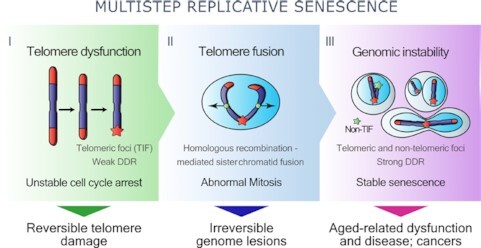
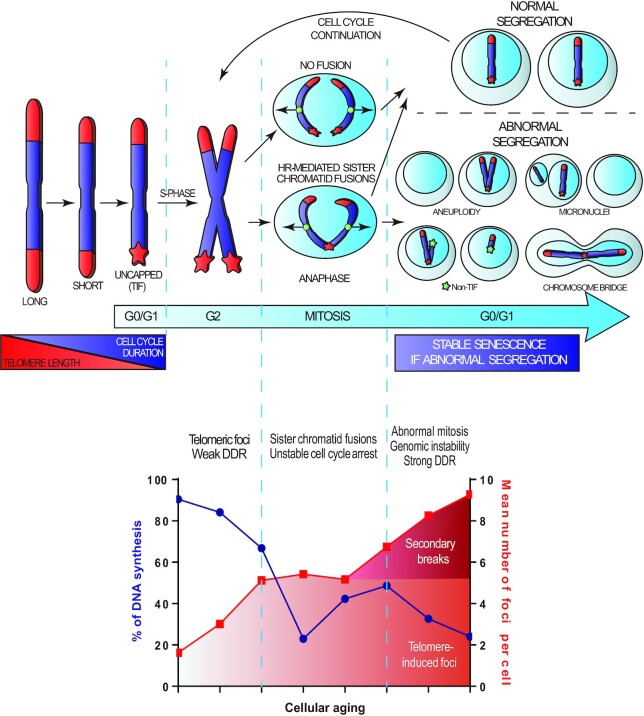
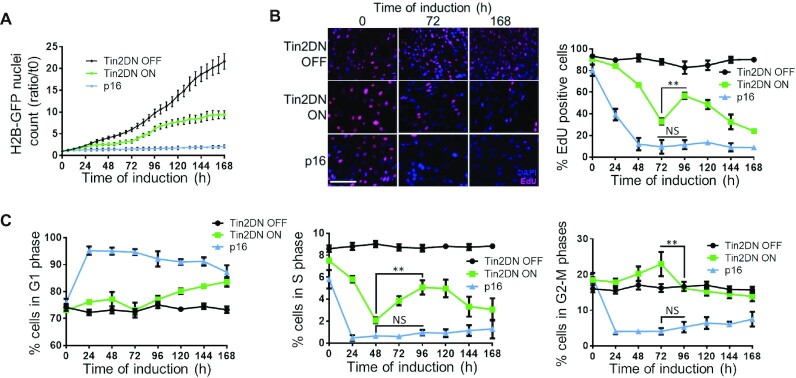
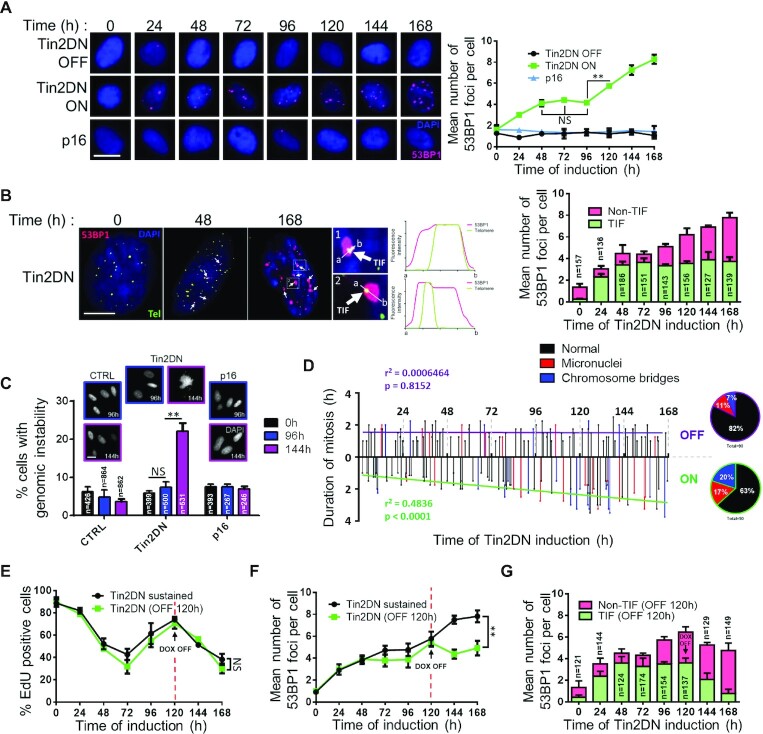
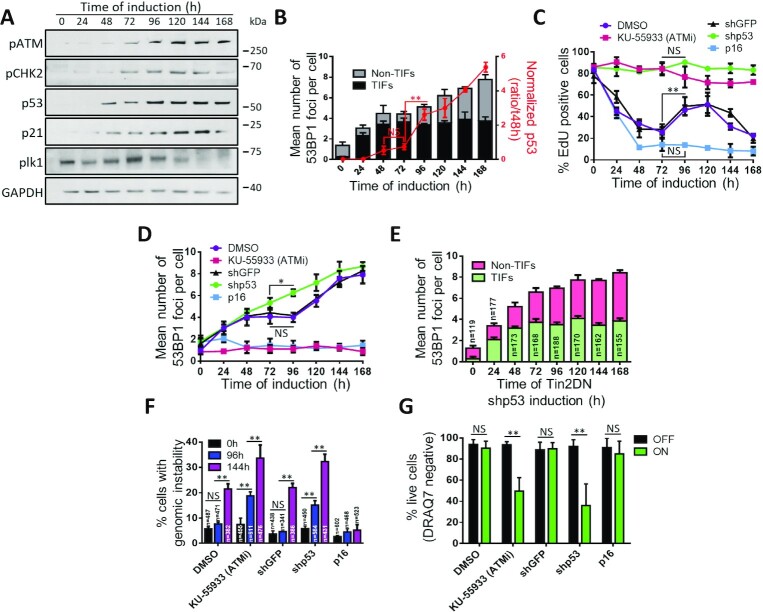
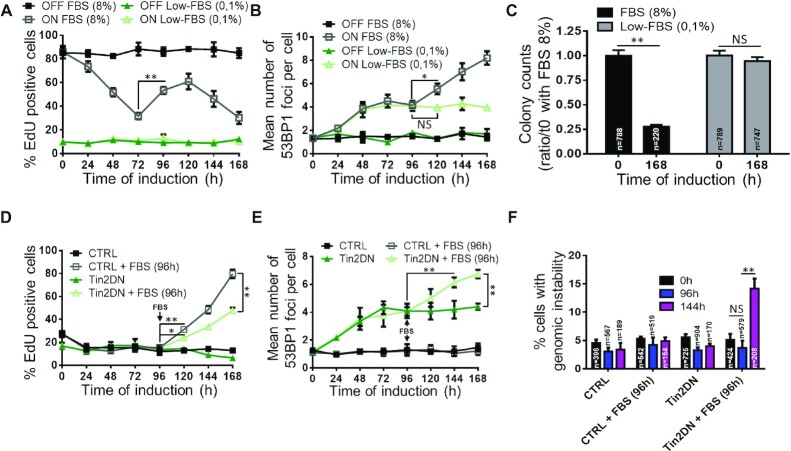
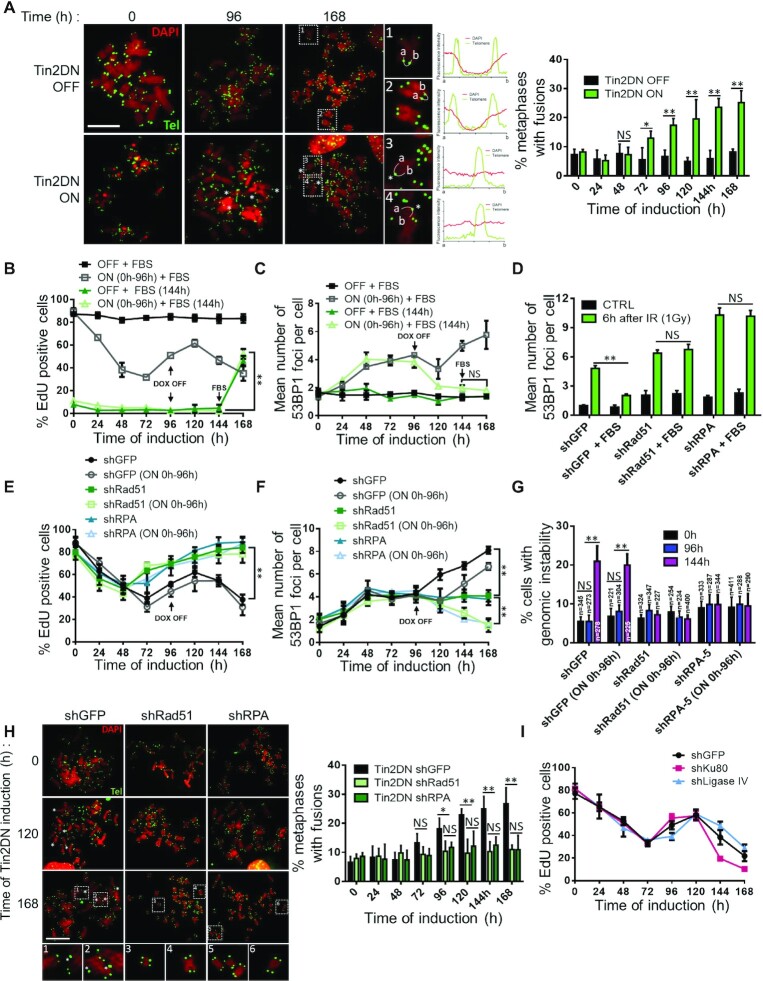
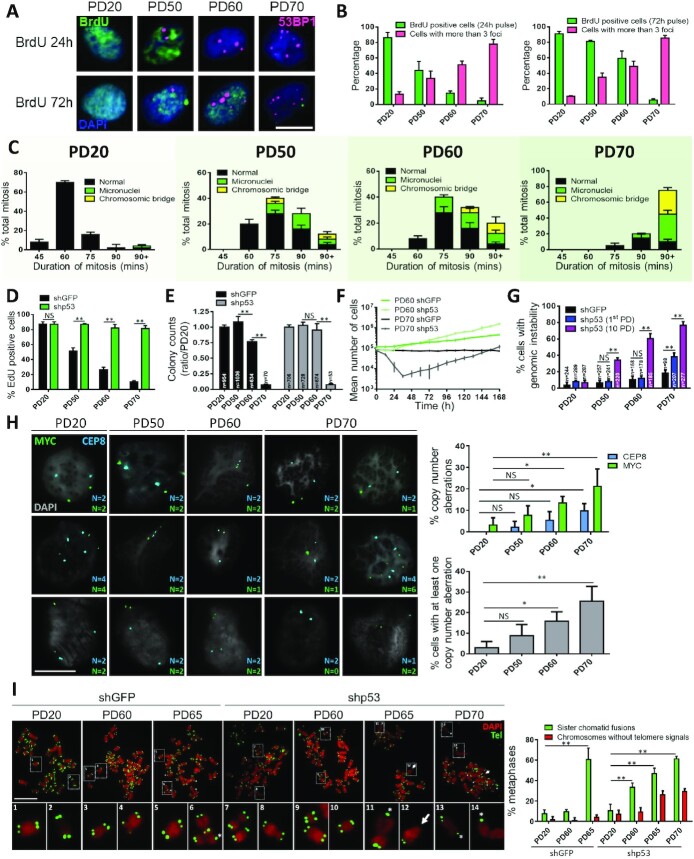
Loss of telomeric DNA leads to telomere uncapping, which triggers a persistent, p53-centric DNA damage response that sustains a stable senescence-associated proliferation arrest. Here, we show that in normal cells telomere uncapping triggers a focal telomeric DNA damage response accompanied by a transient cell cycle arrest. Subsequent cell division with dysfunctional telomeres resulted in sporadic telomeric sister chromatid fusions that gave rise to next-mitosis genome instability, including non-telomeric DNA lesions responsible for a stable, p53-mediated, senescence-associated proliferation arrest. Unexpectedly, the blocking of Rad51/RPA-mediated homologous recombination, but not non-homologous end joining (NHEJ), prevented senescence despite multiple dysfunctional telomeres. When cells approached natural replicative senescence, interphase senescent cells displayed genome instability, whereas near-senescent cells that underwent mitosis despite the presence of uncapped telomeres did not. This suggests that these near-senescent cells had not yet acquired irreversible telomeric fusions. We propose a new model for telomere-initiated senescence where tolerance of telomere uncapping eventually results in irreversible non-telomeric DNA lesions leading to stable senescence. Paradoxically, our work reveals that senescence-associated tumor suppression from telomere shortening requires irreversible genome instability at the single-cell level, which suggests that interventions to repair telomeres in the pre-senescent state could prevent senescence and genome instability.
端粒 DNA 的丢失会导致端粒去帽,从而引发持续的、以 p53 为中心的 DNA 损伤反应,维持稳定的衰老相关增殖停滞。在这里,我们表明在正常细胞中端粒去帽会引发伴随短暂细胞周期停滞的局灶性端粒 DNA 损伤反应。随后,具有功能障碍端粒的细胞分裂会导致散发性端粒姐妹染色单体融合,从而导致下一次有丝分裂的基因组不稳定性,包括非端粒 DNA 损伤,这些损伤导致稳定的、p53 介导的衰老相关增殖停滞。出乎意料的是,尽管存在多个功能障碍的端粒,阻断 Rad51/RPA 介导的同源重组,但不能阻断非同源末端连接(NHEJ),仍然可以防止衰老。当细胞接近自然复制性衰老时,有丝分裂间期衰老细胞显示出基因组不稳定性,而尽管存在去帽端粒但仍经历有丝分裂的近衰老细胞则没有。这表明这些近衰老细胞尚未获得不可逆转的端粒融合。我们提出了一个新的端粒引发衰老模型,其中端粒去帽的容忍最终导致不可逆转的非端粒 DNA 损伤,导致稳定的衰老。矛盾的是,我们的工作揭示了端粒缩短引发的衰老相关肿瘤抑制需要在单细胞水平上具有不可逆转的基因组不稳定性,这表明在衰老前状态下修复端粒的干预措施可能预防衰老和基因组不稳定性。