Mycotic Diseases Branch, Centers for Disease Control and Preventiongrid.416738.f, Atlanta, Georgia, USA.
Washington State Department of Health, Shoreline, Washington, USA.
mSphere. 2021 Dec 22;6(6):e0059821. doi: 10.1128/mSphere.00598-21. Epub 2021 Nov 3.
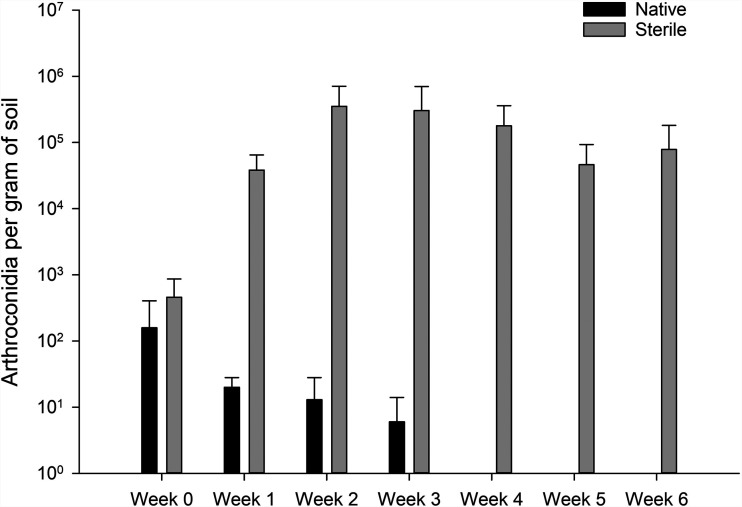
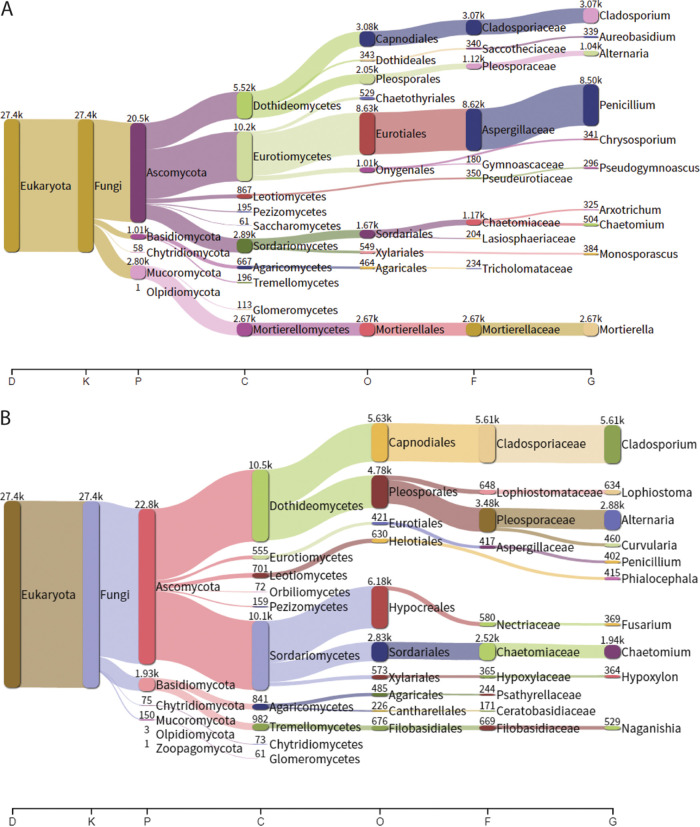
Coccidioides immitis and Coccidioides posadasii are causative agents of Valley fever, a serious fungal disease endemic to regions with hot, arid climate in the United States, Mexico, and Central and South America. The environmental niche of s spp. is not well defined, and it remains unknown whether these fungi are primarily associated with rodents or grow as saprotrophs in soil. To better understand the environmental reservoir of these pathogens, we used a systematic soil sampling approach, quantitative PCR (qPCR), culture, whole-genome sequencing, and soil chemical analysis to identify factors associated with the presence of C. immitis at a known colonization site in Washington State linked to a human case in 2010. We found that the same strain colonized an area of over 46,000 m and persisted in soil for over 6 years. No association with rodent burrows was observed, as C. immitis DNA was as likely to be detected inside rodent holes as it was in the surrounding soil. In addition, the presence of C. immitis DNA in soil was correlated with elevated levels of boron, calcium, magnesium, sodium, and silicon in soil leachates. We also observed differences in the microbial communities between C. immitis-positive and -negative soils. Our artificial soil inoculation experiments demonstrated that C. immitis can use soil as a sole source of nutrients. Taken together, these results suggest that soil parameters need to be considered when modeling the distribution of this fungus in the environment. Coccidioidomycosis is considered a highly endemic disease for which geographic range is likely to expand from climate change. A better understanding of the ecological niche of spp. is essential for generating accurate distribution maps and predicting future changes in response to the changing environment. Our study used a systematic sampling strategy, advanced molecular detection methods, and soil chemical analysis to identify environmental factors associated with the presence of C. immitis in soil. Our results demonstrate the fungus can colonize the same areas for years and is associated with chemical and microbiological soil characteristics. Our results suggest that in addition to climate parameters, soil characteristics need to be considered when building habitat distribution models for this pathogen.
粗球腔菌和波氏粗球腔菌是荚膜组织胞浆菌病的病原体,这是一种严重的真菌病,流行于美国、墨西哥以及中美洲和南美洲的炎热干旱气候地区。spp. 的生态位尚未明确界定,目前尚不清楚这些真菌主要与啮齿动物有关,还是作为土壤中的腐生物生长。为了更好地了解这些病原体的环境储库,我们采用了系统的土壤采样方法、定量 PCR(qPCR)、培养、全基因组测序和土壤化学分析,以确定与 2010 年华盛顿州一个已知定植点相关的人类病例中荚膜组织胞浆菌存在的相关因素。我们发现,同一菌株定植了超过 46000m2 的区域,并在土壤中持续存在了超过 6 年。未观察到与啮齿动物洞穴的关联,因为在啮齿动物洞穴内检测到荚膜组织胞浆菌 DNA 的可能性与在周围土壤中检测到的可能性相同。此外,土壤浸提液中硼、钙、镁、钠和硅含量升高与土壤中荚膜组织胞浆菌 DNA 的存在相关。我们还观察到荚膜组织胞浆菌阳性和阴性土壤之间微生物群落的差异。我们的人工土壤接种实验表明,荚膜组织胞浆菌可以将土壤用作唯一的营养来源。总的来说,这些结果表明,在建模该真菌在环境中的分布时,需要考虑土壤参数。荚膜组织胞浆菌病被认为是一种高度地方性疾病,其地理范围可能因气候变化而扩大。更好地了解 spp. 的生态位对于生成准确的分布图谱和预测未来环境变化时的变化至关重要。我们的研究采用了系统的采样策略、先进的分子检测方法和土壤化学分析,以确定与土壤中荚膜组织胞浆菌存在相关的环境因素。我们的结果表明,真菌可以在同一区域定植多年,并与土壤的化学和微生物学特性相关。我们的结果表明,除了气候参数外,在构建该病原体的生境分布模型时还需要考虑土壤特征。