Partha Sarathi Celine I, Mowforth Oliver D, Sinha Amil, Bhatti Faheem, Bhatti Aniqah, Akhbari Melika, Ahmed Shahzaib, Davies Benjamin M
Division of Neurosurgery, Department of Clinical Neurosciences, Addenbrooke's Hospital, University of Cambridge, Cambridge, UK.
Nutr Metab Insights. 2021 Oct 30;14:11786388211054664. doi: 10.1177/11786388211054664. eCollection 2021.
Degenerative cervical myelopathy (DCM) is the commonest cause of adult spinal cord impairment worldwide, encompassing chronic compression of the spinal cord, neurological disability and diminished quality of life. Evidence on the contribution of environmental factors is sparse; in particular, the role of nutrition in DCM is unknown. The objective of this review was to assess the effect of nutrition on DCM susceptibility, severity and surgical outcome.
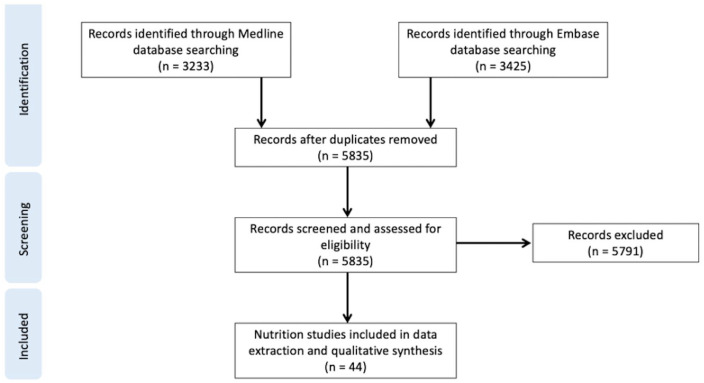
A systematic review in MEDLINE and Embase was conducted following PRISMA guidelines. Full-text papers in English papers, focussing on cervical myelopathy and nutrition, published before January 2020 were considered eligible. Quality assessments were performed using the GRADE assessment tool. Patient demographics, nutritional factor and DCM outcomes measures were recorded. Relationships between nutritional factors, interventions and disease prognosis were assessed.
In total, 5835 papers were identified of which 44 were included in the final analysis. DCM patients with pathological weight pre-operatively were more likely to see poorer improvements post-surgically. These patients experienced poorer physical and mental health improvements from surgery compared to normal weight patients and were more likely to suffer from post-operative complications such as infection, DVT, PE and hospital readmissions. Two trials reporting benefits of nutritional supplements were identified, with 1 suggesting Cerebrolysin to be significant in functional improvement. An unbalanced diet, history of alcohol abuse and malnourishment were associated with poorer post-operative outcome.
Although the overall strength of recommendation is low, current evidence suggests nutrition may have a significant role in optimising surgical outcome in DCM patients. Although it may have a role in onset and severity of DCM, this is a preliminary suggestion. Further work needs to be done on how nutrition is defined and measured, however, the beneficial results from studies with nutritional interventions suggest nutrition could be a treatment target in DCM.
退行性颈椎脊髓病(DCM)是全球范围内成人脊髓损伤最常见的原因,包括脊髓的慢性压迫、神经功能障碍和生活质量下降。关于环境因素影响的证据很少;特别是,营养在DCM中的作用尚不清楚。本综述的目的是评估营养对DCM易感性、严重程度和手术结果的影响。
按照PRISMA指南在MEDLINE和Embase中进行系统综述。纳入2020年1月之前发表的、聚焦于颈椎脊髓病和营养的英文全文论文。使用GRADE评估工具进行质量评估。记录患者人口统计学、营养因素和DCM结果指标。评估营养因素、干预措施与疾病预后之间的关系。
共识别出5835篇论文,其中44篇纳入最终分析。术前体重异常的DCM患者术后改善可能较差。与体重正常的患者相比,这些患者手术前后的身心健康改善较差,且更易出现术后并发症,如感染、深静脉血栓形成、肺栓塞和再次入院。识别出两项报告营养补充剂有益效果的试验,其中一项表明脑蛋白水解物在功能改善方面有显著作用。饮食不均衡、酗酒史和营养不良与术后结果较差有关。
尽管推荐的总体力度较低,但现有证据表明营养可能在优化DCM患者的手术结果方面发挥重要作用。尽管其可能在DCM的发病和严重程度方面起作用,但这只是初步建议。关于如何定义和衡量营养仍需进一步研究,然而,营养干预研究的有益结果表明营养可能是DCM的一个治疗靶点。