Department of General, Visceral and Transplant Surgery, University Hospital of LMU Munich, Marchionini Str. 15, Munich, Germany.
J Gastrointest Surg. 2022 Mar;26(3):671-683. doi: 10.1007/s11605-021-05188-7. Epub 2021 Nov 3.
Hepatosteatosis is the earliest stage in the pathogenesis of nonalcoholic fatty (NAFLD) and alcoholic liver disease (ALD). As NAFLD is affecting 10-24% of the general population and approximately 70% of obese patients, it carries a large economic burden and is becoming a major reason for liver transplantation worldwide. ALD is a major cause of morbidity and mortality causing 50% of liver cirrhosis and 10% of liver cancer related death. Increasing evidence has accumulated that gut-derived factors play a crucial role in the development and progression of chronic liver diseases.
A selective literature search was conducted in Medline and PubMed, using the terms "nonalcoholic fatty liver disease," "alcoholic liver disease," "lipopolysaccharide," "gut barrier," and "microbiome."
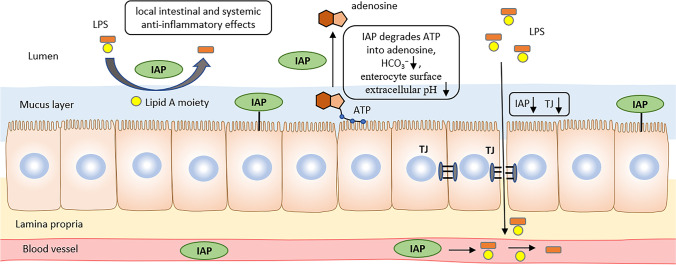
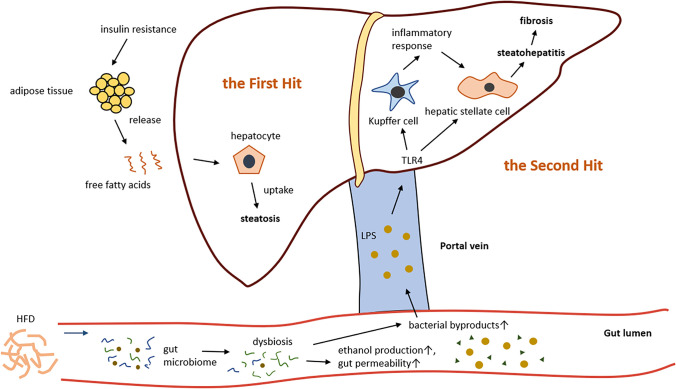
Gut dysbiosis and gut barrier dysfunction both contribute to chronic liver disease by abnormal regulation of the gut-liver axis. Thereby, gut-derived lipopolysaccharides (LPS) are a key factor in inducing the inflammatory response of liver tissue. The review further underlines that endotoxemia is observed in both NAFLD and ALD patients. LPS plays an important role in conducting liver damage through the LPS-TLR4 signaling pathway. Treatments targeting the gut microbiome and the gut barrier such as fecal microbiota transplantation (FMT), probiotics, prebiotics, synbiotics, and intestinal alkaline phosphatase (IAP) represent potential treatment modalities for NAFLD and ALD.
The gut-liver axis plays an important role in the development of liver disease. Treatments targeting the gut microbiome and the gut barrier have shown beneficial effects in attenuating liver inflammation and need to be further investigated.
肝脂肪变性是非酒精性脂肪性肝病(NAFLD)和酒精性肝病(ALD)发病机制的最早阶段。由于 NAFLD 影响 10-24%的普通人群和大约 70%的肥胖患者,因此它带来了巨大的经济负担,并成为全球范围内肝移植的主要原因。ALD 是发病率和死亡率的主要原因,导致 50%的肝硬化和 10%的肝癌相关死亡。越来越多的证据表明,肠道来源的因素在慢性肝病的发展和进展中起着至关重要的作用。
在 Medline 和 PubMed 上进行了选择性文献检索,使用了“非酒精性脂肪性肝病”、“酒精性肝病”、“脂多糖”、“肠道屏障”和“微生物组”等术语。
肠道菌群失调和肠道屏障功能障碍通过异常调节肠-肝轴共同导致慢性肝病。因此,肠道来源的脂多糖(LPS)是诱导肝组织炎症反应的关键因素。该综述进一步强调,内毒素血症在 NAFLD 和 ALD 患者中均有观察到。LPS 通过 LPS-TLR4 信号通路在导致肝损伤中发挥重要作用。针对肠道微生物组和肠道屏障的治疗方法,如粪便微生物群移植(FMT)、益生菌、益生元、合生元和肠碱性磷酸酶(IAP),代表了 NAFLD 和 ALD 的潜在治疗方法。
肠-肝轴在肝病的发展中起着重要作用。针对肠道微生物组和肠道屏障的治疗方法已显示出在减轻肝炎症方面的有益效果,需要进一步研究。