School of Life Sciences, Arizona State University, Tempe, AZ 85728, USA.
Genetics. 2021 Nov 5;219(3). doi: 10.1093/genetics/iyab144.
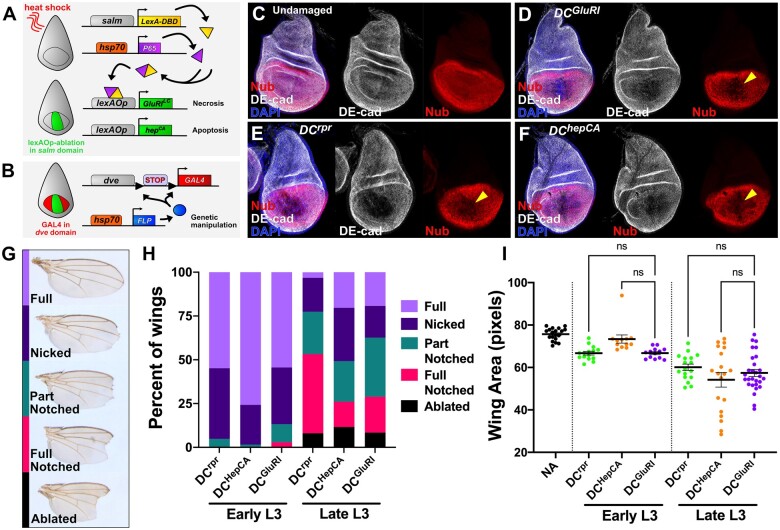
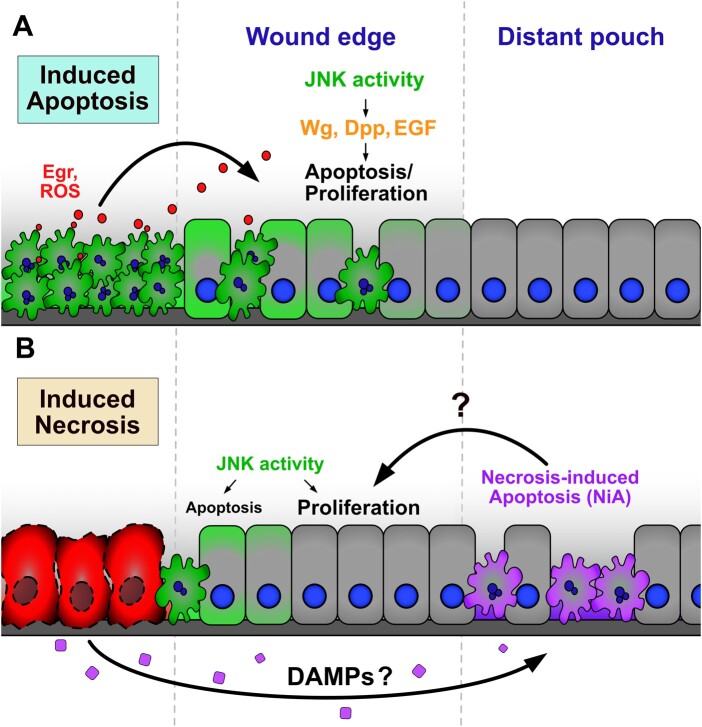
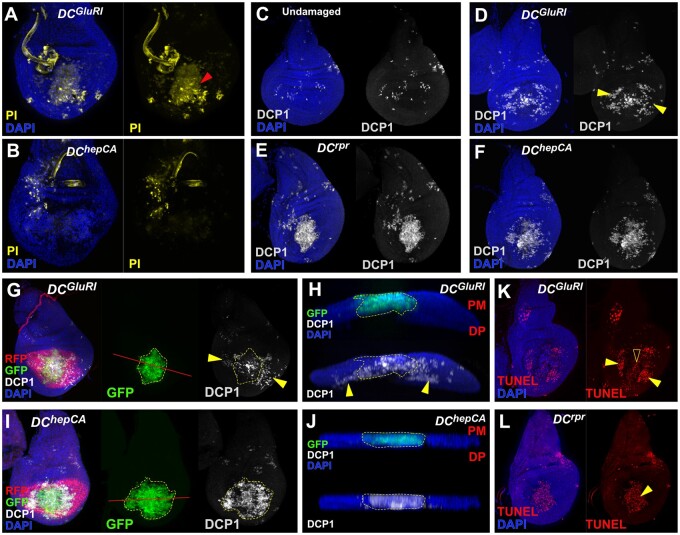
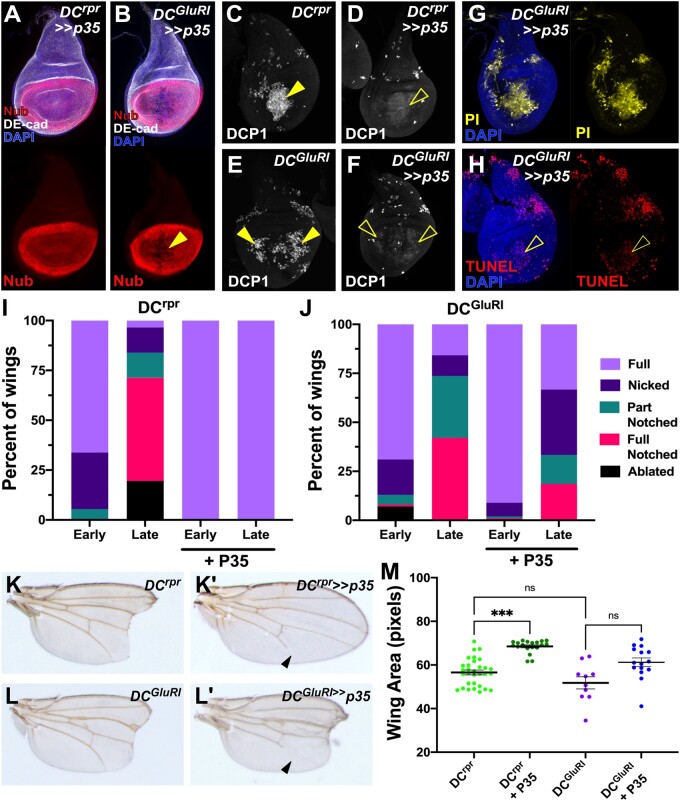
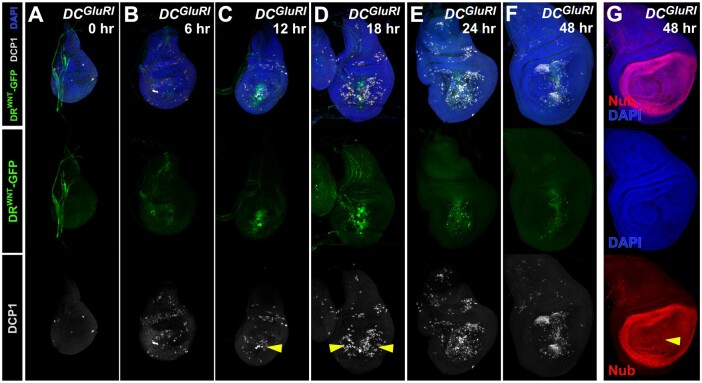
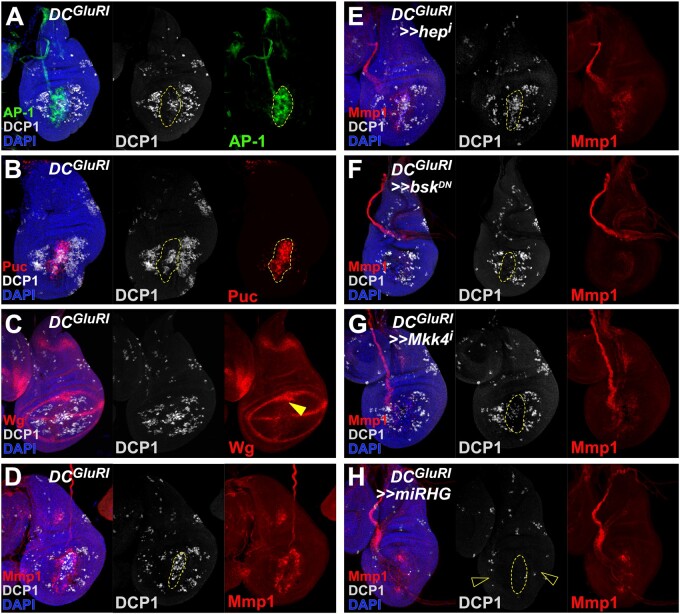
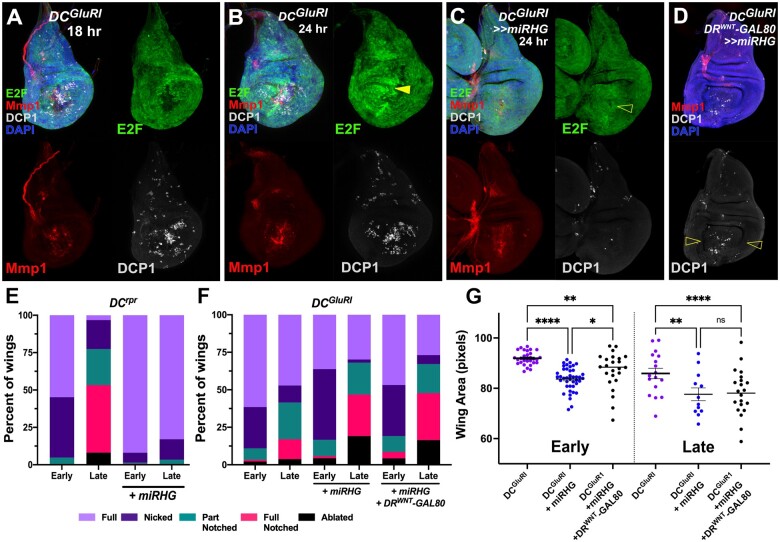
Regeneration is a complex process that requires a coordinated genetic response to tissue loss. Signals from dying cells are crucial to this process and are best understood in the context of regeneration following programmed cell death, like apoptosis. Conversely, regeneration following unregulated forms of death, such as necrosis, have yet to be fully explored. Here, we have developed a method to investigate regeneration following necrosis using the Drosophila wing imaginal disc. We show that necrosis stimulates regeneration at an equivalent level to that of apoptosis-mediated cell death and activates a similar response at the wound edge involving localized JNK signaling. Unexpectedly, however, necrosis also results in significant apoptosis far from the site of ablation, which we have termed necrosis-induced apoptosis (NiA). This apoptosis occurs independent of changes at the wound edge and importantly does not rely on JNK signaling. Furthermore, we find that blocking NiA limits proliferation and subsequently inhibits regeneration, suggesting that tissues damaged by necrosis can activate programmed cell death at a distance from the injury to promote regeneration.
再生是一个复杂的过程,需要协调的基因反应来应对组织损失。来自死亡细胞的信号对这个过程至关重要,在程序性细胞死亡(如细胞凋亡)后再生的背景下,这些信号最容易理解。相反,不受调控的死亡形式(如坏死)后的再生尚未得到充分探索。在这里,我们开发了一种使用果蝇翅 imaginal 盘研究坏死后再生的方法。我们表明,坏死以与细胞凋亡介导的细胞死亡相当的水平刺激再生,并在伤口边缘激活涉及局部 JNK 信号的类似反应。然而,出乎意料的是,坏死还会导致远离消融部位的显著凋亡,我们称之为坏死诱导的凋亡(NiA)。这种凋亡发生在伤口边缘没有变化的情况下,并且重要的是不依赖于 JNK 信号。此外,我们发现阻断 NiA 会限制增殖,从而抑制再生,这表明坏死损伤的组织可以在远离损伤的地方激活程序性细胞死亡,以促进再生。