Department of Orthopaedics, Lanzhou University Second Hospital, Lanzhou, People's Republic of China.
Orthopaedics Key Laboratory of Gansu Province, Lanzhou, People's Republic of China.
J Cell Mol Med. 2021 Dec;25(23):11016-11030. doi: 10.1111/jcmm.17024. Epub 2021 Nov 5.
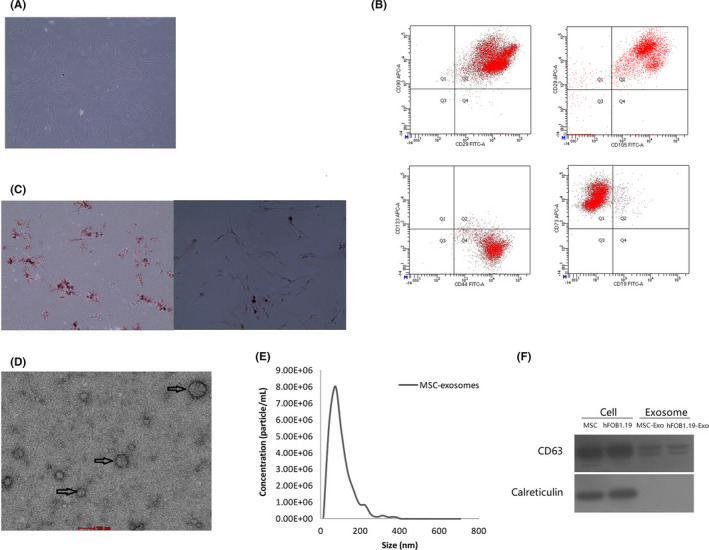
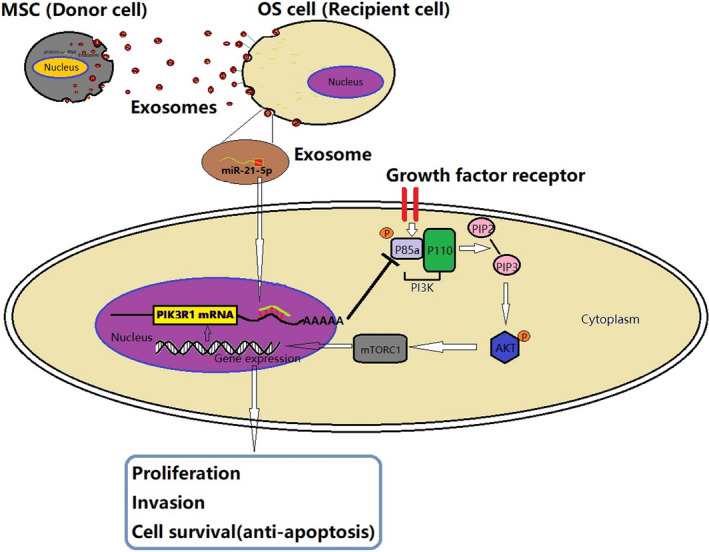
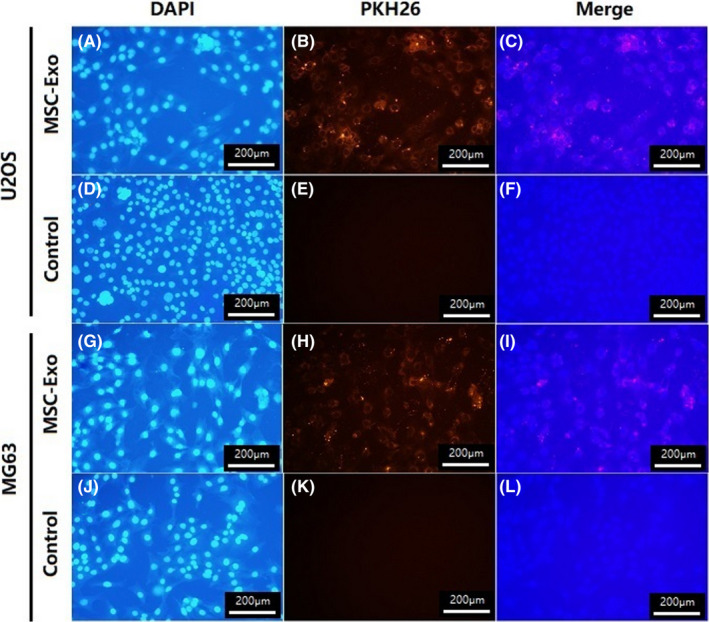
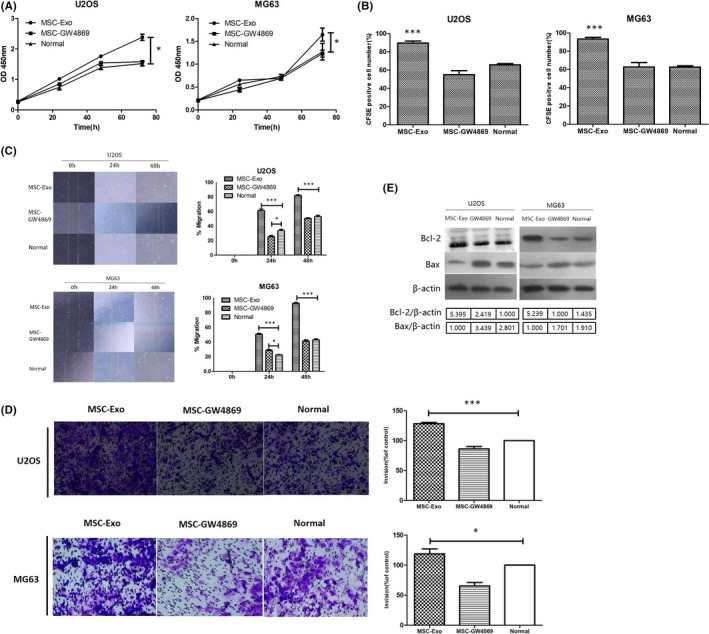
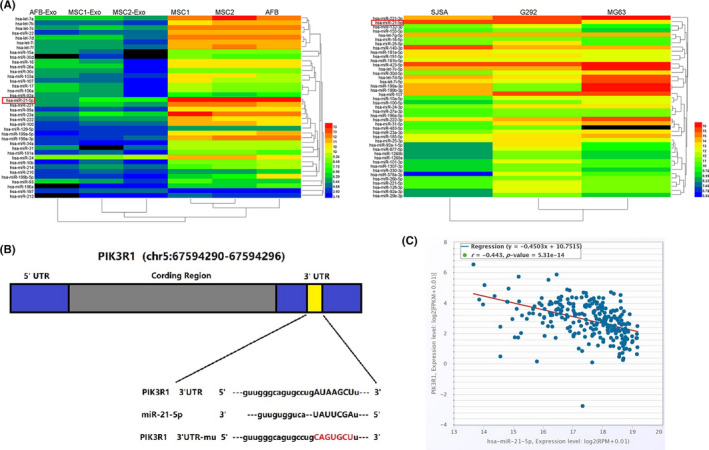
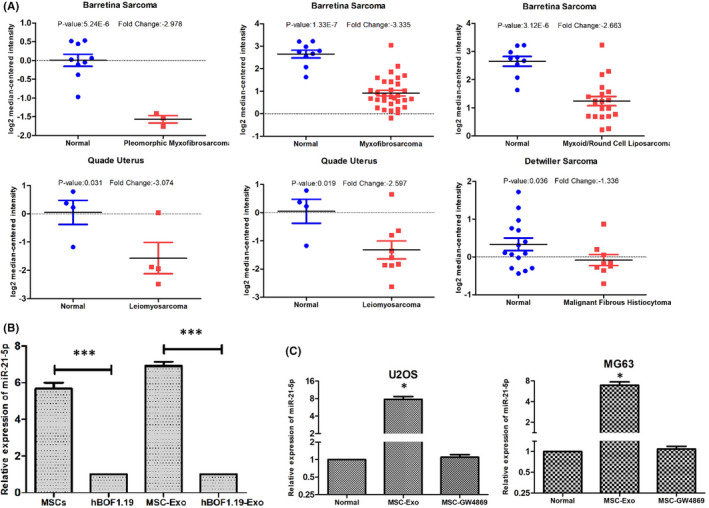
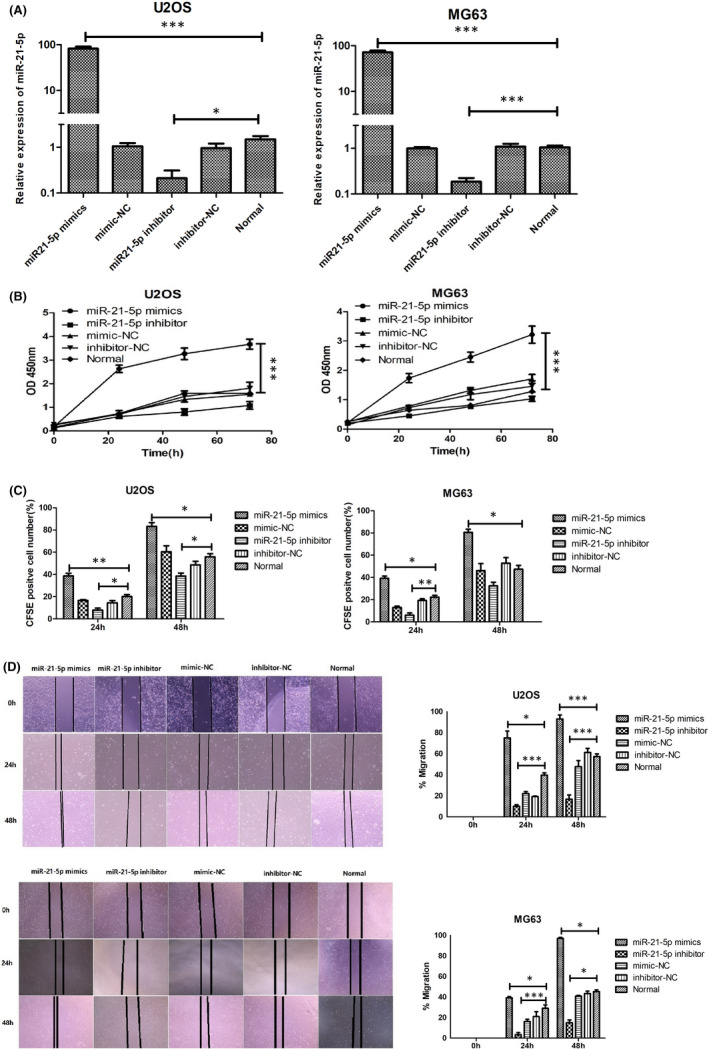
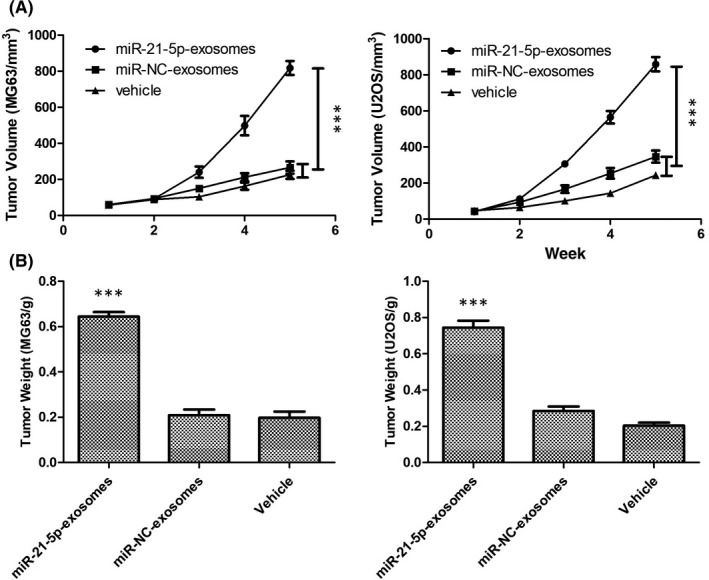
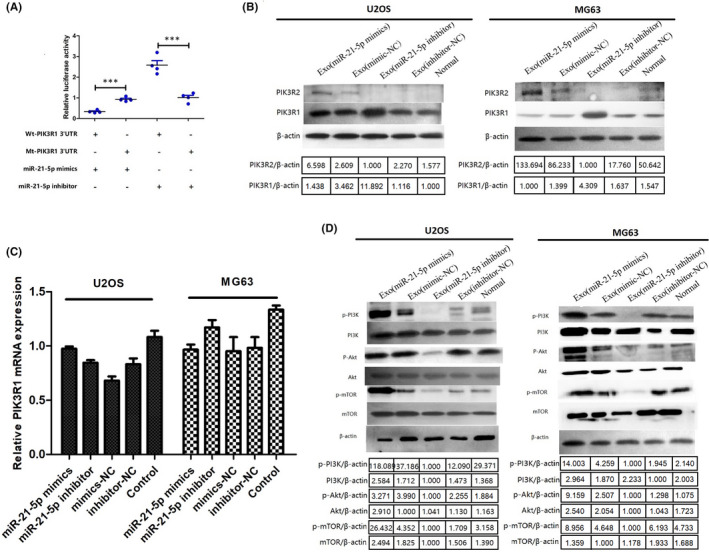
Mesenchymal stem cells (MSCs) are a class of pluripotent cells that can release a large number of exosomes which act as paracrine mediators in tumour-associated microenvironment. However, the role of MSC-derived exosomes in pathogenesis and progression of cancer cells especially osteosarcoma has not been thoroughly clarified until now. In this study, we established a co-culture model for human bone marrow-derived MSCs with osteosarcoma cells, then extraction of exosomes from induced MSCs and study the role of MSC-derived exosomes in the progression of osteosarcoma cell. The aim of this study was to address potential cell biological effects between MSCs and osteosarcoma cells. The results showed that MSC-derived exosomes can significantly promote osteosarcoma cells' proliferation and invasion. We also found that miR-21-5p was significantly over-expressed in MSCs and MSC-derived exosomes by quantitative real-time polymerase chain reaction (qRT-PCR), compared with human foetal osteoblastic cells hFOB1.19. MSC-derived exosomes transfected with miR-21-5p could significantly enhance the proliferation and invasion of osteosarcoma cells in vitro and in vivo. Bioinformatics analysis and dual-luciferase reporter gene assays validated the targeted relationship between exosomal miR-21-5p and PIK3R1; we further demonstrated that miR-21-5p-abundant exosomes derived human bone marrow MSCs could activate PI3K/Akt/mTOR pathway by suppressing PIK3R1 expression in osteosarcoma cells. In summary, our study provides new insights into the interaction between human bone marrow MSCs and osteosarcoma cells in tumour-associated microenvironment.
间充质干细胞(MSCs)是一类多能细胞,可释放大量外泌体,在外泌体作为旁分泌介质在肿瘤相关微环境中发挥作用。然而,直到现在,MSC 来源的外泌体在癌细胞,尤其是骨肉瘤发病机制和进展中的作用仍未完全阐明。在本研究中,我们建立了人骨髓间充质干细胞与骨肉瘤细胞的共培养模型,然后从诱导的 MSC 中提取外泌体,并研究 MSC 来源的外泌体在骨肉瘤细胞进展中的作用。本研究的目的是探讨 MSC 和骨肉瘤细胞之间的潜在细胞生物学效应。结果表明,MSC 来源的外泌体可显著促进骨肉瘤细胞的增殖和侵袭。我们还发现,与人类胎儿成骨细胞 hFOB1.19 相比,MSC 及其来源的外泌体中 miR-21-5p 的表达通过定量实时聚合酶链反应(qRT-PCR)显著上调。转染 miR-21-5p 的 MSC 来源的外泌体可显著增强骨肉瘤细胞在体外和体内的增殖和侵袭能力。生物信息学分析和双荧光素酶报告基因实验验证了外泌体 miR-21-5p 与 PIK3R1 之间的靶向关系;我们进一步证明,源自人骨髓 MSC 的富含 miR-21-5p 的外泌体可通过抑制骨肉瘤细胞中 PIK3R1 的表达来激活 PI3K/Akt/mTOR 通路。综上所述,本研究为肿瘤相关微环境中人类骨髓 MSC 与骨肉瘤细胞之间的相互作用提供了新的见解。