Kodama Narihiro, Kumai Yoshihiko, Miyamoto Takumi, Matsubara Keigo, Samejima Yasuhiro, Orita Yorihisa
Department of Rehabilitation, Kumamoto Health Science University, Kumamoto, Japan.
Department of Otolaryngology Head and Neck Surgery, Nagasaki University Graduate School of Medicine, Nagasaki, Japan.
Ann Rehabil Med. 2021 Oct;45(5):368-378. doi: 10.5535/arm.21035. Epub 2021 Oct 31.
To investigate the factors affecting the postoperative swallowing dysfunction in patients who underwent oral cancer surgery.
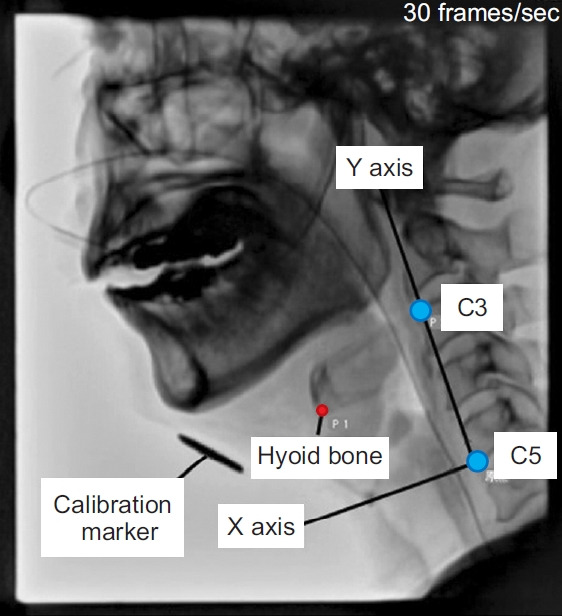
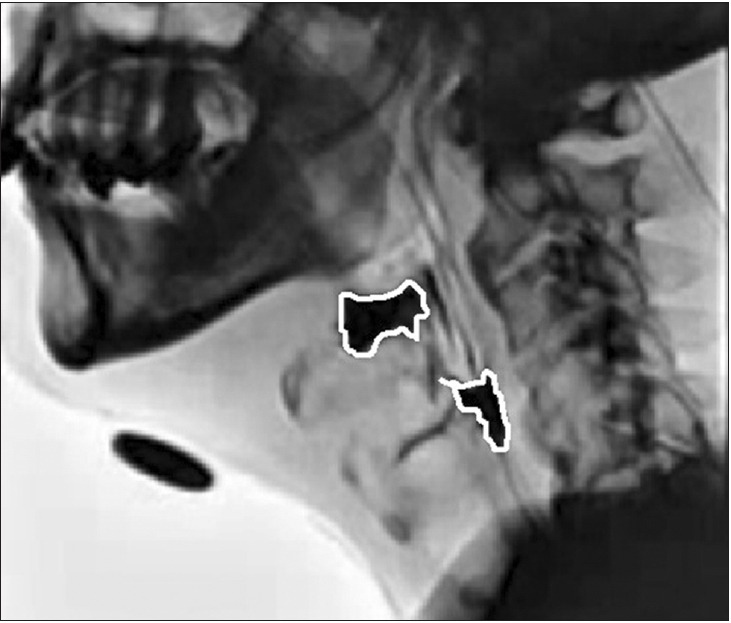
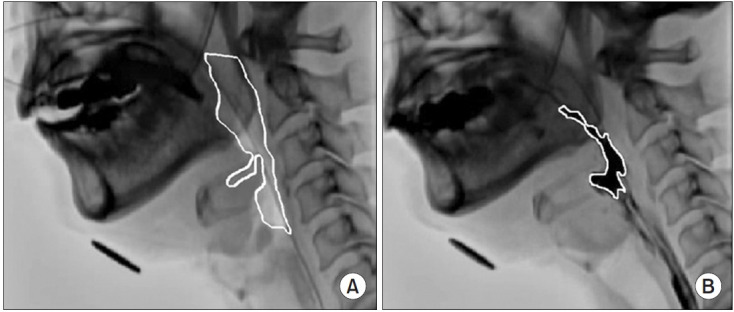
Retrospective review of clinical records of 70 patients (50 males and 20 females) who underwent oral cancer surgeries from July 2007 to April 2015 were enrolled. Multiple regression analysis was performed using the Food Intake LEVEL Scale (FILS) at discharge as the objective variable and age, tumor size, resection of the tongue base, suprahyoid muscle resection, segmental mandibulectomy, neck dissection and radiation therapy as the explanatory variables in 70 patients. In addition, multiple regression analysis was performed between objective variables, which include maximum hyoid bone movement, laryngeal elevation delay time, pharyngeal constriction ratio (PCR), residue in the vallecular and pear-shaped depression (pyriform sinuses), and Penetration-Aspiration Scale score and one of the main factors representing the characteristics of each case as the explanatory variables, and age was treated as an adjustment factor in 23 patients.
The FILS shows significant negative correlation by age and resection of the tongue base. In videofluoroscopic swallowing study, the maximum movement, PCR and residue in the vallecular are significantly correlated with factors demonstrating the characteristic for each case.
It was suggested that in elderly patients, the presence of more than half of the tongue base resection, suprahyoid muscle resection and neck dissection cause severe dysphagia after surgery.
探讨口腔癌手术患者术后吞咽功能障碍的影响因素。
回顾性分析2007年7月至2015年4月期间接受口腔癌手术的70例患者(50例男性,20例女性)的临床记录。以出院时的食物摄入水平量表(FILS)作为目标变量,年龄、肿瘤大小、舌根切除、舌骨上肌群切除、下颌骨节段性切除、颈部清扫术和放疗作为解释变量,对70例患者进行多元回归分析。此外,以最大舌骨移动度、喉提升延迟时间、咽缩窄率(PCR)、会厌谷和梨状窝残留量以及渗透-误吸量表评分等客观变量之一作为解释变量,以代表各病例特征的主要因素之一作为解释变量,对23例患者进行多元回归分析,并将年龄作为调整因素。
FILS与年龄和舌根切除呈显著负相关。在电视透视吞咽研究中,最大移动度、PCR和会厌谷残留量与各病例特征因素显著相关。
提示老年患者,舌根切除超过一半、舌骨上肌群切除和颈部清扫术会导致术后严重吞咽困难。