Huang Minshi, Liu Jun, Liu Kevin, Chen Jierong, Wei Zhen, Feng Zhe, Wu Yuyu, Fong Michelle, Tian Ruiyi, Wang Bryan, Budjan Christoph, Zhuang Patrick, Wan Guobin, Kong Xue-Jun
Affiliated Shenzhen Maternity and Child Healthcare Hospital, Southern Medical University, Shenzhen, China.
Athinoula A. Martinos Center for Biomedical Imaging, Massachusetts General Hospital, Boston, MA, United States.
Front Psychiatry. 2021 Oct 20;12:682454. doi: 10.3389/fpsyt.2021.682454. eCollection 2021.
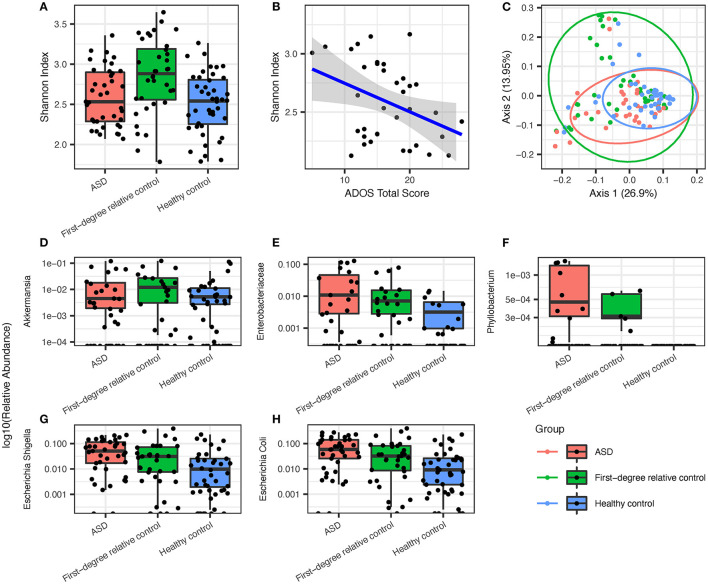
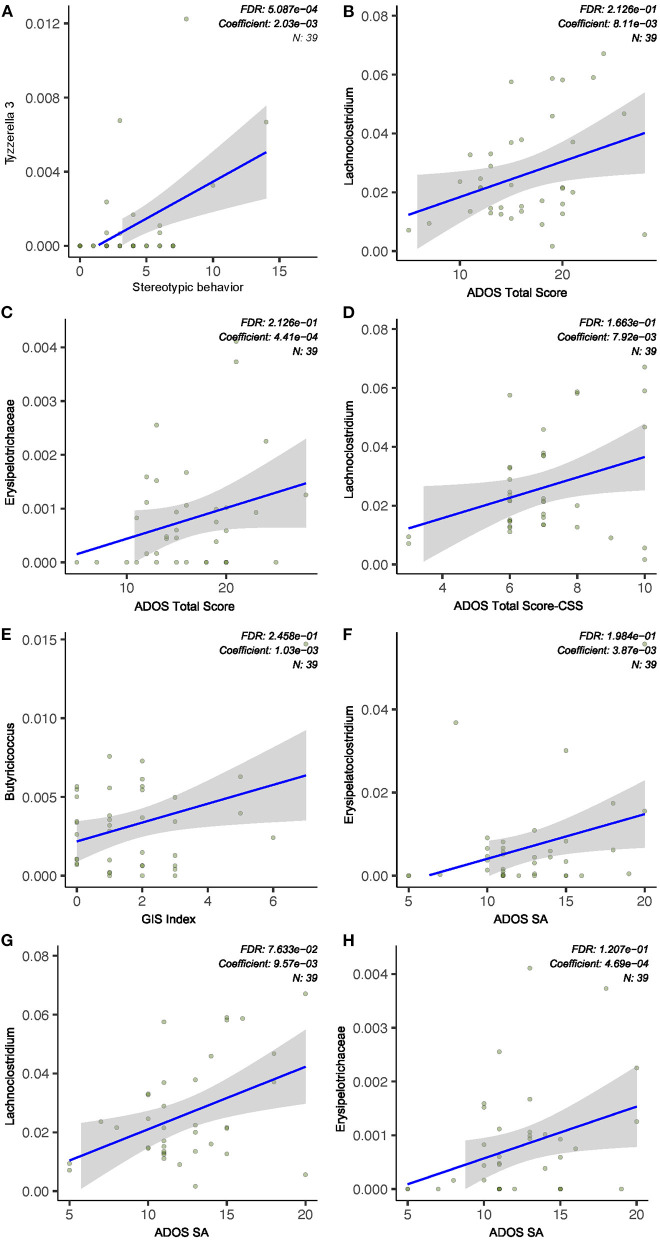
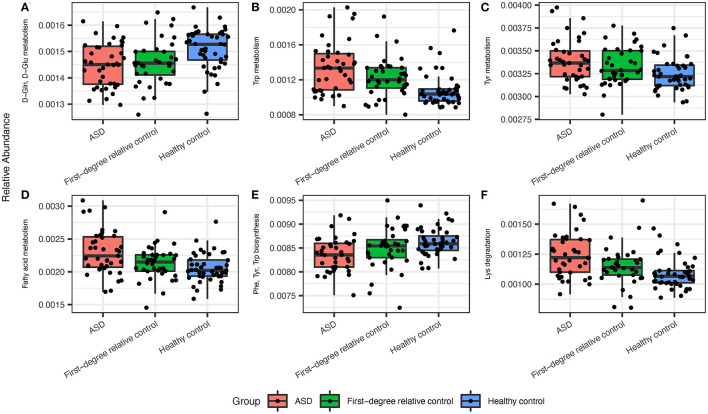
Autism Spectrum Disorder (ASD) is a neurodevelopmental disorder with unclear mechanisms of pathogenesis. Gastrointestinal microbiome alterations were found to correlate with ASD core symptoms, but its specific role in ASD pathogenesis has not been determined. In this study, we used a case-control strategy that simultaneously compared the ASD gastrointestinal microbiome with that from age-sex matched controls and first-degree relative controls, using a statistical framework accounting for confounders such as age. Enterobacteriaceae (including ) and were significantly enriched in the ASD group, with their relative abundances all following a pattern of ASD > first degree relative control > healthy control, consistent with our hypothesis of living environment and shared microbial and immunological exposures as key drivers of ASD gastrointestinal microbiome dysbiosis. Using multivariable omnibus testing, we identified clinical factors including ADOS scores, dietary habits, and gastrointestinal symptoms that covary with overall microbiome structure within the ASD cohort. A microbiome-specific multivariate modeling approach (MaAsLin2) demonstrated microbial taxa, such as and , are significantly associated with ASD core symptoms measured by ADOS. Finally, we identified alterations in predicted biological functions, including tryptophan and tyrosine biosynthesis/metabolism potentially relevant to the pathophysiology of the gut-brain-axis. Overall, our results identified gastrointestinal microbiome signature changes in patients with ASD, highlighted associations between gastrointestinal microbiome and clinical characteristics related to the gut-brain axis and identified contributors to the heterogeneity of gastrointestinal microbiome within the ASD population.
自闭症谱系障碍(ASD)是一种发病机制不明的神经发育障碍。研究发现胃肠道微生物群的改变与ASD的核心症状相关,但其在ASD发病机制中的具体作用尚未确定。在本研究中,我们采用病例对照策略,同时将ASD患者的胃肠道微生物群与年龄、性别匹配的对照组以及一级亲属对照组进行比较,并使用一个考虑年龄等混杂因素的统计框架。肠杆菌科(包括 )和 在ASD组中显著富集,它们的相对丰度均呈现ASD>一级亲属对照组>健康对照组的模式,这与我们提出的生活环境以及共享的微生物和免疫暴露是ASD胃肠道微生物群失调的关键驱动因素这一假设一致。通过多变量综合检验,我们确定了包括ADOS评分、饮食习惯和胃肠道症状等临床因素,这些因素与ASD队列中的整体微生物群结构相关。一种微生物群特异性多变量建模方法(MaAsLin2)表明,某些微生物分类群,如 和 ,与通过ADOS测量的ASD核心症状显著相关。最后,我们确定了预测生物学功能的改变,包括与肠-脑轴病理生理学可能相关的色氨酸和酪氨酸生物合成/代谢。总体而言,我们的研究结果确定了ASD患者胃肠道微生物群特征的变化,突出了胃肠道微生物群与肠-脑轴相关临床特征之间的关联,并确定了ASD人群中胃肠道微生物群异质性的影响因素。