Caruso Marjolly Brigido, Lauria Pedro Santana Sales, de Souza Claudio Maurício Vieira, Casais-E-Silva Luciana Lyra, Zingali Russolina Benedeta
Laboratory of Hemostasis and Venoms, Leopoldo de Meis Institute of Medical Biochemistry, Federal University of Rio de Janeiro (UFRJ), Rio de Janeiro, RJ, Brazil.
Laboratory of Pharmacology and Experimental Therapeutics, School of Pharmacy, Federal University of Bahia (UFBA), Salvador, BA, Brazil.
J Venom Anim Toxins Incl Trop Dis. 2021 Oct 22;27:e20210011. doi: 10.1590/1678-9199-JVATITD-2021-0011. eCollection 2021.
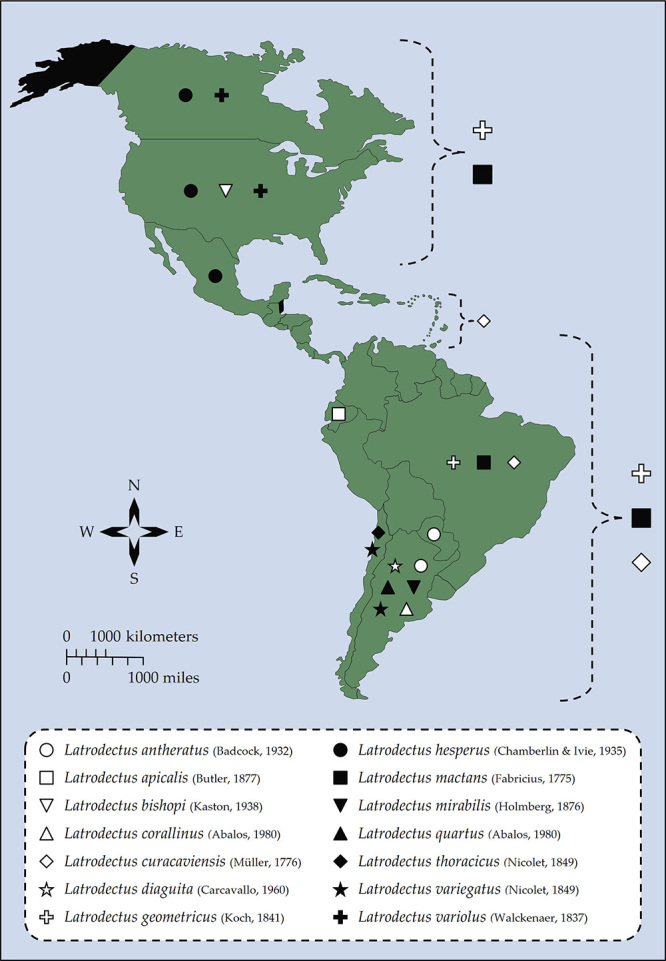
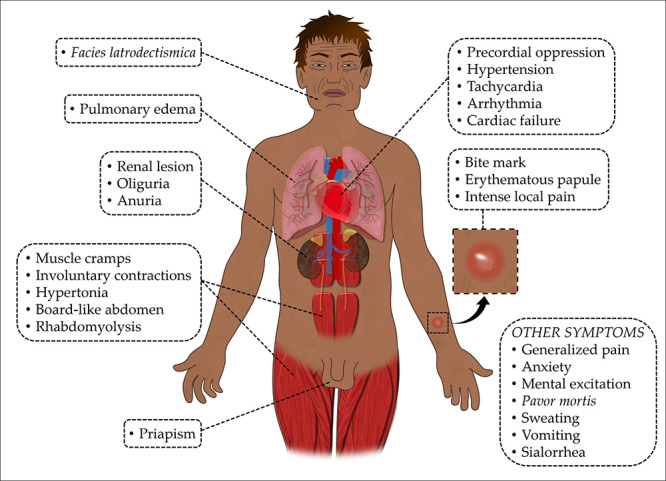
Humankind has always been fascinated by venomous animals, as their toxic substances have transformed them into symbols of power and mystery. Over the centuries, researchers have been trying to understand animal venoms, unveiling intricate mixtures of molecules and their biological effects. Among venomous animals, Walckenaer, 1805 (widow spiders) have become feared in many cultures worldwide due to their extremely neurotoxic venom. The genus encompasses 32 species broadly spread around the globe, 14 of which occur in the Americas. Despite the high number of species found in the New World, the knowledge on these spiders is still scarce. This review covers the general knowledge on spp. from the Americas. We address widow spiders' taxonomy; geographical distribution and epidemiology; symptoms and treatments of envenomation (latrodectism); venom collection, experimental studies, proteome and transcriptome; and biotechnological studies on these spp. Moreover, we discuss the main challenges and limitations faced by researchers when trying to comprehend this neglected group of medically important spiders. We expect this review to help overcome the lack of information regarding widow spiders in the New World.
人类一直对有毒动物着迷,因为它们的有毒物质使它们成为力量和神秘的象征。几个世纪以来,研究人员一直试图了解动物毒液,揭示分子的复杂混合物及其生物学效应。在有毒动物中,1805年的瓦尔克纳属(寡妇蜘蛛)因其极具神经毒性的毒液而在全球许多文化中令人恐惧。该属包括广泛分布于全球的32个物种,其中14种出现在美洲。尽管在新大陆发现的物种数量众多,但关于这些蜘蛛的知识仍然匮乏。本综述涵盖了来自美洲的寡妇蜘蛛属的一般知识。我们阐述了寡妇蜘蛛的分类学;地理分布和流行病学;中毒(红斑蛛中毒)的症状和治疗方法;毒液采集、实验研究、蛋白质组和转录组;以及对这些寡妇蜘蛛属的生物技术研究。此外,我们还讨论了研究人员在试图了解这一被忽视的具有重要医学意义的蜘蛛群体时面临的主要挑战和限制。我们希望这篇综述有助于克服关于新大陆寡妇蜘蛛信息不足的问题。