Department of Biological Sciences, University of Massachusetts, Lowell, USA.
Mol Biol Evol. 2013 May;30(5):999-1014. doi: 10.1093/molbev/mst011. Epub 2013 Jan 21.
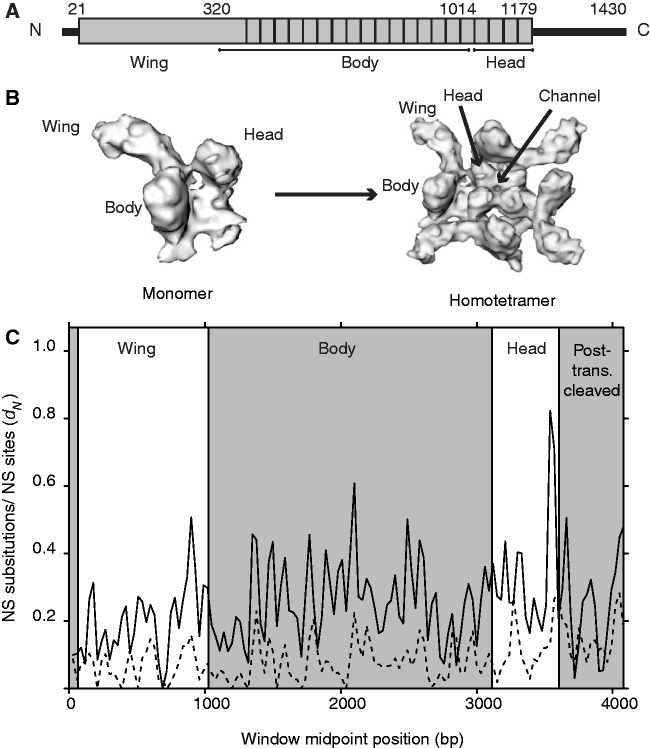
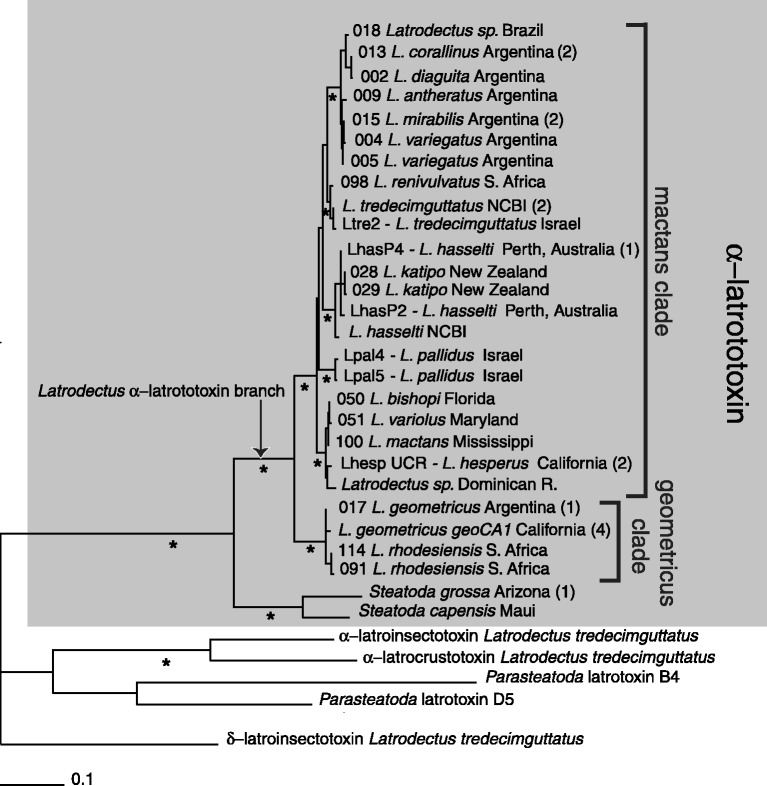
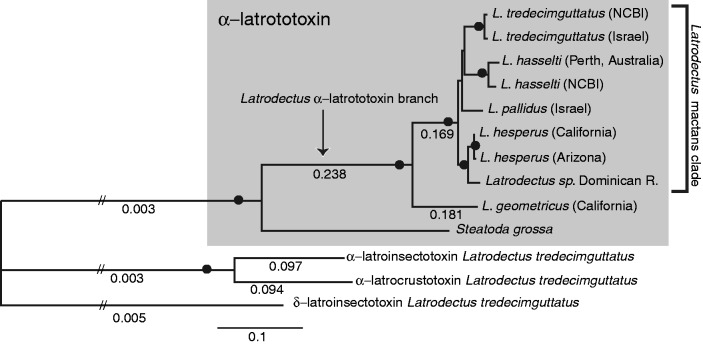
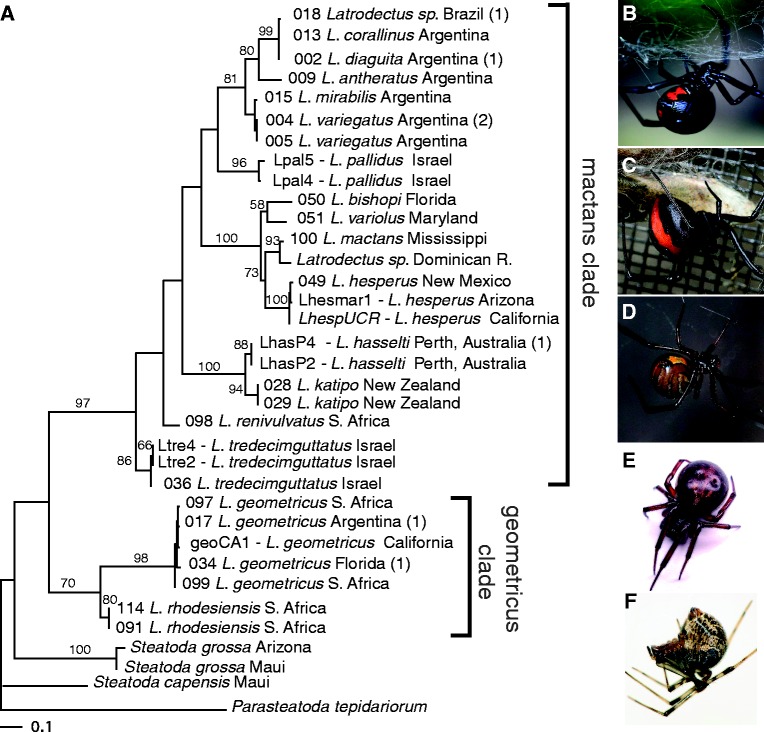
Black widow spiders (members of the genus Latrodectus) are widely feared because of their potent neurotoxic venom. α-Latrotoxin is the vertebrate-specific toxin responsible for the dramatic effects of black widow envenomation. The evolution of this toxin is enigmatic because only two α-latrotoxin sequences are known. In this study, ~4 kb α-latrotoxin sequences and their homologs were characterized from a diversity of Latrodectus species, and representatives of Steatoda and Parasteatoda, establishing the wide distribution of latrotoxins across the mega-diverse spider family Theridiidae. Across black widow species, α-latrotoxin shows ≥ 94% nucleotide identity and variability consistent with purifying selection. Multiple codon and branch-specific estimates of the nonsynonymous/synonymous substitution rate ratio also suggest a long history of purifying selection has acted on α-latrotoxin across Latrodectus and Steatoda. However, α-latrotoxin is highly divergent in amino acid sequence between these genera, with 68.7% of protein differences involving non-conservative substitutions, evidence for positive selection on its physiochemical properties and particular codons, and an elevated rate of nonsynonymous substitutions along α-latrotoxin's Latrodectus branch. Such variation likely explains the efficacy of red-back spider, L. hasselti, antivenom in treating bites from other Latrodectus species, and the weaker neurotoxic symptoms associated with Steatoda and Parasteatoda bites. Long-term purifying selection on α-latrotoxin indicates its functional importance in black widow venom, even though vertebrates are a small fraction of their diet. The greater differences between Latrodectus and Steatoda α-latrotoxin, and their relationships to invertebrate-specific latrotoxins, suggest a shift in α-latrotoxin toward increased vertebrate toxicity coincident with the evolution of widow spiders.
黑寡妇蜘蛛(Latrodectus 属)因其强效的神经毒性毒液而被广泛恐惧。α- latrotoxin 是负责黑寡妇蜘蛛毒液显著作用的脊椎动物特异性毒素。这种毒素的进化是神秘的,因为只知道两个α- latrotoxin 序列。在这项研究中,从多种 Latrodectus 物种以及 Steatoda 和 Parasteatoda 代表中,鉴定了约 4kb 的α- latrotoxin 序列及其同源物,确立了 latrotoxins 在巨型多样化蜘蛛科 Theridiidae 中的广泛分布。在黑寡妇蜘蛛物种中,α- latrotoxin 的核苷酸同一性≥94%,变异性与纯化选择一致。多个密码子和分支特异性的非同义/同义替代率比值估计也表明,α- latrotoxin 在 Latrodectus 和 Steatoda 中经历了长期的纯化选择。然而,α- latrotoxin 在这些属之间的氨基酸序列上高度分化,68.7%的蛋白差异涉及非保守取代,这表明对其物理化学性质和特定密码子的正选择,以及在α- latrotoxin 的 Latrodectus 分支上的非同义替换率升高。这种变异可能解释了红背蜘蛛(L. hasselti)抗毒液治疗其他 Latrodectus 物种咬伤的效果,以及与 Steatoda 和 Parasteatoda 咬伤相关的较弱神经毒性症状。α- latrotoxin 的长期纯化选择表明其在黑寡妇毒液中的功能重要性,即使脊椎动物在其饮食中只占很小的一部分。Latrodectus 和 Steatoda α- latrotoxin 之间的差异更大,以及它们与无脊椎动物特异性 latrotoxins 的关系,表明在与寡妇蜘蛛进化同时,α- latrotoxin 朝着增加对脊椎动物的毒性方向发生了转变。