Department of Radiology, Faculty of Medicine, King Abdulaziz University Hospital, Jeddah, Saudi Arabia.
Department of Industrial Engineering, Faculty of Engineering, King Abdulaziz University, Jeddah 21589, Saudi Arabia.
J Healthc Eng. 2021 Oct 27;2021:1233166. doi: 10.1155/2021/1233166. eCollection 2021.
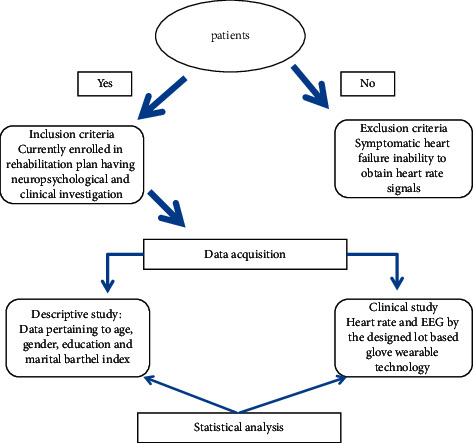
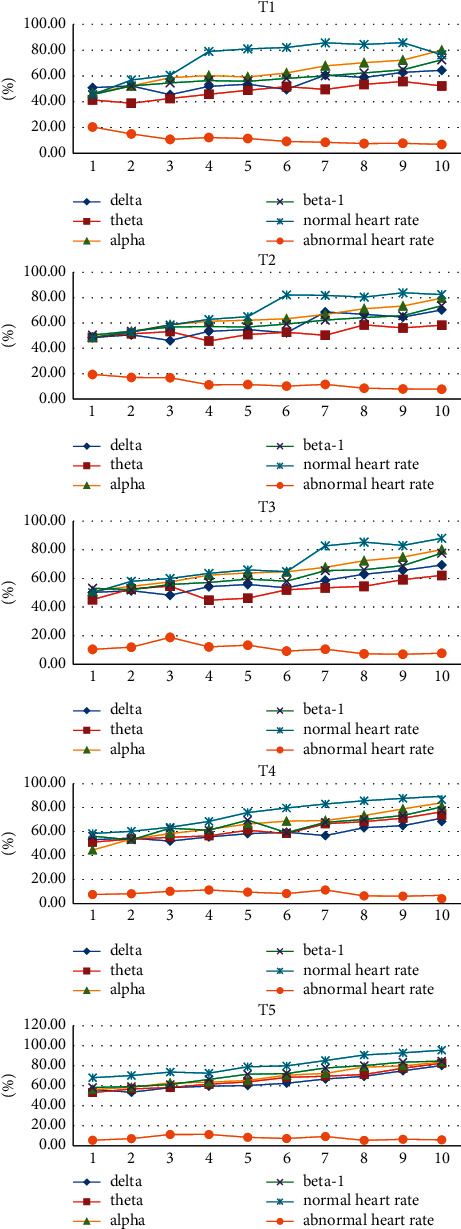
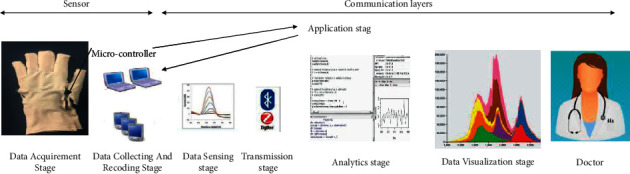
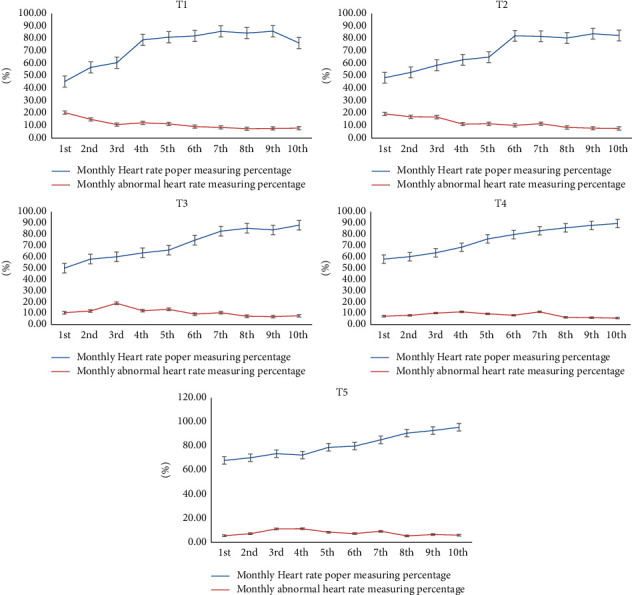
In recent years, neurological diseases have become a standout amongst all the other diseases and are the most important reasons for mortality and morbidity all over the world. The current study's aim is to conduct a pilot study for testing the prototype of the designed glove-wearable technology that could detect and analyze the heart rate and EEG for better management and avoiding stroke consequences. The qualitative, clinical experimental method of assessment was explored by incorporating use of an IoT-based real-time assessing medical glove that was designed using heart rate-based and EEG-based sensors. We conducted structured interviews with 90 patients, and the results of the interviews were analyzed by using the Barthel index and were grouped accordingly. Overall, the proportion of patients who followed proper daily heart rate recording behavior went from 46.9% in the first month of the trial to 78.2% after 3-10 months of the interventions. Meanwhile, the percentage of individuals having an irregular heart rate fell from 19.5% in the first month of the trial to 9.1% after 3-10 months of intervention research. In T5, we found that delta relative power decreased by 12.1% and 5.8% compared with baseline at 3 and at 6 months and an average increase was 24.3 ± 0.08. Beta-1 remained relatively steady, while theta relative power grew by 7% and alpha relative power increased by 31%. The T1 hemisphere had greater mean values of delta and theta relative power than the T5 hemisphere. For alpha ( < 0.05) and beta relative power, the opposite pattern was seen. The distinction was statistically significant for delta ( < 0.001), alpha ( < 0.01), and beta-1 ( < 0.05) among T1 and T5 patient groups. In conclusion, our single center-based study found that such IoT-based real-time medical monitoring devices significantly reduce the complexity of real-time monitoring and data acquisition processes for a healthcare provider and thus provide better healthcare management. The emergence of significant risks and controlling mechanisms can be improved by boosting the awareness. Furthermore, it identifies the high-risk factors besides facilitating the prevention of strokes. The EEG-based brain-computer interface has a promising future in upcoming years to avert DALY.
近年来,神经疾病已成为所有疾病中的突出问题,也是全球导致死亡率和发病率的最重要原因。本研究旨在进行一项原型测试研究,以检验设计的可穿戴手套技术,该技术可以检测和分析心率和脑电图,以更好地管理和避免中风后果。通过使用基于物联网的实时评估医疗手套,该手套是使用基于心率和脑电图的传感器设计的,探索了定性、临床实验评估方法。我们对 90 名患者进行了结构性访谈,根据巴塞尔指数对访谈结果进行了分析并进行了分组。总的来说,在试验的第一个月,遵循适当日常心率记录行为的患者比例从 46.9%增加到 3-10 个月干预后的 78.2%。同时,在试验的第一个月,心率不规则的患者比例从 19.5%下降到 3-10 个月干预研究后的 9.1%。在 T5 中,我们发现与基线相比,在 3 个月和 6 个月时,delta 相对功率分别下降了 12.1%和 5.8%,平均增加了 24.3±0.08。β-1 相对稳定,而 theta 相对功率增加了 7%,alpha 相对功率增加了 31%。T1 半球的 delta 和 theta 相对功率均值大于 T5 半球。对于 alpha(<0.05)和 beta 相对功率,观察到相反的模式。T1 和 T5 患者组之间 delta(<0.001)、alpha(<0.01)和 beta-1(<0.05)的差异具有统计学意义。总之,我们的单中心研究发现,这种基于物联网的实时医疗监测设备显著降低了医疗保健提供者实时监测和数据采集过程的复杂性,从而提供了更好的医疗保健管理。通过提高认识,可以改善显著风险和控制机制。此外,它除了促进中风的预防外,还确定了高风险因素。基于脑电图的脑机接口在未来几年具有广阔的前景,可以避免残疾调整生命年的损失。