School of Engineering, Universidad Simón Bolívar, Barranquilla, Atlántico, 00000, Colombia.
F1000Res. 2020 Jun 16;9:618. doi: 10.12688/f1000research.23181.2. eCollection 2020.
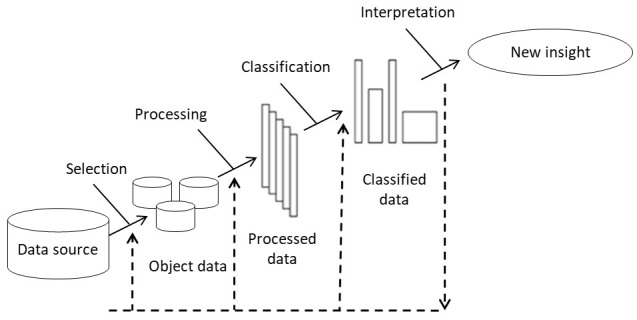
: Previous studies of migraine classification have focused on the analysis of brain waves, leading to the development of complex tests that are not accessible to the majority of the population. In the early stages of this pathology, patients tend to go to the emergency services or outpatient department, where timely identification largely depends on the expertise of the physician and continuous monitoring of the patient. However, owing to the lack of time to make a proper diagnosis or the inexperience of the physician, migraines are often misdiagnosed either because they are wrongly classified or because the disease severity is underestimated or disparaged. Both cases can lead to inappropriate, unnecessary, or imprecise therapies, which can result in damage to patients' health. This study focuses on designing and testing an early classification system capable of distinguishing between seven types of migraines based on the patient's symptoms. The methodology proposed comprises four steps: data collection based on symptoms and diagnosis by the treating physician, selection of the most relevant variables, use of artificial neural network models for automatic classification, and selection of the best model based on the accuracy and precision of the diagnosis. The artificial neural network models used provide an excellent classification performance, with accuracy and precision levels >97% and which exceed the classifications made using other model, such as logistic regression, support vector machines, nearest neighbor, and decision trees. The implementation of migraine classification through artificial neural networks is a powerful tool that reduces the time to obtain accurate, reliable, and timely clinical diagnoses.
以往的偏头痛分类研究主要集中在脑波分析上,这导致了复杂测试的发展,而这些测试大多数人无法进行。在该病理的早期阶段,患者往往会去急诊室或门诊,而及时识别在很大程度上取决于医生的专业知识和对患者的持续监测。然而,由于缺乏时间进行适当的诊断或医生经验不足,偏头痛经常被误诊,要么是因为它们被错误地分类,要么是因为疾病的严重程度被低估或轻视。这两种情况都可能导致不适当、不必要或不准确的治疗,从而损害患者的健康。本研究专注于设计和测试一种早期分类系统,该系统能够根据患者的症状区分七种类型的偏头痛。所提出的方法包括四个步骤:基于症状和主治医生诊断的数据收集、选择最相关的变量、使用人工神经网络模型进行自动分类,以及根据诊断的准确性和精确性选择最佳模型。所使用的人工神经网络模型提供了出色的分类性能,准确率和精度水平均超过 97%,超过了其他模型(如逻辑回归、支持向量机、最近邻和决策树)的分类。通过人工神经网络实现偏头痛分类是一种强大的工具,可以减少获得准确、可靠和及时临床诊断的时间。