Mitrović Katarina, Petrušić Igor, Radojičić Aleksandra, Daković Marko, Savić Andrej
Department of Information Technologies, Faculty of Technical Sciences in Čačak, University of Kragujevac, Čačak, Serbia.
Laboratory for Advanced Analysis of Neuroimages, Faculty of Physical Chemistry, University of Belgrade, Belgrade, Serbia.
Front Neurol. 2023 Jun 23;14:1106612. doi: 10.3389/fneur.2023.1106612. eCollection 2023.
Migraine with aura (MwA) is a neurological condition manifested in moderate to severe headaches associated with transient visual and somatosensory symptoms, as well as higher cortical dysfunctions. Considering that about 5% of the world's population suffers from this condition and manifestation could be abundant and characterized by various symptoms, it is of great importance to focus on finding new and advanced techniques for the detection of different phenotypes, which in turn, can allow better diagnosis, classification, and biomarker validation, resulting in tailored treatments of MwA patients.
This research aimed to test different machine learning techniques to distinguish healthy people from those suffering from MwA, as well as people with simple MwA and those experiencing complex MwA. Magnetic resonance imaging (MRI) post-processed data (cortical thickness, cortical surface area, cortical volume, cortical mean Gaussian curvature, and cortical folding index) was collected from 78 subjects [46 MwA patients (22 simple MwA and 24 complex MwA) and 32 healthy controls] with 340 different features used for the algorithm training.
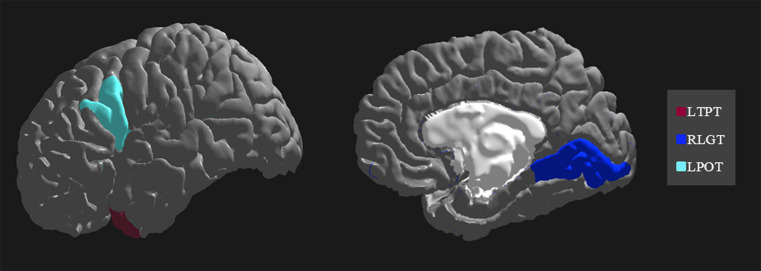
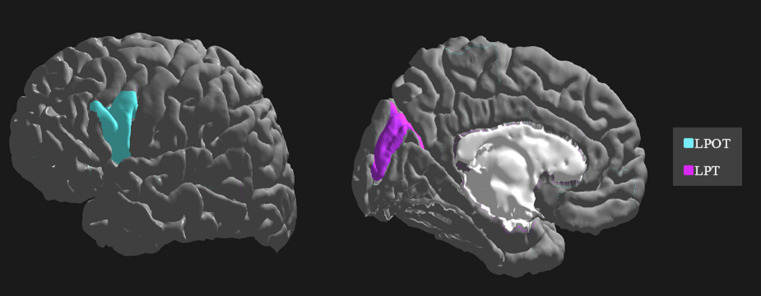
The results show that an algorithm based on post-processed MRI data yields a high classification accuracy (97%) of MwA patients and precise distinction between simple MwA and complex MwA with an accuracy of 98%. Additionally, the sets of features relevant to the classification were identified. The feature importance ranking indicates the thickness of the left temporal pole, right lingual gyrus, and left pars opercularis as the most prominent markers for MwA classification, while the thickness of left pericalcarine gyrus and left pars opercularis are proposed as the two most important features for the simple and complex MwA classification.
This method shows significant potential in the validation of MwA diagnosis and subtype classification, which can tackle and challenge the current treatments of MwA.
伴先兆偏头痛(MwA)是一种神经系统疾病,表现为中度至重度头痛,并伴有短暂的视觉和躯体感觉症状以及高级皮层功能障碍。鉴于全球约5%的人口患有这种疾病,且其表现形式多样、症状各异,因此专注于寻找新的先进技术来检测不同表型至关重要,这反过来可以实现更好的诊断、分类和生物标志物验证,从而为MwA患者提供个性化治疗。
本研究旨在测试不同的机器学习技术,以区分健康人与患有MwA的人,以及患有简单MwA的人和患有复杂MwA的人。从78名受试者[46名MwA患者(22名简单MwA患者和24名复杂MwA患者)和32名健康对照者]中收集了磁共振成像(MRI)后处理数据(皮质厚度、皮质表面积、皮质体积、皮质平均高斯曲率和皮质折叠指数),使用340个不同特征进行算法训练。
结果表明,基于MRI后处理数据的算法对MwA患者的分类准确率较高(97%),并且能够精确区分简单MwA和复杂MwA,准确率为98%。此外,还确定了与分类相关的特征集。特征重要性排名表明,左颞极、右舌回和左岛盖部的厚度是MwA分类最突出的标志物,而左距状回和左岛盖部的厚度被认为是简单和复杂MwA分类的两个最重要特征。
该方法在MwA诊断和亚型分类的验证方面显示出巨大潜力,能够应对并挑战当前的MwA治疗方法。