Charras Amandine, Garau Jessica, Hofmann Sigrun R, Carlsson Emil, Cereda Cristina, Russ Susanne, Abraham Susanne, Hedrich Christian M
Department of Women's and Children's Health, Institute of Life Course and Medical Sciences, University of Liverpool, Liverpool, United Kingdom.
Genomic and Post-Genomic Unit, IRCCS Mondino Foundation, Pavia, Italy.
Front Cell Dev Biol. 2021 Oct 21;9:746145. doi: 10.3389/fcell.2021.746145. eCollection 2021.
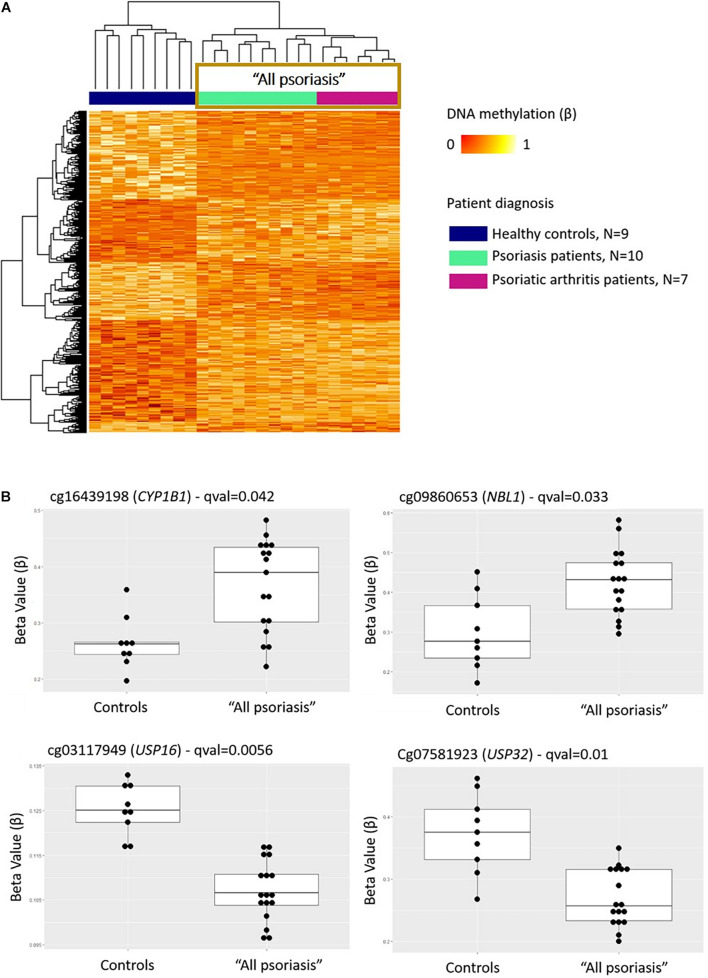
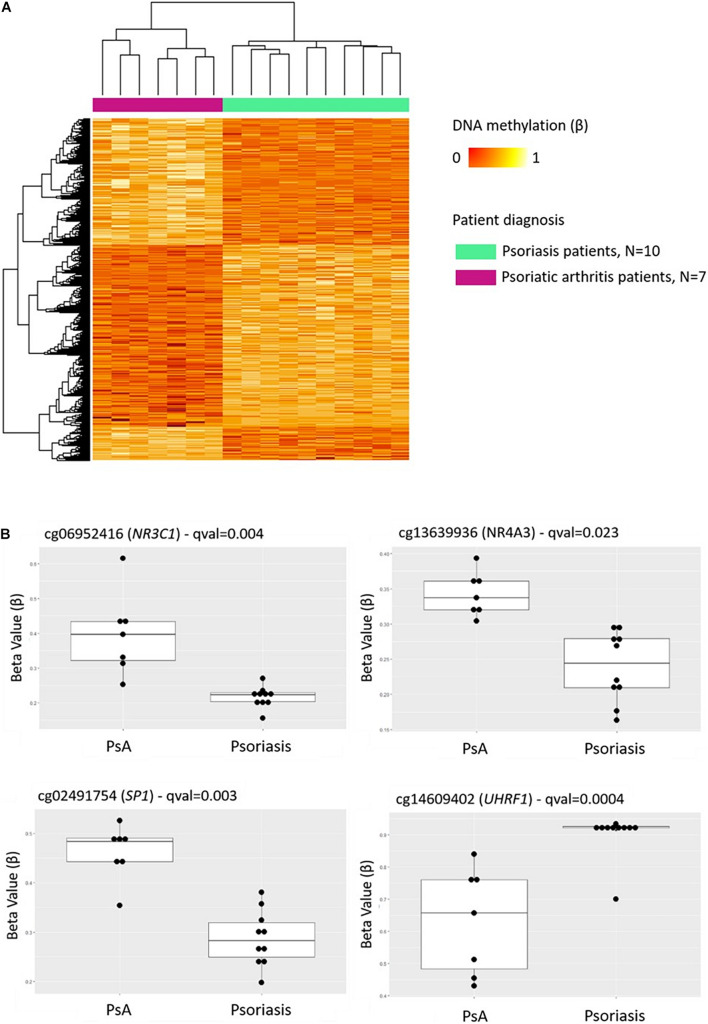
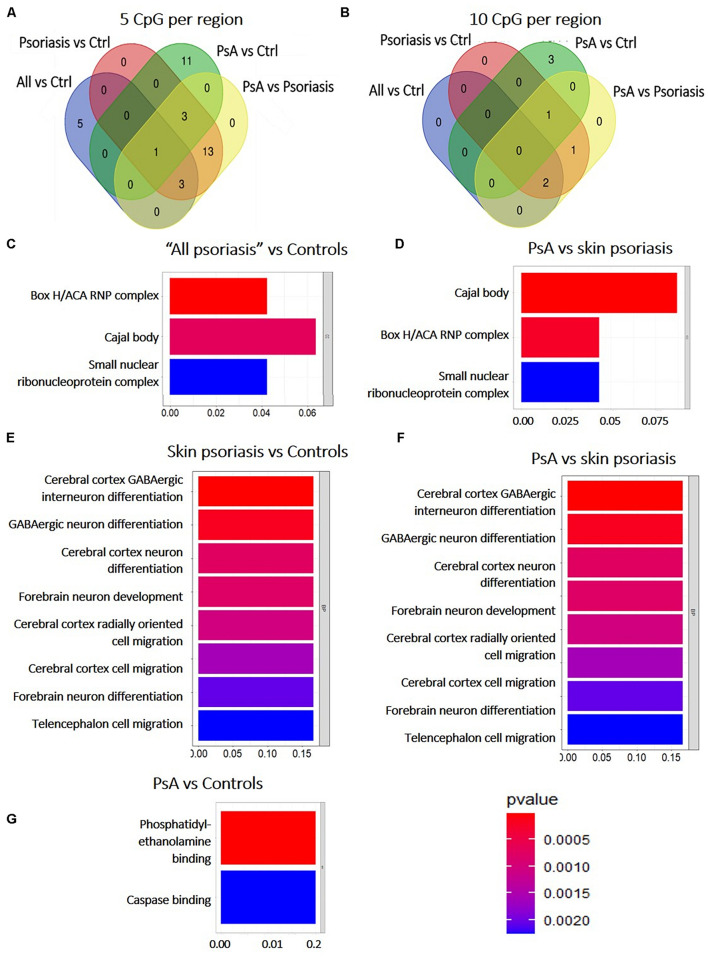
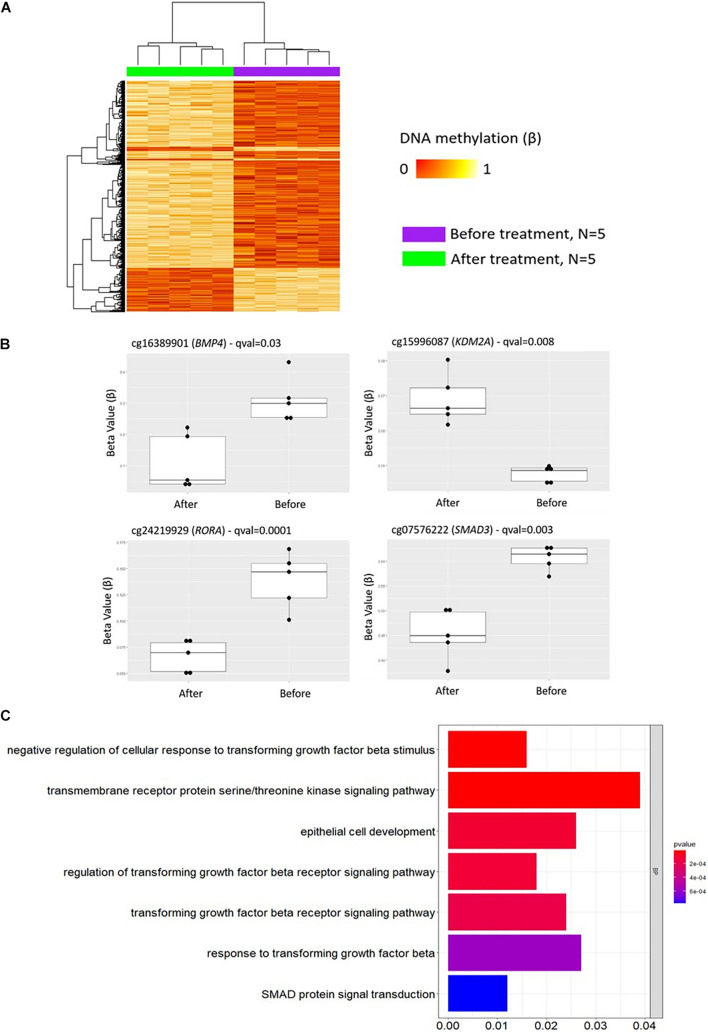
Psoriasis is a T cell-mediated chronic autoimmune/inflammatory disease. While some patients experience disease limited to the skin (skin psoriasis), others develop joint involvement (psoriatic arthritis; PsA). In the absence of disease- and/or outcome-specific biomarkers, and as arthritis can precede skin manifestations, diagnostic and therapeutic delays are common and contribute to disease burden and damage accrual. Altered epigenetic marks, including DNA methylation, contribute to effector T cell phenotypes and altered cytokine expression in autoimmune/inflammatory diseases. This project aimed at the identification of disease-/outcome-specific DNA methylation signatures in CD8 T cells from patients with psoriasis and PsA as compared to healthy controls. Peripheral blood CD8 T cells from nine healthy controls, 10 psoriasis, and seven PsA patients were collected to analyze DNA methylation marks using Illumina Human Methylation EPIC BeadChips (>850,000 CpGs per sample). Bioinformatic analysis was performed using R (, and packages). DNA methylation profiles in CD8 T cells differentiate healthy controls from psoriasis patients [397 Differentially Methylated Positions (DMPs); 9 Differentially Methylated Regions (DMRs) when ≥CpGs per DMR were considered; 2 DMRs for ≥10 CpGs]. Furthermore, patients with skin psoriasis can be discriminated from PsA patients [1,861 DMPs, 20 DMRs (≥5 CpGs per region), 4 DMRs (≥10 CpGs per region)]. Gene ontology (GO) analyses considering genes with ≥1 DMP in their promoter delivered methylation defects in skin psoriasis and PsA primarily affecting the BMP signaling pathway and endopeptidase regulator activity, respectively. GO analysis of genes associated with DMRs between skin psoriasis and PsA demonstrated an enrichment of GABAergic neuron and cortex neuron development pathways. Treatment with cytokine blockers associated with DNA methylation changes [2,372 DMPs; 1,907 DMPs within promoters, 7 DMRs (≥5 CpG per regions)] affecting transforming growth factor beta receptor and transmembrane receptor protein serine/threonine kinase signaling pathways. Lastly, a methylation score including TNF and IL-17 pathway associated DMPs inverse correlates with skin disease activity scores (PASI). Patients with skin psoriasis exhibit DNA methylation patterns in CD8 T cells that allow differentiation from PsA patients and healthy individuals, and reflect clinical activity of skin disease. Thus, DNA methylation profiling promises potential as diagnostic and prognostic tool to be used for molecular patient stratification toward individualized treatment.
银屑病是一种由T细胞介导的慢性自身免疫性/炎症性疾病。一些患者仅出现皮肤病变(皮肤型银屑病),而另一些患者则会出现关节受累(银屑病关节炎;PsA)。由于缺乏疾病和/或结局特异性生物标志物,且关节炎可能先于皮肤表现出现,诊断和治疗延迟很常见,这会增加疾病负担并导致损害累积。包括DNA甲基化在内的表观遗传标记改变,会导致自身免疫性/炎症性疾病中效应T细胞表型改变和细胞因子表达改变。本项目旨在鉴定银屑病和PsA患者与健康对照相比,CD8 T细胞中疾病/结局特异性DNA甲基化特征。收集了9名健康对照、10名银屑病患者和7名PsA患者的外周血CD8 T细胞,使用Illumina Human Methylation EPIC BeadChips(每个样本>850,000个CpG位点)分析DNA甲基化标记。使用R(、和软件包)进行生物信息学分析。CD8 T细胞中的DNA甲基化谱可区分健康对照和银屑病患者[397个差异甲基化位点(DMP);当每个差异甲基化区域(DMR)考虑≥个CpG位点时,有9个DMR;当每个DMR≥10个CpG位点时,有2个DMR]。此外,皮肤型银屑病患者可与PsA患者区分开来[1,861个DMP,20个DMR(每个区域≥5个CpG位点),4个DMR(每个区域≥10个CpG位点)]。基因本体(GO)分析显示,启动子中具有≥1个DMP的基因,在皮肤型银屑病和PsA中分别主要影响骨形态发生蛋白(BMP)信号通路和内肽酶调节活性的甲基化缺陷。对皮肤型银屑病和PsA之间DMR相关基因的GO分析表明,GABA能神经元和皮质神经元发育途径显著富集。细胞因子阻滞剂治疗与DNA甲基化变化相关[2,372个DMP;启动子内1,907个DMP,7个DMR(每个区域≥5个CpG位点)],影响转化生长因子β受体和跨膜受体蛋白丝氨酸/苏氨酸激酶信号通路。最后,一个包括肿瘤坏死因子(TNF)和白细胞介素-17(IL-17)途径相关DMP的甲基化评分与皮肤疾病活动评分(PASI)呈负相关。皮肤型银屑病患者CD8 T细胞中的DNA甲基化模式,可与PsA患者和健康个体区分开来,并反映皮肤疾病的临床活动。因此,DNA甲基化谱分析有望作为诊断和预后工具,用于分子层面的患者分层以实现个体化治疗。