Departmento de Biología Celular e Histología, Facultad de Biología, Universidad de Murcia, Spain.
Instituto Murciano de Investigación Biosanitaria-Arrixaca, Murcia, Spain.
PLoS Biol. 2021 Nov 8;19(11):e3001455. doi: 10.1371/journal.pbio.3001455. eCollection 2021 Nov.
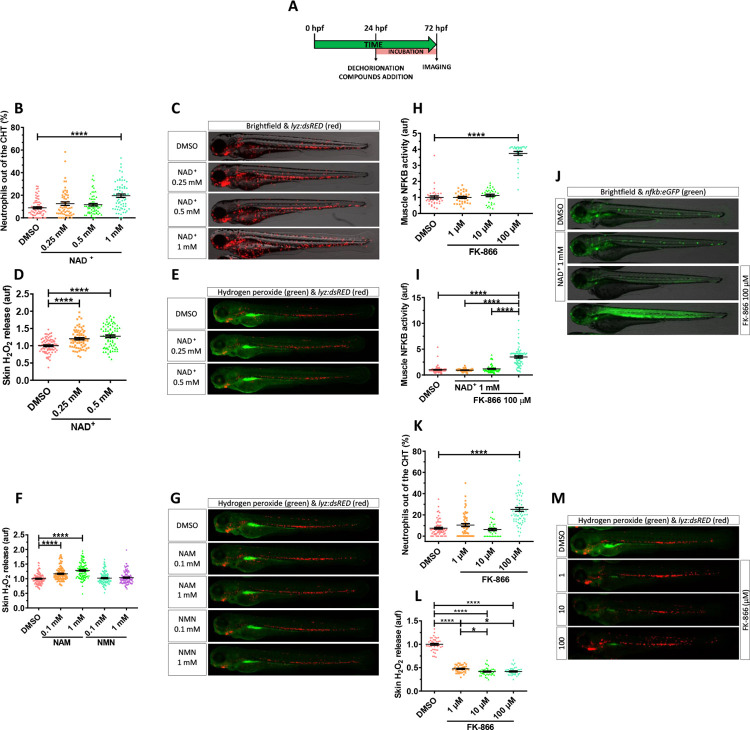
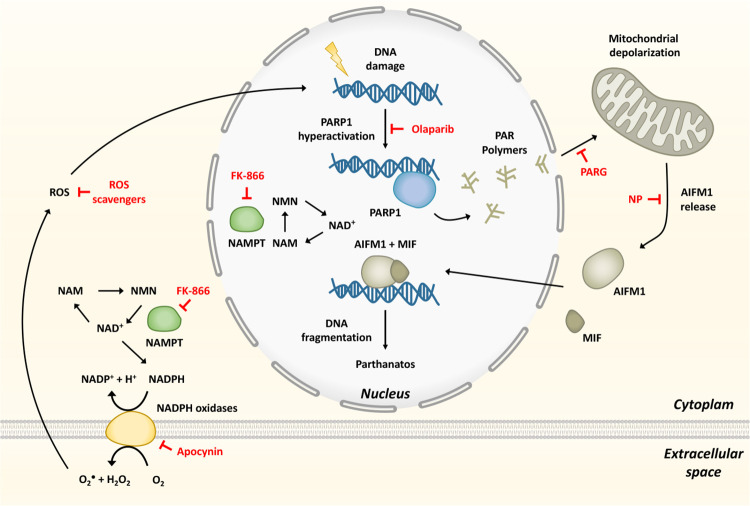
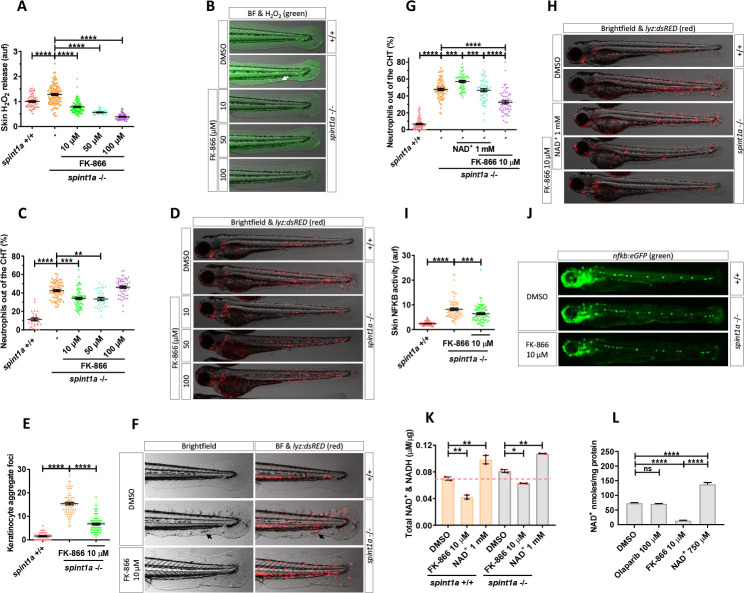
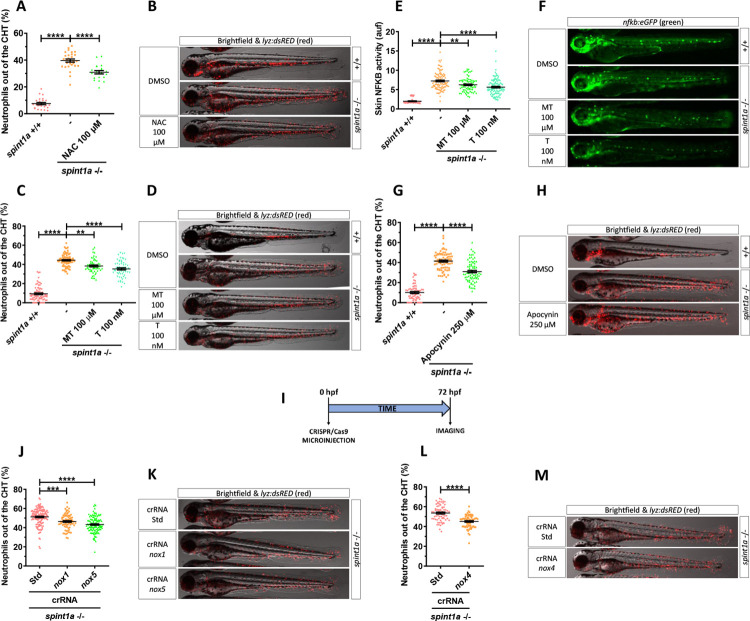
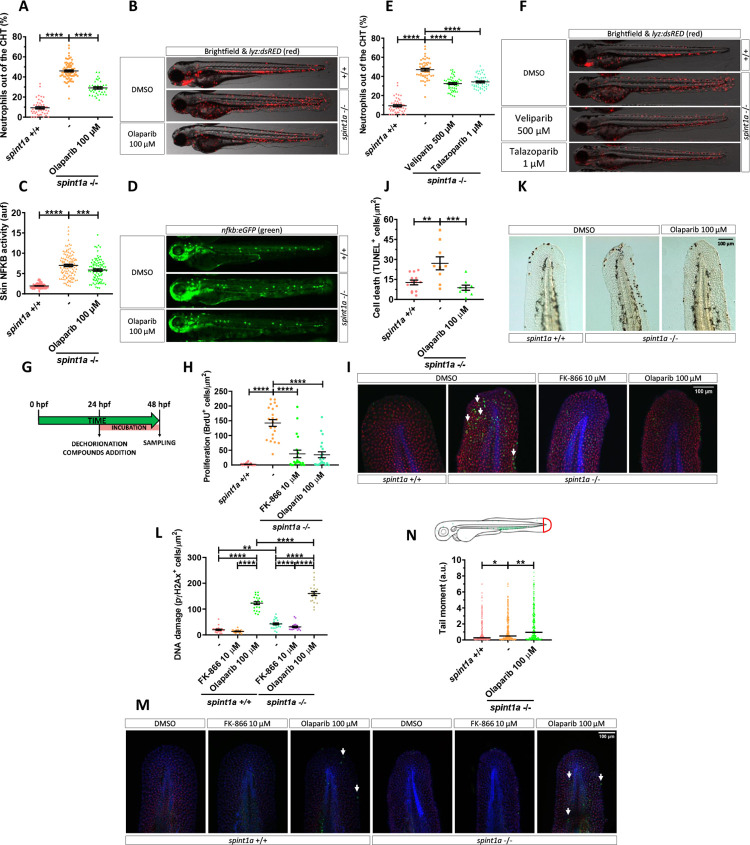
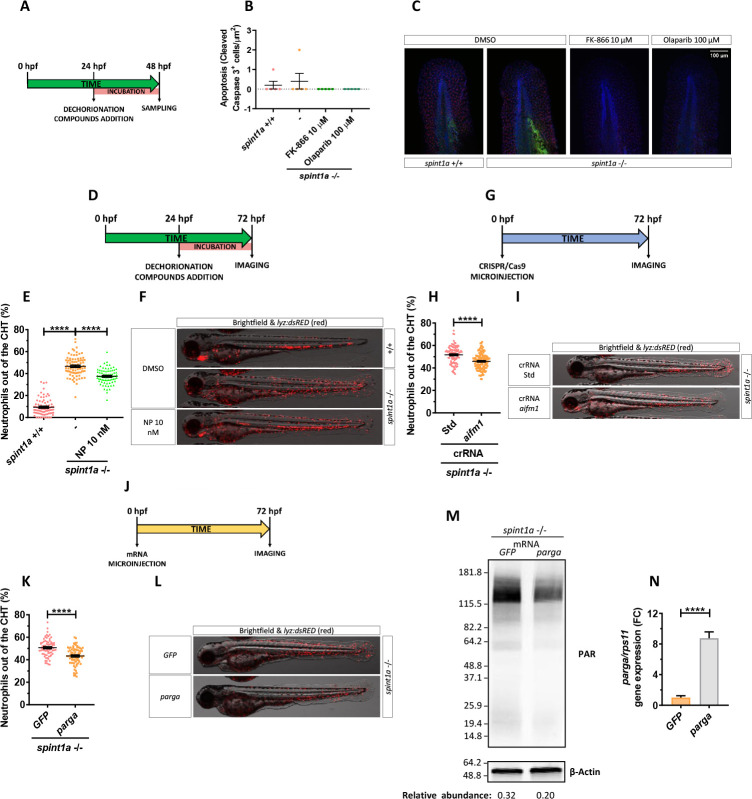
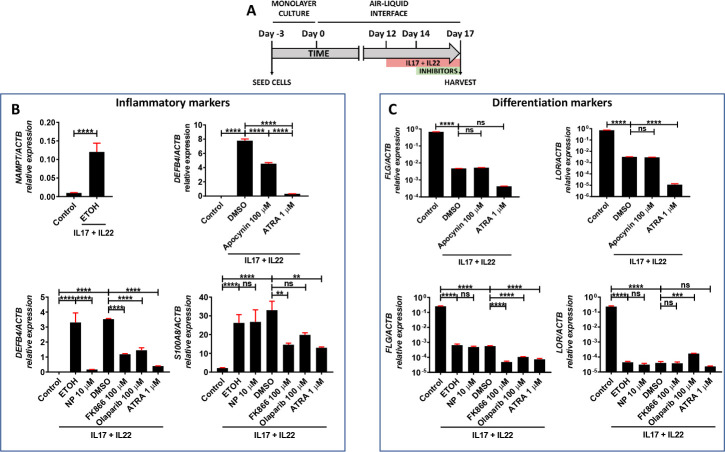
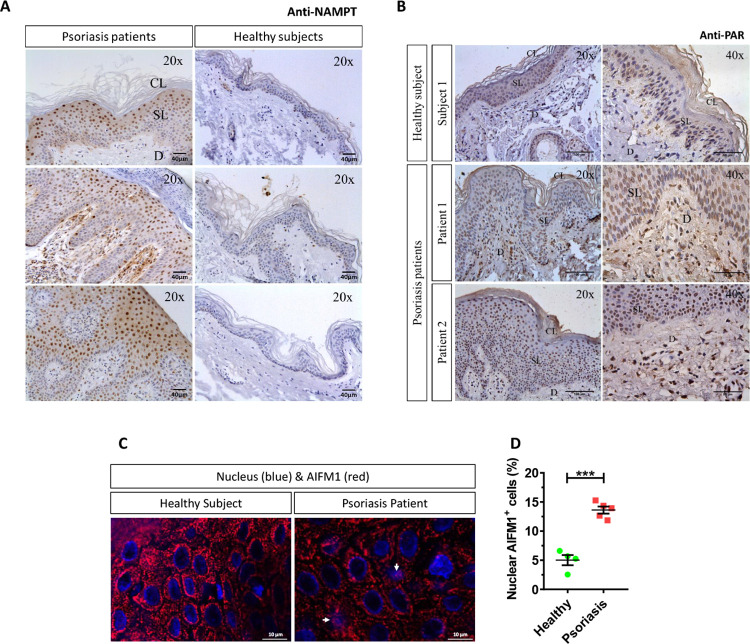
Several studies have revealed a correlation between chronic inflammation and nicotinamide adenine dinucleotide (NAD+) metabolism, but the precise mechanism involved is unknown. Here, we report that the genetic and pharmacological inhibition of nicotinamide phosphoribosyltransferase (Nampt), the rate-limiting enzyme in the salvage pathway of NAD+ biosynthesis, reduced oxidative stress, inflammation, and keratinocyte DNA damage, hyperproliferation, and cell death in zebrafish models of chronic skin inflammation, while all these effects were reversed by NAD+ supplementation. Similarly, genetic and pharmacological inhibition of poly(ADP-ribose) (PAR) polymerase 1 (Parp1), overexpression of PAR glycohydrolase, inhibition of apoptosis-inducing factor 1, inhibition of NADPH oxidases, and reactive oxygen species (ROS) scavenging all phenocopied the effects of Nampt inhibition. Pharmacological inhibition of NADPH oxidases/NAMPT/PARP/AIFM1 axis decreased the expression of pathology-associated genes in human organotypic 3D skin models of psoriasis. Consistently, an aberrant induction of NAMPT and PARP activity, together with AIFM1 nuclear translocation, was observed in lesional skin from psoriasis patients. In conclusion, hyperactivation of PARP1 in response to ROS-induced DNA damage, fueled by NAMPT-derived NAD+, mediates skin inflammation through parthanatos cell death.
几项研究表明,慢性炎症与烟酰胺腺嘌呤二核苷酸(NAD+)代谢之间存在相关性,但具体的相关机制尚不清楚。在这里,我们报告称,烟酰胺磷酸核糖转移酶(Nampt)的遗传和药理学抑制,即 NAD+生物合成补救途径中的限速酶,可减少氧化应激、炎症以及斑马鱼慢性皮肤炎症模型中的角质形成细胞 DNA 损伤、过度增殖和细胞死亡,而 NAD+的补充则逆转了所有这些作用。同样,聚(ADP-核糖)(PAR)聚合酶 1(Parp1)的遗传和药理学抑制、PAR 糖基水解酶的过表达、凋亡诱导因子 1 的抑制、NADPH 氧化酶的抑制和活性氧(ROS)清除都可模拟 Nampt 抑制的作用。NADPH 氧化酶/NAMPT/PARP/AIFM1 轴的药理学抑制降低了银屑病患者 3D 人器官皮肤模型中与病理学相关基因的表达。一致地,在银屑病患者的皮损皮肤中观察到 NAMPT 和 PARP 活性的异常诱导,以及 AIFM1 的核易位。总之,ROS 诱导的 DNA 损伤导致 PARP1 的过度激活,该激活由 Nampt 衍生的 NAD+ 提供燃料,通过细胞坏死介导皮肤炎症。