Department of Materials Science and Engineering, Massachusetts Institute of Technology, Cambridge, MA, United States of America.
PLoS One. 2021 Nov 8;16(11):e0245405. doi: 10.1371/journal.pone.0245405. eCollection 2021.
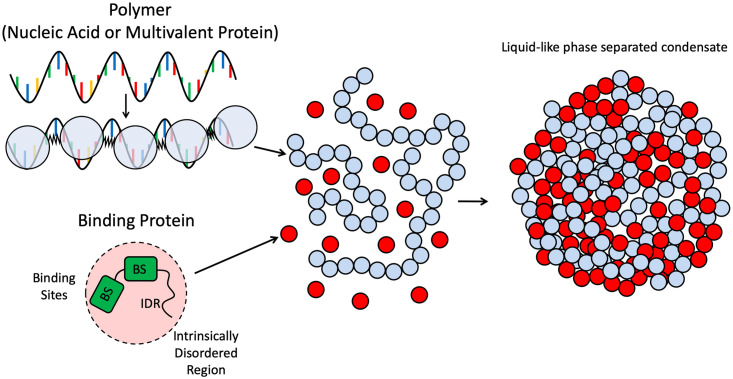
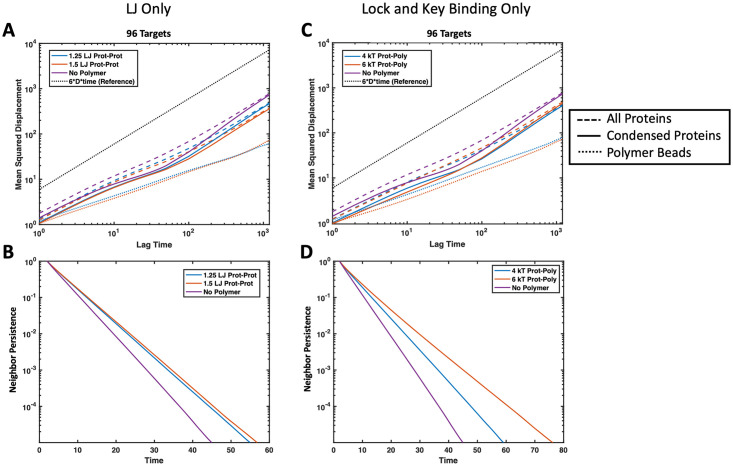
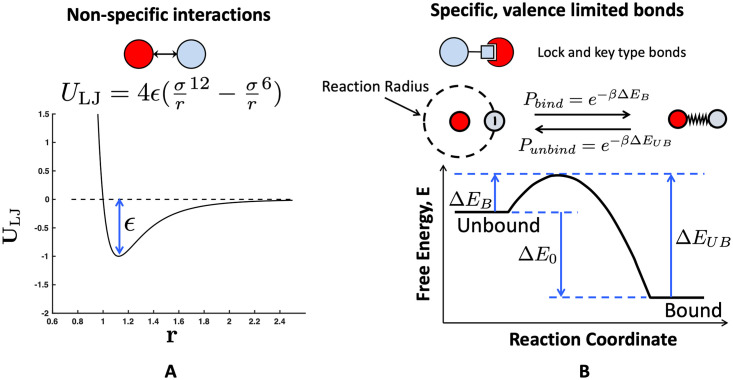
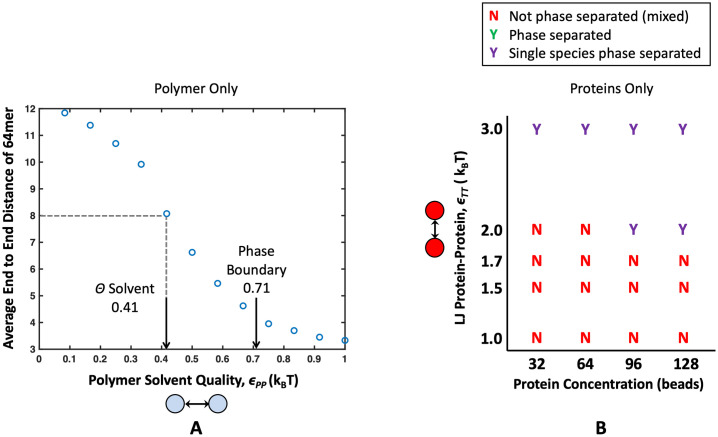
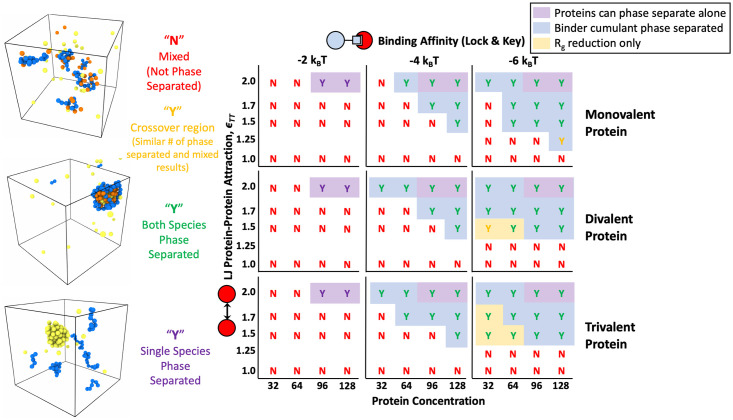
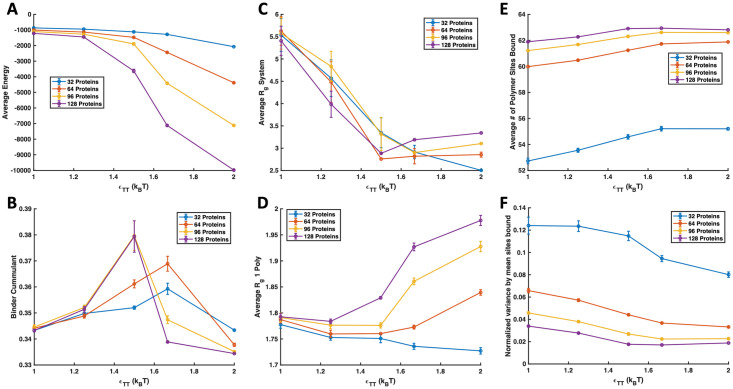
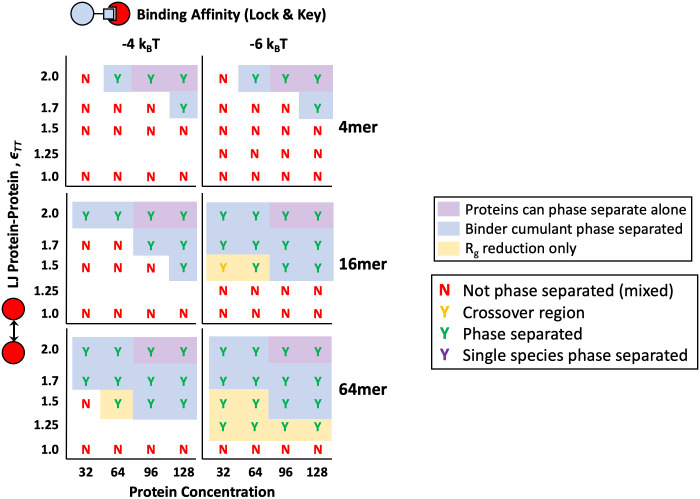
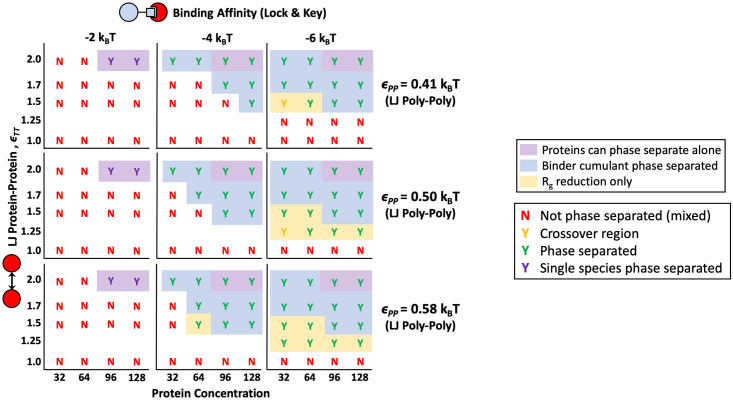
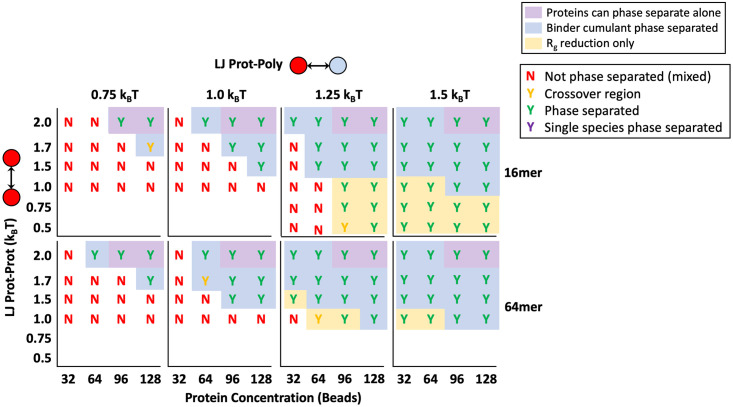
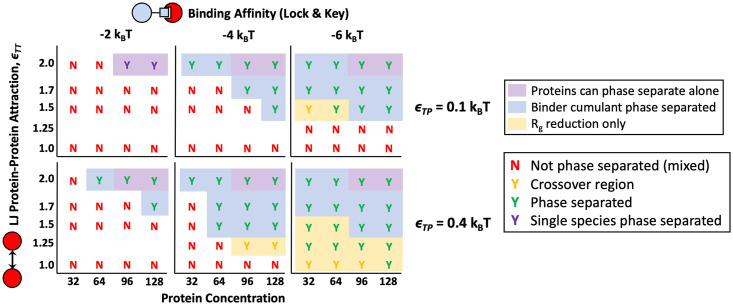
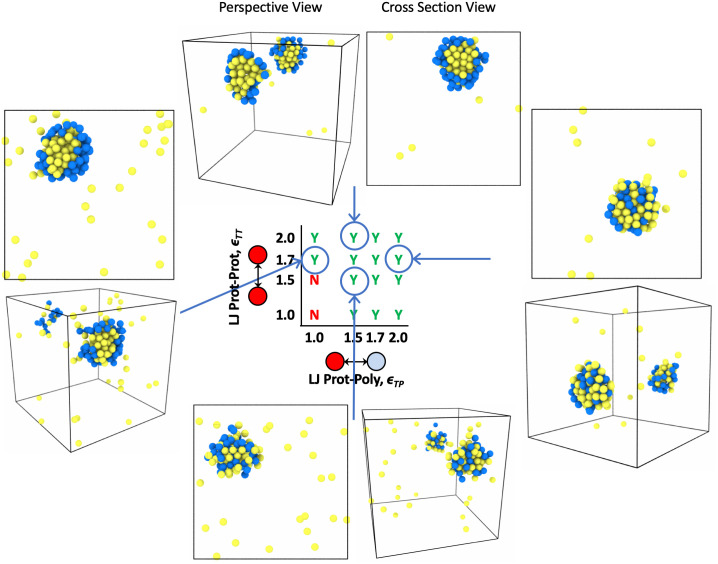
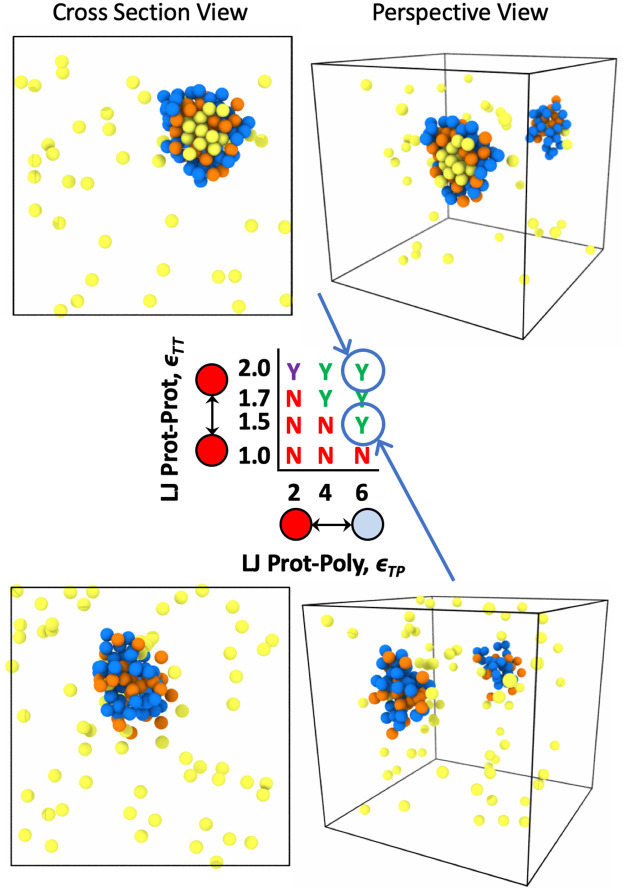
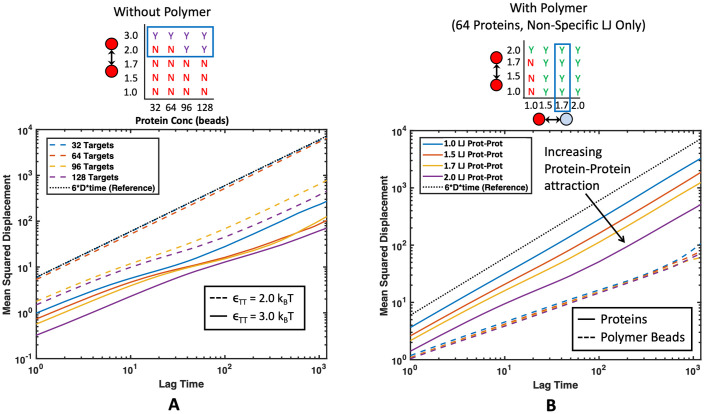
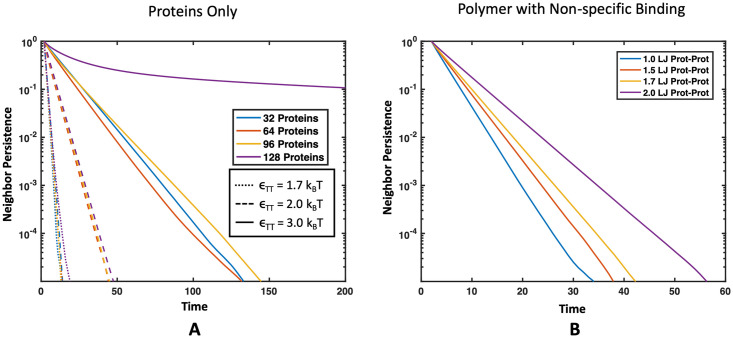
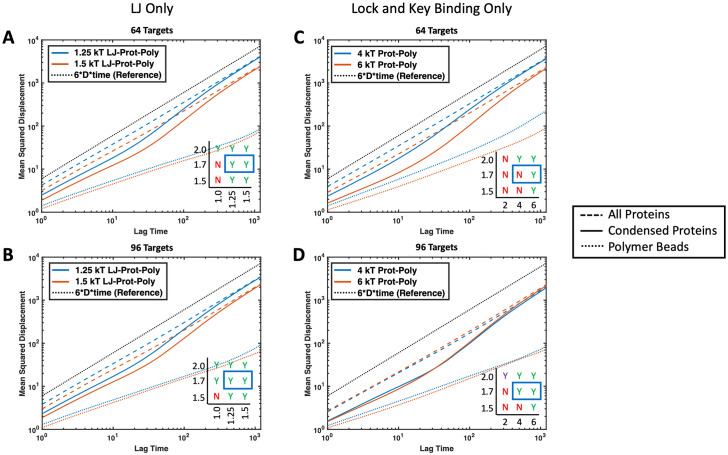
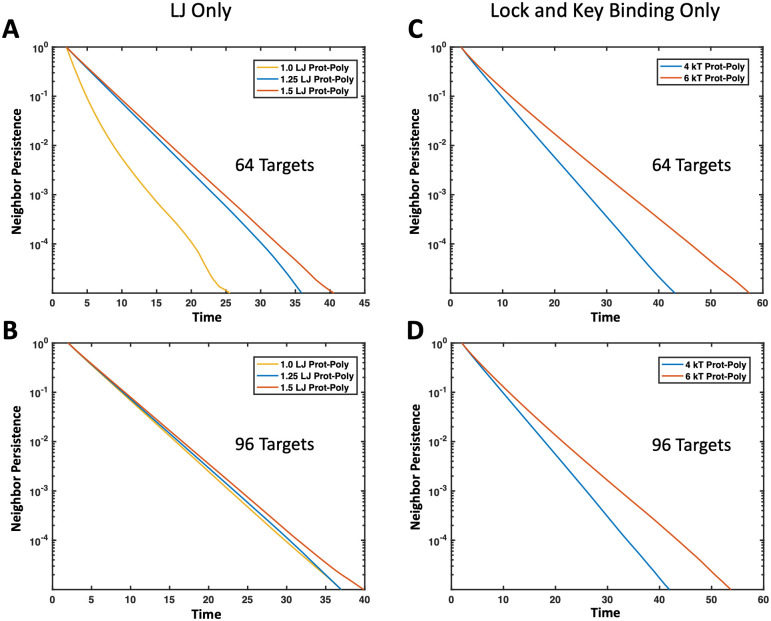
Multivalent polymers are a key structural component of many biocondensates. When interacting with their cognate binding proteins, multivalent polymers such as RNA and modular proteins have been shown to influence the liquid-liquid phase separation (LLPS) boundary to both control condensate formation and to influence condensate dynamics after phase separation. Much is still unknown about the function and formation of these condensed droplets, but changes in their dynamics or phase separation are associated with neurodegenerative diseases such as amyotrophic lateral sclerosis (ALS) and Alzheimer's Disease. Therefore, investigation into how the structure of multivalent polymers relates to changes in biocondensate formation and maturation is essential to understanding and treating these diseases. Here, we use a coarse-grain, Brownian Dynamics simulation with reactive binding that mimics specific interactions in order to investigate the difference between non-specific and specific multivalent binding polymers. We show that non-specific binding interactions can lead to much larger changes in droplet formation at lower protein-polymer interaction energies than their specific, valence-limited counterparts. We also demonstrate the effects of solvent conditions and polymer length on phase separation, and we present how modulating binding energy to the polymer can change the organization of a droplet in a three component system of polymer, binding protein, and solvent. Finally, we compare the effects of surface tension and polymer binding on the condensed phase dynamics, and show that both lower protein solubilities and higher attraction/affinity of the protein to the polymer result in slower droplet dynamics. This research will help to better understand experimental systems and provides additional insight into how multivalent polymers can control LLPS.
多价聚合物是许多生物凝聚物的关键结构组成部分。当与同源结合蛋白相互作用时,多价聚合物(如 RNA 和模块化蛋白质)已被证明会影响液-液相分离(LLPS)边界,从而控制凝聚物的形成,并影响相分离后的凝聚物动力学。这些凝聚液滴的功能和形成仍然有很多未知之处,但它们动力学或相分离的变化与神经退行性疾病(如肌萎缩侧索硬化症(ALS)和阿尔茨海默病)有关。因此,研究多价聚合物的结构如何与生物凝聚物形成和成熟的变化相关,对于理解和治疗这些疾病至关重要。在这里,我们使用粗粒布朗动力学模拟和具有反应性结合的模拟,模拟特定相互作用,以研究非特异性和特异性多价结合聚合物之间的差异。我们表明,非特异性结合相互作用可以在比其特异性、价态限制的对应物更低的蛋白质-聚合物相互作用能量下导致液滴形成发生更大的变化。我们还展示了溶剂条件和聚合物长度对相分离的影响,并展示了如何调节聚合物的结合能来改变聚合物、结合蛋白和溶剂三组分系统中液滴的组织。最后,我们比较了表面张力和聚合物结合对凝聚相动力学的影响,并表明蛋白质的溶解度降低和对聚合物的吸引力/亲和力增加都会导致液滴动力学变慢。这项研究将有助于更好地理解实验系统,并提供了关于多价聚合物如何控制 LLPS 的更多见解。