Kang Wenying, Ferruzzi Jacopo, Spatarelu Catalina-Paula, Han Yu Long, Sharma Yasha, Koehler Stephan A, Mitchel Jennifer A, Khan Adil, Butler James P, Roblyer Darren, Zaman Muhammad H, Park Jin-Ah, Guo Ming, Chen Zi, Pegoraro Adrian F, Fredberg Jeffrey J
Department of Environmental Science, Harvard T.H. Chan School of Public Health, Boston, MA 02115, USA.
Department of Biomedical Engineering, Boston University, Boston, MA 02215, USA.
iScience. 2021 Oct 12;24(11):103252. doi: 10.1016/j.isci.2021.103252. eCollection 2021 Nov 19.
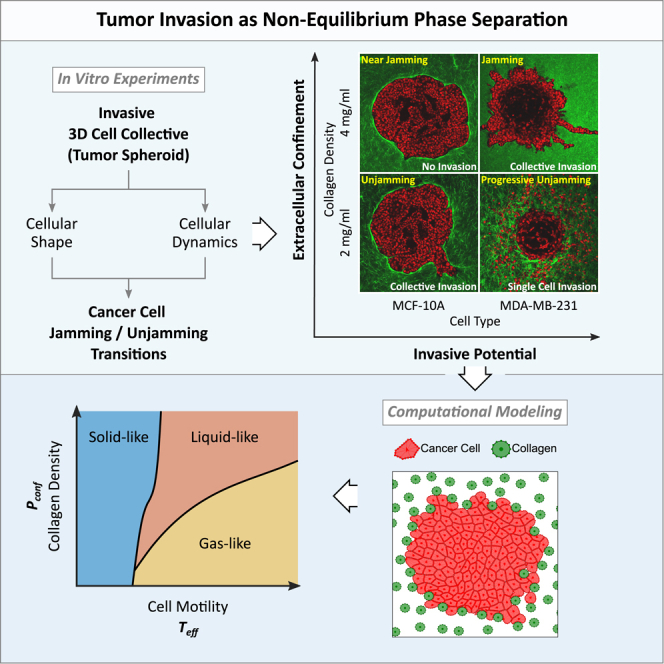
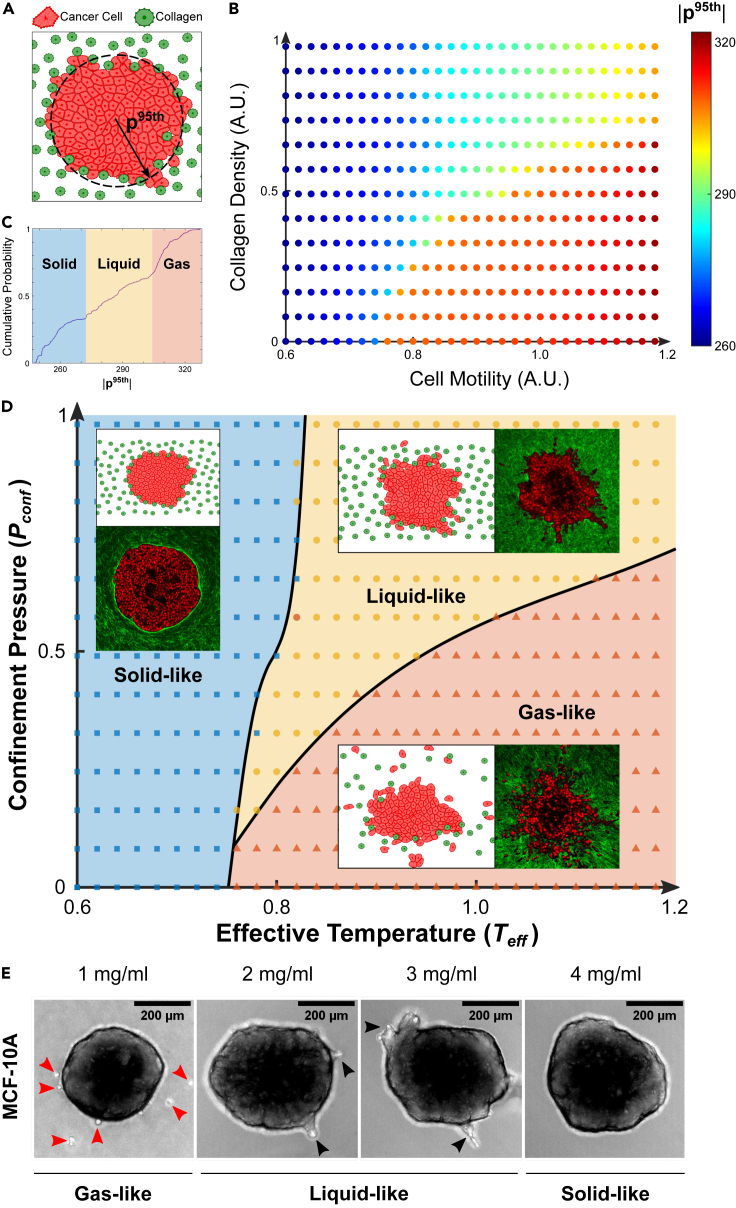
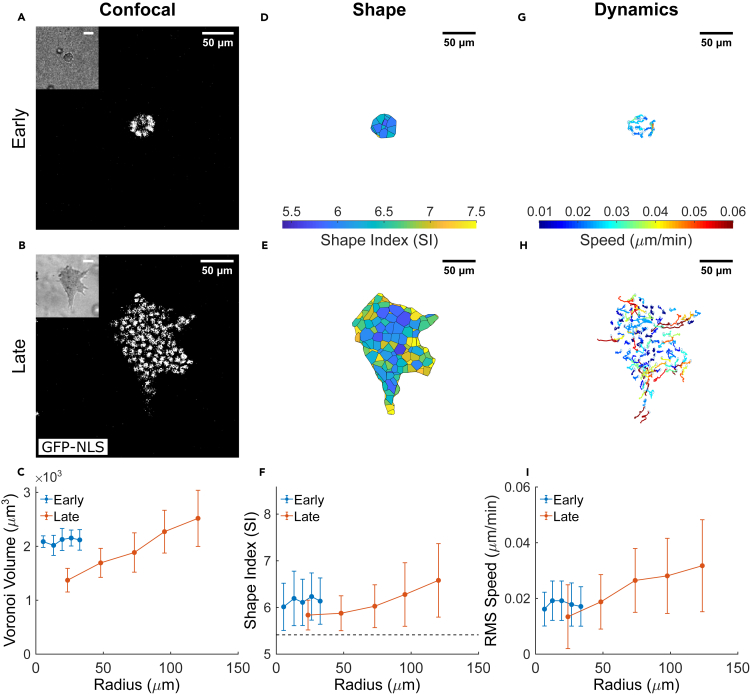
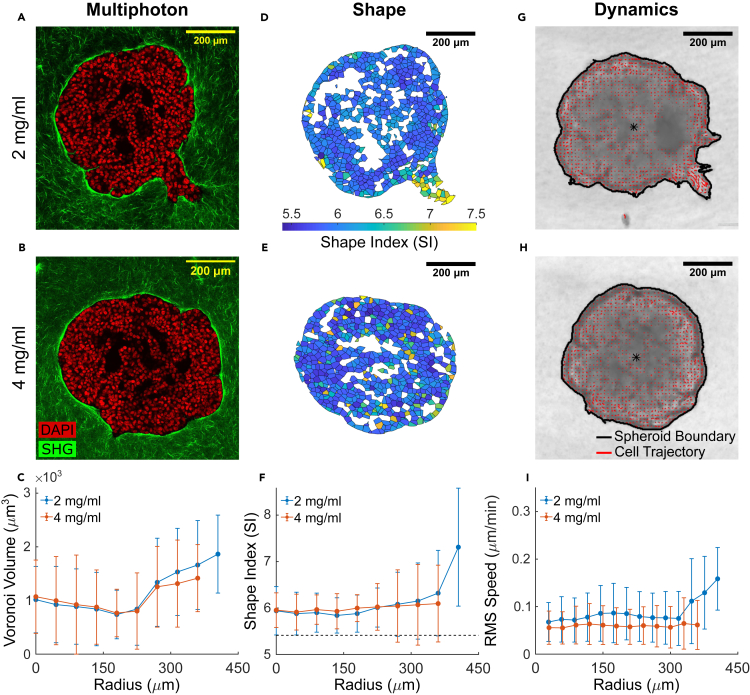
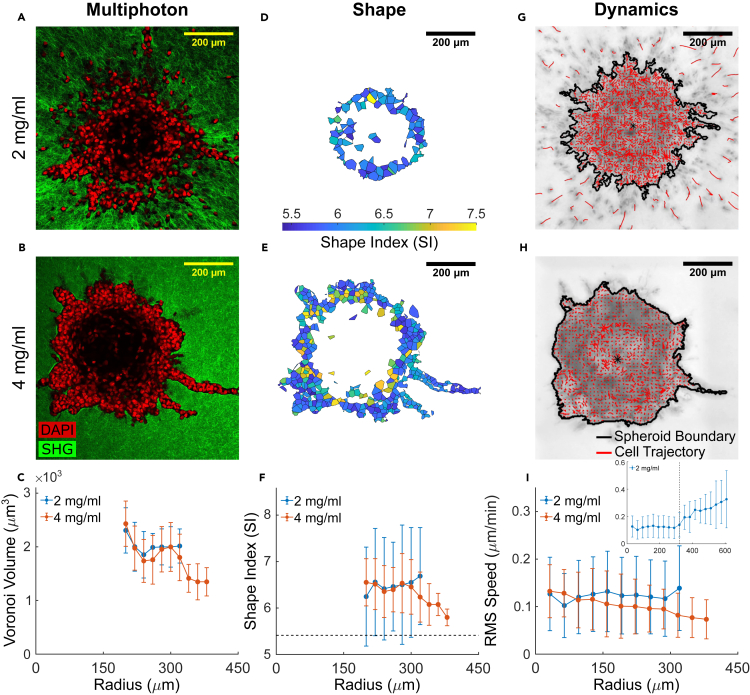
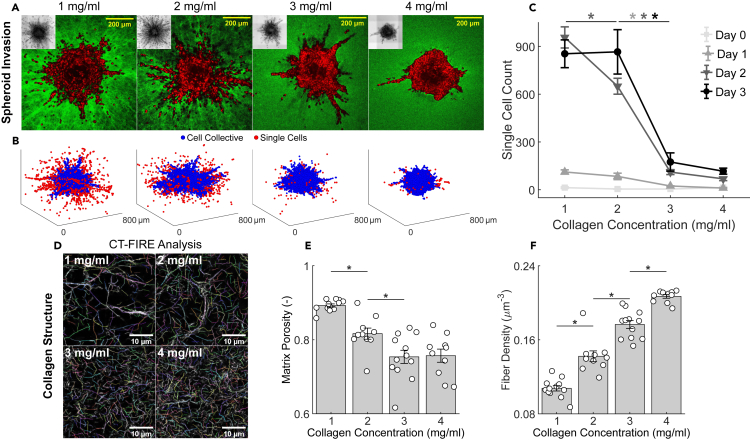
It is well established that the early malignant tumor invades surrounding extracellular matrix (ECM) in a manner that depends upon material properties of constituent cells, surrounding ECM, and their interactions. Recent studies have established the capacity of the invading tumor spheroids to evolve into coexistent solid-like, fluid-like, and gas-like phases. Using breast cancer cell lines invading into engineered ECM, here we show that the spheroid interior develops spatial and temporal heterogeneities in material phase which, depending upon cell type and matrix density, ultimately result in a variety of phase separation patterns at the invasive front. Using a computational approach, we further show that these patterns are captured by a novel jamming phase diagram. We suggest that non-equilibrium phase separation based upon jamming and unjamming transitions may provide a unifying physical picture to describe cellular migratory dynamics within, and invasion from, a tumor.
众所周知,早期恶性肿瘤以一种依赖于组成细胞、周围细胞外基质(ECM)的材料特性及其相互作用的方式侵入周围的细胞外基质。最近的研究证实,侵袭性肿瘤球体有能力演变成共存的固体样、液体样和气体样相。利用侵入工程化ECM的乳腺癌细胞系,我们在此表明,球体内部在材料相上发展出空间和时间上的异质性,这取决于细胞类型和基质密度,最终在侵袭前沿产生各种相分离模式。通过计算方法,我们进一步表明,这些模式可以被一个新的堵塞相图所捕捉。我们认为,基于堵塞和解除堵塞转变的非平衡相分离可能提供一个统一的物理图景,以描述肿瘤内细胞的迁移动力学以及肿瘤的侵袭。