Department of Family Medicine, American University of Beirut Medical Center (AUBMC), Beirut, Lebanon.
Cancer Control. 2021 Jan-Dec;28:10732748211055267. doi: 10.1177/10732748211055267.
Prostate cancer is the most common malignancy in men globally. This study aims at investigating the incidence rates and trends of prostate cancer in Lebanon, and to compare them to those of countries from different regions in the world.
Data on prostate cancer were obtained from the Lebanese national cancer registry for the years 2005 to 2016. The calculated age-standardized incidence and age-specific rates were expressed as per 100 000 population.
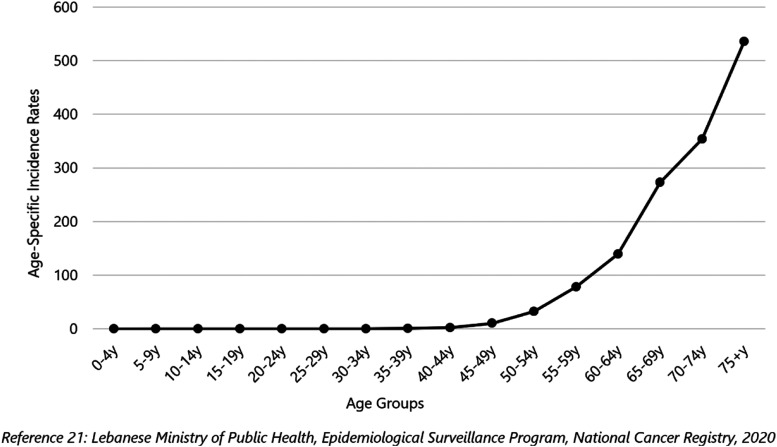
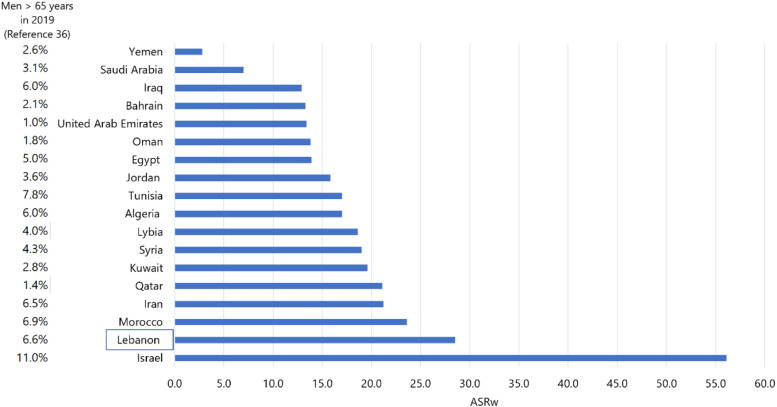
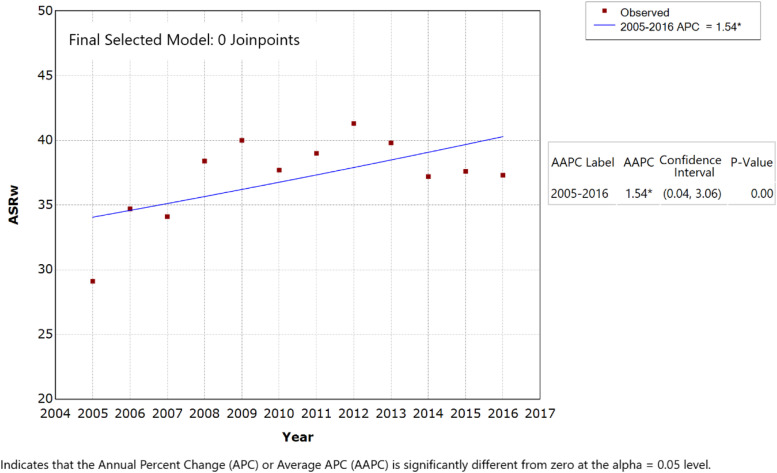
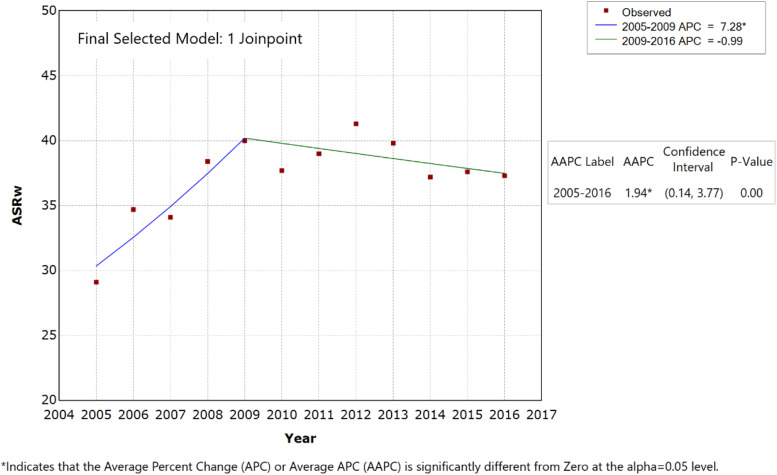
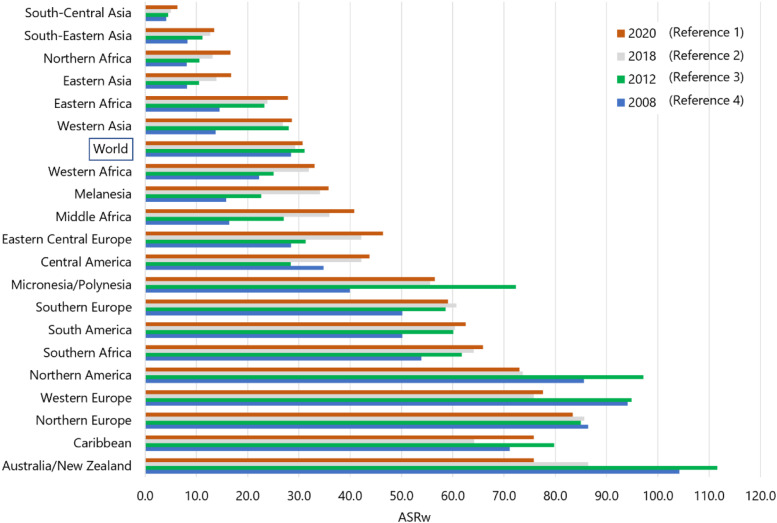
In Lebanon, prostate cancer is ranked as the most common cancer in men. The age-standardized incidence rate of prostate cancer has increased from 29.1 per 100 000 in 2005 to 37.3 per 100 000 in 2016; the highest rate was in 2012, surpassing the global average incidence rate for that year. The age-specific incidence rate of prostate cancer has increased exponentially starting at the age of 50 years to reach its peak in men aged 75 years or more. Two trends were identified in the age-standardized incidence rate of prostate cancer; an average significant increase of 7.28% per year for the period 2005-2009 (-value < .05), followed by a non-significant decrease of around .99% for the period between 2009 and 2016 (-value > .05). The age-standardized incidence rate in Lebanon was higher than most countries in the Middle East and North Africa region and Asia, but lower than the rates reported in Australia, America, and different European countries.
Prostate cancer is the leading cancer among men in Lebanon. Screening practices, changes in population age structure, and prevalence of genetic and risky lifestyle factors may explain the increased incidence rates of prostate cancer. Given the controversy of screening recommendations and the slow growing nature of prostate cancer, increasing public awareness on ways of prevention, and implementing the latest screening recommendation of the United States Preventive Services Task Force are the suggested way forward.
前列腺癌是全球男性最常见的恶性肿瘤。本研究旨在调查黎巴嫩前列腺癌的发病率和趋势,并将其与世界不同地区国家的发病率进行比较。
从黎巴嫩国家癌症登记处获取 2005 年至 2016 年前列腺癌的数据。计算的年龄标准化发病率和年龄特异性率以每 10 万人表示。
在黎巴嫩,前列腺癌是男性中最常见的癌症。前列腺癌的年龄标准化发病率从 2005 年的 29.1/10 万上升到 2016 年的 37.3/10 万;发病率最高的是 2012 年,超过了当年全球平均发病率。前列腺癌的年龄特异性发病率从 50 岁开始呈指数增长,在 75 岁或以上的男性中达到峰值。前列腺癌的年龄标准化发病率有两种趋势;2005-2009 年期间每年平均显著增加 7.28%(-值<.05),之后在 2009-2016 年期间略有下降,约为每年 0.99%(-值>.05)。黎巴嫩的年龄标准化发病率高于中东和北非地区以及亚洲的大多数国家,但低于澳大利亚、美洲和不同欧洲国家的报告率。
前列腺癌是黎巴嫩男性中最常见的癌症。筛查实践、人口年龄结构变化以及遗传和危险生活方式因素的流行可能解释了前列腺癌发病率的上升。鉴于筛查建议存在争议,且前列腺癌的增长速度缓慢,提高公众对预防方法的认识,并实施美国预防服务工作组的最新筛查建议,是未来的发展方向。