Boruchowicz Cynthia, Parker Susan W, Robbins Lindsay
University of Maryland.
University of Maryland & CIDE.
World Dev. 2022 Jan;149:105687. doi: 10.1016/j.worlddev.2021.105687. Epub 2021 Sep 15.
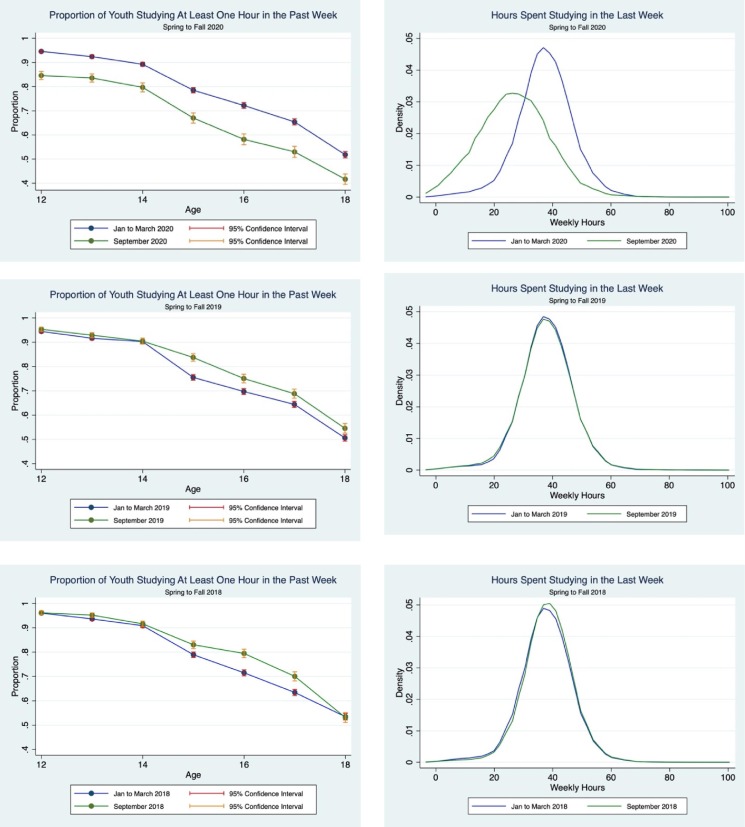
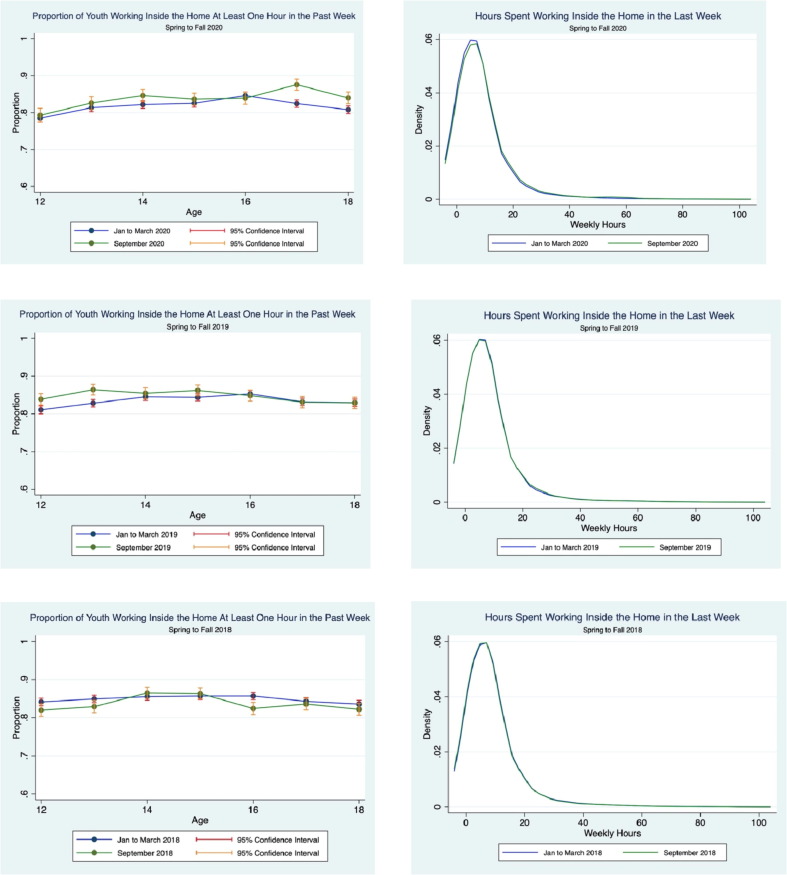
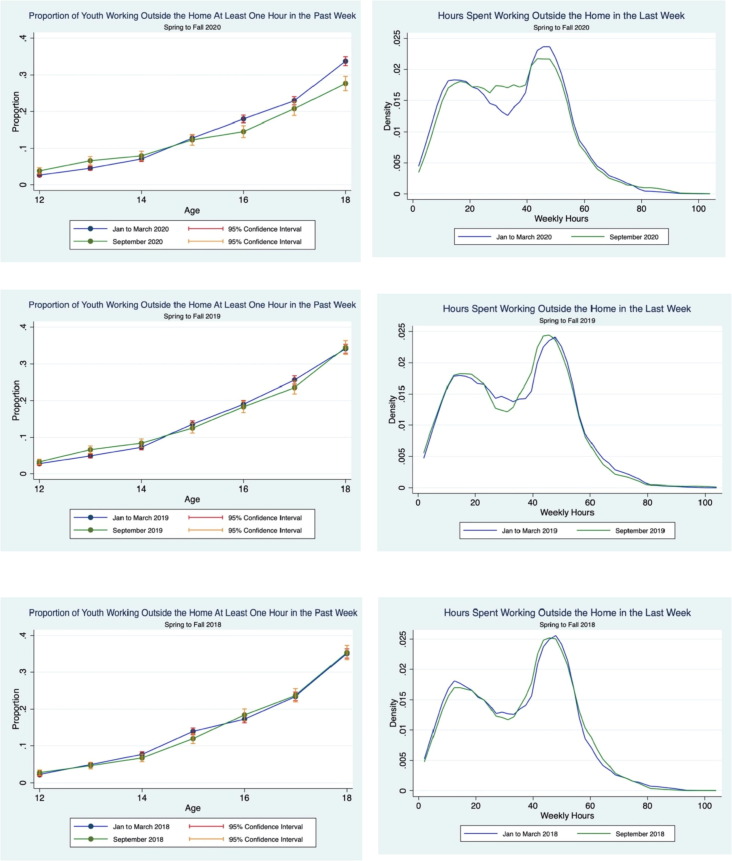
Studying how the pandemic affects the education and work of adolescents is a critical question with long lasting implications for well-being of the next generation, particularly in the developing world. The Covid-19 pandemic by mid-March 2020 had led to the closing of most educational institutions in Latin America and the Caribbean, and the region has been one of the worst hit by the pandemic (Sanmarchi et al. 2021). This paper uses the Mexican National Occupation and Employment Survey (ENOE) to provide initial evidence on the pandemic's effects on school and work of youth. We measure changes in the time use of adolescents comparing patterns just before the pandemic (January to March 2020) with those at the beginning of the following school year (September 2020), controlling for pre pandemic trends and potential seasonality. Our study finds a sharp reduction in the probability of being engaged in studies during the previous week for youth age 12 to 18 during the pandemic, as well as a reduction of about 30 percent in total hours spent on studies for those who report spending at least one hour on studies in the previous week. Time in work in general shows fewer changes than in time dedicated to studies, with some reductions in the probability of working outside the home for older youth, and a small increase in the number of hours dedicated to work inside the household. Our results overall are suggestive of an important decrease in youth who are engaged with school, who may be at particular risk for abandoning school permanently. It also suggests that even for those who remain engaged, there is a reduction on time spent studying likely to lead to a decrease in learning. Policies to combat potential dropout and negative effects on learning of the pandemic are urgently needed.
研究疫情如何影响青少年的教育和工作是一个关键问题,对下一代的福祉有着长期影响,尤其是在发展中世界。到2020年3月中旬,新冠疫情已导致拉丁美洲和加勒比地区的大多数教育机构关闭,该地区是受疫情影响最严重的地区之一(Sanmarchi等人,2021年)。本文利用墨西哥全国职业和就业调查(ENOE),初步证明疫情对青少年学业和工作的影响。我们通过比较疫情爆发前(2020年1月至3月)和下一学年开始时(2020年9月)的模式,来衡量青少年时间利用的变化,并控制疫情前的趋势和潜在的季节性因素。我们的研究发现,在疫情期间,12至18岁的青少年在前一周从事学习的概率大幅下降,对于那些报告前一周至少花一小时学习的人来说,学习总时长减少了约30%。总体而言,工作时间的变化比学习时间的变化要小,年龄较大的青少年外出工作的概率有所下降,而在家中从事家务劳动的时长略有增加。我们的研究结果总体表明,参与学校学习的青少年数量大幅减少,这些青少年可能面临永久辍学的特殊风险。这也表明,即使对于那些仍在上学的学生来说,学习时间的减少可能会导致学习成绩下降。迫切需要制定政策来应对疫情可能导致的辍学问题以及对学习的负面影响。