Carlos-Oliveira Maria, Lozano-Juan Ferran, Occhetta Paola, Visone Roberta, Rasponi Marco
Department of Electronics, Information and Bioengineering, Politecnico di Milano, Via Ponzio 34/5, 20133 Milano, Italy.
BiomimX S.r.l., Via G. Durando 38/A, 20158 Milano, Italy.
Biophys Rev. 2021 Sep 10;13(5):717-727. doi: 10.1007/s12551-021-00841-6. eCollection 2021 Oct.
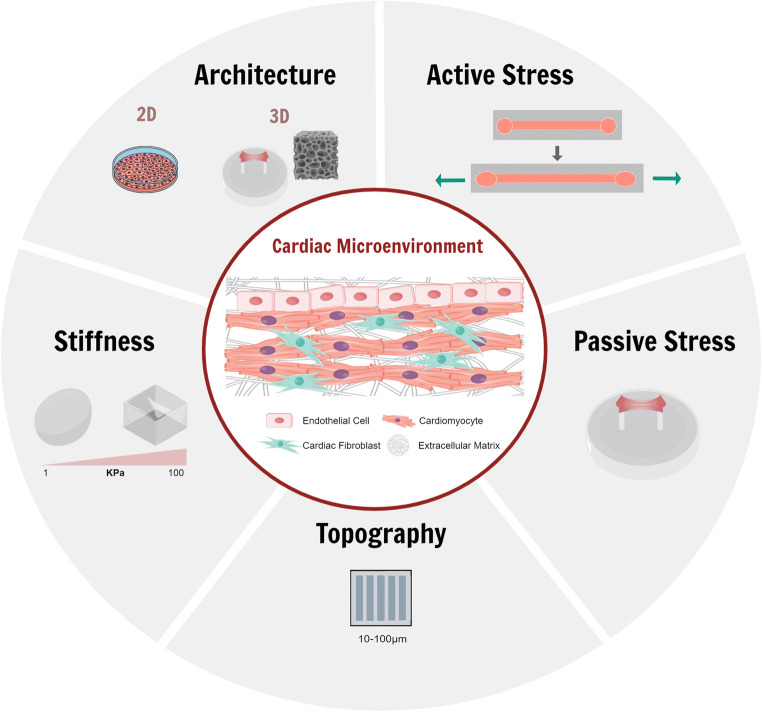
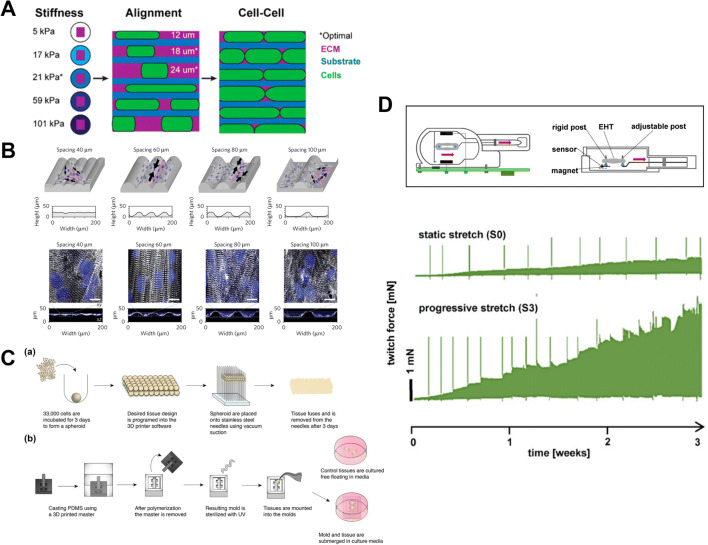
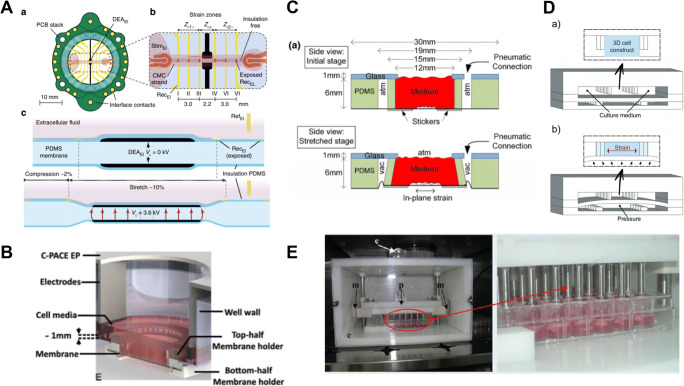
The most advanced in vitro cardiac models are today based on the use of induced pluripotent stem cells (iPSCs); however, the maturation of cardiomyocytes (CMs) has not yet been fully achieved. Therefore, there is a rising need to move towards models capable of promoting an adult-like cardiomyocytes phenotype. Many strategies have been applied such as co-culture of cardiomyocytes, with fibroblasts and endothelial cells, or conditioning them through biochemical factors and physical stimulations. Here, we focus on mechanical stimulation as it aims to mimic the different mechanical forces that heart receives during its development and the post-natal period. We describe the current strategies and the mechanical properties necessary to promote a positive response in cardiac tissues from different cell sources, distinguishing between passive stimulation, which includes stiffness, topography and static stress and active stimulation, encompassing cyclic strain, compression or perfusion. We also highlight how mechanical stimulation is applied in disease modelling.
目前最先进的体外心脏模型是基于诱导多能干细胞(iPSC)的应用;然而,心肌细胞(CM)的成熟尚未完全实现。因此,越来越需要转向能够促进类似成年心肌细胞表型的模型。已经应用了许多策略,例如心肌细胞与成纤维细胞和内皮细胞共培养,或者通过生化因子和物理刺激对它们进行预处理。在这里,我们专注于机械刺激,因为它旨在模拟心脏在发育和出生后所受到的不同机械力。我们描述了当前的策略以及促进不同细胞来源的心脏组织产生积极反应所需的机械特性,区分了被动刺激(包括硬度、拓扑结构和静态应力)和主动刺激(包括循环应变、压缩或灌注)。我们还强调了机械刺激在疾病建模中的应用方式。